El Poder de la Palabra en el Análisis Crítico del Discurso: Ideologías, Identidades y Transformaciones Sociales

Featured
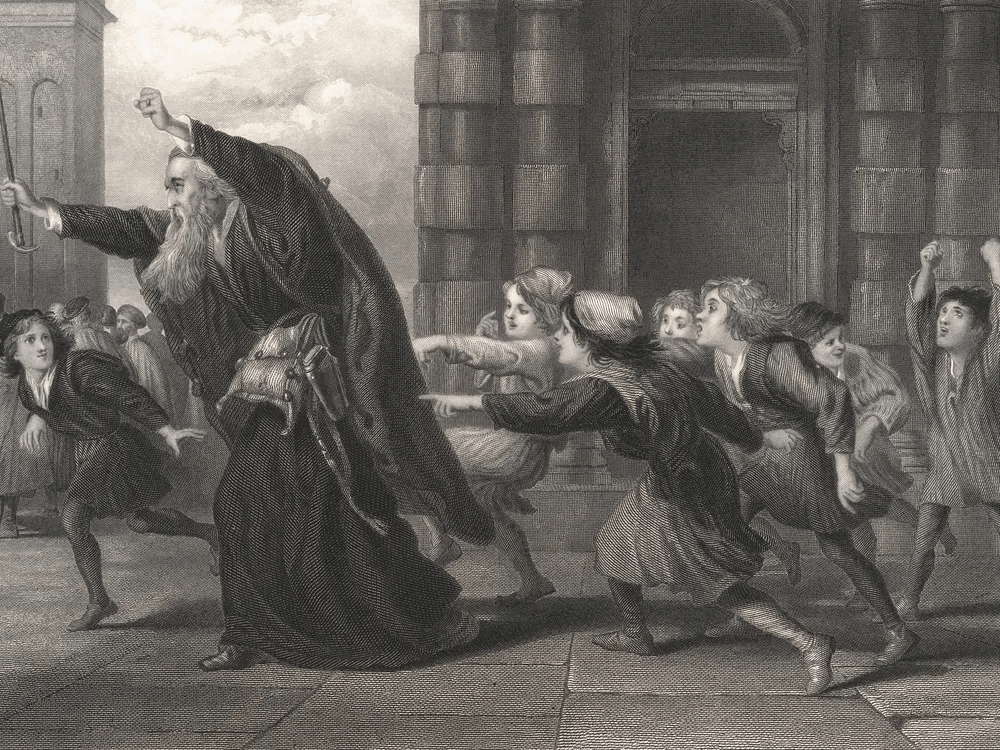
Shylock después del juicio, una ilustración para El mercader de Venecia. Ejemplo de un estereotipos discursivo con el que se ha representando al pueblo judío

Uno de los versículos bíblicos más atingentes a comprender el poderoso rol de la palabra sobre la acción humana es Proverbios, 18:21 que lee “Muerte y vida están en poder de la lengua, y los que la aman comerán su fruto”. De las palabras hechas verbo se ha construido el lenguaje que ha permitido configurar ideologías e identidades de poder social en las cuales surge la teoría del Análisis Crítico del Discurso (ACD, por sus siglas) sobre el cual Ruth Wodak y Michael Meyer presentan el libro “Métodos de análisis crítico del discurso”. El ACD se origina en el trabajo de lingüistas que exploraron la relación existente entre el lenguaje, el poder y las estructuras sociales que parten del reconocimiento del poder de la palabra para modificar el comportamiento de uno o varios individuos. En el lenguaje que se utiliza según indican los autores, se esconden estructuras de poder e ideologías de los sujetos actuantes que actúan siempre bajo una ideología y dentro de dinámicas de poder incrustadas en el discurso. Así, la acción dentro del contexto social en el que se interactúa tendrá una contribución que formará una sociedad, sus normas, las conductas y las legislaciones. A la vez, también el lenguaje y la ideología detrás de este tendrá un poder sobre la no creación o prohibición dentro de una sociedad de aquellas ideas y conceptos no compartidos por una ideología o por los sujetos que detenten el poder. Según Wodak y Meyer el lenguaje es un eje central del estudio del ACD y cita a Habermas exponiendo que el lenguaje “es también un medio de dominación y una fuerza social. Sirve para legitimar las relaciones del poder organizado, En la medida en que las legitimaciones de las relaciones de poder, r, .. ] no estén articuladas, [ … ] el lenguaje es  también ideológico” (Habermas, 1977, pág. 259).  En este proceso de acción del lenguaje, el discurso involucra la participación de diversos actores y también de diversas disciplinas que interactúan para la conducción de un discurso específico que es utilizado por los actores para dominar y dividir a la sociedad en grupos.

Junto con el lenguaje hablado, la palabra escrita es también uno de los principales motores de la acción y Wodak y Meyer explican que los textos escritos son también un medio fundamental para la construcción y crecimiento de las ideologías e ideas dentro de una sociedad y para que, los actores en el poder continúen su dominación sobre los otros. Los textos son una herramienta que según Wodak y Meyer ha permitido a los humanos moldear sus ideologías y relaciones de poder de acuerdo con las dimensiones históricas detrás de las cuales eventos han pasado para pueblos que comparten los mismos idiomas y que incluso llegan, gracias al idioma, a distinguirse entre ellos mismos de los otros. De esta manera, el idioma fue la causa principal por la cual las actuales naciones en Europa se establecieron y no debido a la geografía o las migraciones a las que muchos pueblos se vieron forzados. El idioma de un pueblo funcionó para estructurar y construir las identidades sociales y como explican Wodak y Meyer, la etnicidad, el género y la nacionalidad de un pueblo constituyeron pueblos y marginaron a otros pueblos. Así, las relaciones de poder dentro de estas sociedades permitieron constituir una historia común para algunos miembros de los grupos.

El análisis del ACD permite estudiar las estrategias que actualmente utilizan los políticos para manipular la opinión pública, construir narrativas y legitimar sus acciones. Es en este estudio de los actores y de sus discursos que una compleja ideología y prácticas lingüísticas permiten propagar y popularizar ideas a través del lenguaje. Por lo cual, el continúo estudio de las teorías del discurso, permitirán al estudioso comprender cómo la evolución de las tecnologías de la comunicación influencia el discurso en la opinión pública y estructuran la formulación de nuevas políticas y dinámicas sociales en el siglo XXI. Asimismo, el estudio del ACD es una herramienta que permite a las personas comprender los mensajes ocultos detrás de los discursos políticos, exponer el racismo y las desigualdades y comprender las formas enmarañadas en que el lenguaje que utilizan las personas en el poder puede llegar incluso a cambiar la forma de nuestro mundo en pro de la vida o de la muerte.
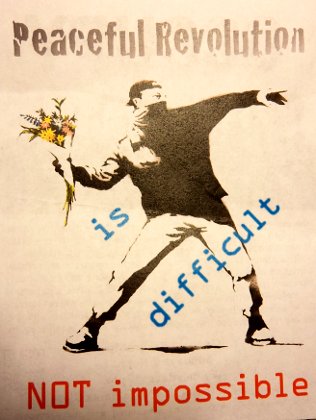
The never-ending cycle of revolutions

via: http://www.activistpost.com

“A revolution is the climax of a long philosophical development and expresses a nation’s profound discontent; a Putsch is a minority’s seizure of power. The goal of a revolution is to overthrow tyranny; the goal of a Putsch is to establish it.” Ayn Rand

The day after Revolution the streets were in silence. Anarchy was the rule and a no man’s land emerged. The protests against the ruling party had started several weeks before. However, as my grandmother recalled, the problems that had ignited the most recent uprising had always existed: ” these were the very old unfulfilled promises long inherited from Colonial times.”  Indeed, these promises were the idea that Government was here to rule over Us, to give Us and to provide Us for our needs and to care for our frailties.  The Global South has known dozens of revolutionary movements, dozens of attempts of revolutions and a handful of sanguinary coup d’états. Unfortunately, not much if anything has changed after the uprisings.

Around the world today conflict  continues in many areas that were once colonized or controlled by Western European or Soviet powers. The source of many of these protracted conflicts, in large part, lies in past colonial  policies, and especially those “regarding territorial boundaries, the treatment of indigenous populations, the privileging of some groups over others, the uneven distribution of wealth, local governmental infrastructures, and the formation of non-democratic or non-participatory governmental systems.”

It is therefore essential, if one wants to understand current revolutionary movements, intractable conflict and its causes, to examine not only the issues and problems of the moment, but also influential historical factors and actors – most notably, past colonial policies and today’s ruling power of these metropolis over former colonies – and their lingering effects.

The idea that the government should provide for our needs is more accepted in post-colonial governments that inherited institutions of dependency and granted privileges by the metropolis.  Imagine yourself traveling 200 years back in time to the period in which colonies were ruled by Western Capital. Interestingly, you will find yourself observing almost the same institutions and the same old problems that societies in the Global South still face today in Africa, the Middle East, South America, Eastern Europe and South Asia. The problems in these societies are the result of a long list of misguided decisions all centered in one fatal conceit: the conceit of revolution by force, not in defense, but in violation, of individual rights.

The colonial institutional heritage of the Global South is built around the abuse and violation of individual rights. Not a single revolutionary movement in the Global South has really aimed at restoring individual rights but to the granting of privileges for a minority.  The minority groups have taken many forms, received many names and have taken many slogans. They have been revolutions organized by and in contraposition of one minority group versus a majority: of the poor versus the rich, of the middle classes versus oligarch classes, of national interests of capital versus foreign interests, of enlightened groups versus conservative groups, of different ethnic groups against each other, of indigenous groups tired of being exploited, and many many more.

In order for a revolution that aims at restoring individual rights to take place it would be  necessary for all citizens to first redefine their code of values upon principles that allow them to pursue happiness without violating the rights of others.  This means that for a “revolution and not a putsch” to take place in the Global South we need first to understand that today’s revolutions have no moral justification and are all gang warfare.  As such, in order to change our immoral systems of government we require to first our own immoral code of values.  This means that we need to learn our history and fix all those immoral decisions taken in the past by our former enslavers.

I believe that the ideal way for starting to learn which is the code of values that provides for a consistent philosophy of life that protects individual rights and allows for humans to pursue happiness is the philosophy of Objectivism and the Objectivist Ethics.

If successful, most probably, the ongoing revolutionary movements in the Middle East, Ukraine and Venezuela will reflect to be nothing but immoral putsches of the very same old privileged groups that they were supposed to fight.  Corruption will take a new name, the citizens will be again defrauded by their leaders, immorality will again reign.  the power currently upheld by immoral leaders is not a simple system of domination of one specific group but it completely traverses the entire social body.  When social relations are not based upon a consistent and ethical code of values its result is “the immanence of force” that Foucault widely studied.    In this game of power, the incessant struggle and confrontation will be reinforced, transformed and reshaped without any meaningful outcome.  This never-ending cycle of revolutions will encrust and institutionalize itself if it hasn’t already. I truly believe that a Peaceful Philosophical revolution is Possible.  It is up to you reader, to chose wether to start it or not.