Why is Copernicus relevant to our understanding of Globalization?

192207_337884092969813_1647955587_o

We are constantly bombarded with media reports on globalization in terms of its increasing process and potential effects on our lives. What is meant by this concept and why should we be concerned with its impact? The developing countries of sub-Saharan Africa, Latin America and Asia should be interested in it because of the opportunities and threats offered by globalization (also known as globalisation).

The mother of this globalization is Science and the activator is her daughter Technology (both affectionately called science and technology). The most visible manifestations of “globalization” are in the economic and communications spheres. And one of the fathers of Science is our friend Copernicus.

In two sentences his contribution to Science and Globalization is:

  • Copernicus broke open the medieval idea of an enclosed, Earth-centered universe.
  • He set the stage for all of modern astronomy.

And why does this matter?

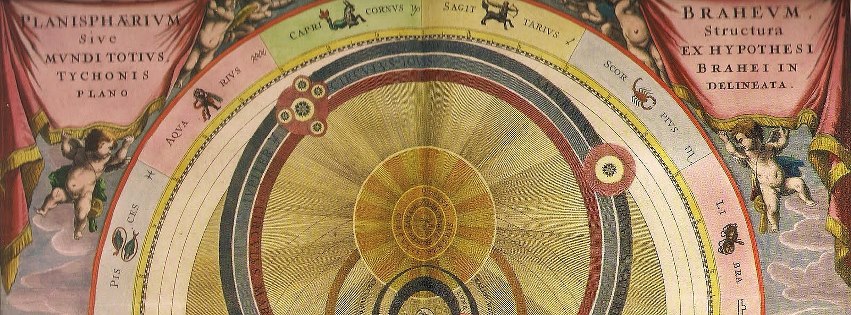
He lived at a time when people believed Earth lay enclosed within crystal spheres at the center of the universe. Can you picture the leap of imagination required for him to conceive of a sun-centered universe? The publication of Copernicus’ book – De revolutionibus orbium coelestium (On the Revolutions of the Celestial Spheres) – just before his death in 1543, set the stage for all of modern astronomy. Today, people speak of his work as the Copernican Revolution.

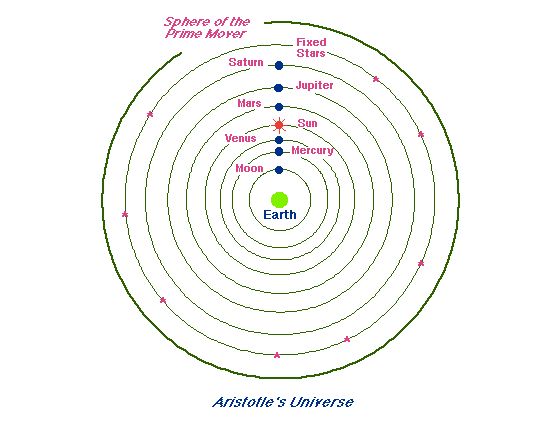
Post-data: Copernicus wasn’t the first to conceive of a sun-centered universe. Early Greek philosophers also spoke of it. It was the Greek philosopher Aristotle, however, who proposed that the heavens were literally composed of 55 concentric, crystalline spheres to which the celestial objects were attached. In Aristole’s model, Earth lay at the center of these spheres. Thus Earth lay – fixed and enclosed – until Copernicus published his version of a heliocentric universe.
Remembering the wise Talleyrand

Political Cartoon of Napoleon I and TalleyrandNapoleon I, originally Napolean Bonaparte, was the emperor of France. He seized power in 1799 in a coup d'etat, crowned himself emperor in 1804, and attempted to conquer Europe. He abdicated in 1815 after several military defeats.
Political Cartoon of Napoleon I and Talleyrand
Napoleon I, originally Napolean Bonaparte, was the emperor of France. He seized power in 1799 in a coup d’etat, crowned himself emperor in 1804, and attempted to conquer Europe. He abdicated in 1815 after several military defeats.

Je connais quelqu’un qui a plus d’esprit que Napoléon, que Voltaire, que tous les ministres présents et futurs: c’est l’opinion.

I know where there is more wisdom than is found in Napoleon, Voltaire, or all the ministers present and to come — in public opinion.

Charles Maurice de Talleyrand was born a day like today on February 13, 1754.  He is one of the smartest and more prolific politicians and diplomats of  modern times (and one of my favourites).  Born and well educated in the arts, letters and ideas into an aristocratic family in Paris he quickly became a wise men by a young age.  He worked, survived and taught successfully for and against the regimes of Louis XVI, participated actively through the French Revolution and then under Napoleon ILouis XVIIICharles X, and Louis-Philippe.

The Dutch historian, Pieter Geyl, said once that, “in the purely political arena” the only figure to have held on to his rank in history during the Napoleonic era, apart from Napoleon himself of course, was Charles-Maurice de Talleyrand-Périgord and he intended to include a chapter on the prince in his famous work Napoleon For and Against (Harmondsworth, 1949).(1)

Talleyrand was, without a doubt, one of the most remarkable figures in the history of the late eighteenth and early nineteenth century, and certainly one of the most controversial. He was one of a rare breed capable of occupying a wide range of positions in politics and society, both in his public and private life. To a certain extent, he was representative of his era, whether taking on the mantel of the Ancien Régime, as an aristocrat working for the Revolution, or as lord of the Château de Valençay during the Restoration. However, it is the most important of these roles, Minister of Foreign Affairs during the Directoire, the Consulate, the Empire and the Restoration, for which he is of course remembered.

To learn more about his life, works and ideas I invite you to read the following biography (one of my favourite books too) which I am sure you will all enjoy: Talleyrand by Duff Cooper

Celebrating Charles Darwin Day

8467356955_da01abd2ac_b
Tattoo inspired from Darwin’s notebook around July 1837 that showed his first sketch of an evolutionary tree.

Today people around the world celebrates the 204 Anniversary of Charles Darwin birth.  To me this day is special and I celebrate the life and work of this great man by sharing with you the WHY he is history’s most important thinker.

Throughout his life, Darwin’s work resulted in the most enormous benefits that scientific knowledge, acquired through human curiosity and ingenuity, ever contributed to the advancement of humanity.  Darwin gave us the research and opened the doors for human inquiry by founding the unifying theory of Biology: Evolution. He was the first to present convincing evidence of it and its major driving force – natural selection.

The general idea of evolution preceded Darwin, and he shied away from making the explicit and incendiary claim that even humans were evolved from other creatures. But his explanation of natural selection as a mechanism that made evolution plausibly able to explain the origin of species without reference to a creator up-ended the contemporary orthodoxy. It set a new course that no subsequent scientific work could ignore. And according to the eminent late evolutionary biologist Ernst Mayr, “Eliminating God from science made room for strictly scientific explanations of all natural phenomena; it gave rise to positivism; it produced a powerful intellectual and spiritual revolution, the effects of which have lasted to this day.”

Eugene Byrne and Simon Gurr wanted to celebrate Darwin’s lifelong spirit of curiosity and bring the message to kids with their new graphic novel.

Remembering J’accuse

“It is a crime to poison the small and the humble,

to exasperate passions of reaction and intolerance,

while taking shelter behind the odious antisemitism…”

J'accuse

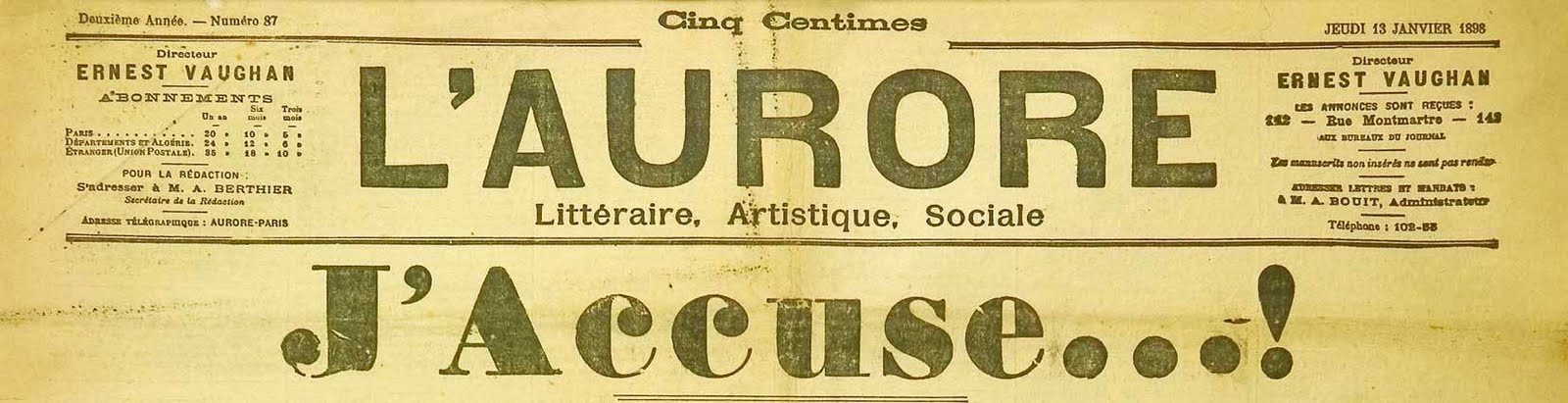
A day like today in February 07 1898 the Émile Zola was brought to trial for libel for publishing J’Accuse in the L’Aurore a literary, liberal, and socialist newspaper published in Paris, France   J’accuse is in my opinion one of the most important historical essays ever written because it brought to public opinion an honest and objective critic against the ruling elite’s injustices.

In his letter, Zola addressed President of France Félix Faure, and accused the government of antisemitism and the unlawful jailing of Alfred Dreyfus, a French Army General Staff officer sentenced to penal servitude for life for espionage.  Further, “Zola pointed out judicial errors and lack of serious evidence. The letter was printed on the front page of the newspaper, and caused a stir in France and abroad. Zola was prosecuted and found guilty of libel on 23 February 1898. To avoid imprisonment, he fled to England, returning home in June 1899.”

Zola’s intention was that he be prosecuted for libel so that the new evidence in support of Dreyfus would be made public (“Correspondence Between Emile Zola and Imprisoned Alfred Dreyfus”. Shapell Manuscript Foundation.) The case divided France deeply between the reactionary army and church and the more liberal commercial society and its ramifications continued for many years. On the 100th anniversary of Zola’s article, France’s Roman Catholic daily paper, La Croix, apologized for its antisemitic editorials during the Dreyfus Affair. As Zola was a leading French thinker, his letter formed a major turning-point in the affair.

Zola’s powerful letter included a direct conversation to the President of France to whom he address as a honorable and rightful man,

And it is to you, Mr. President, that I will proclaim it, this truth, with all the force of the revulsion of an honest man. For your honor, I am convinced that you are unaware of it. And with whom will I thus denounce the criminal foundation of these guilty truths, if not with you, the first magistrate of the country?

And by doing this, he requested the President to be truthful to Justice.

Lets have this letter as a memory of which is our truthful right and obligation as citizens of our States.  Let us remember that We MUST always Accuse the wrongdoers and Demand justice to prevail.

Audio (French) – J’Accuse – Lettre ouverte d’Emile Zola

Access to the French Original version available here via Archive.org

Here you can find the English translation of the letter: “I Accuse…!” By Émile Zola

Terracotta vase in the form of a lobster claw

Visiting history museums is one of my favorite activities.  There, one of the things that I appreciate the most is learning about the paintings they have in vases and other pottery utensils from Ancient Greece. Why? Because of its relative durability, pottery comprises a large part of the archaeological record of Ancient Greece, and since there is so much of it (some 100,000 vases are recorded in the Corpus vasorum antiquorum), it has exerted a disproportionately large influence on our understanding of Greek society.

Take a look to this wooooonderful work that I found in the website of The Metropolitan Museum of Art.

Terracotta vase in the form of a lobster claw
Attributed to the Class of Seven Lobster-Claws

Period: Classical
Date: ca. 460 B.C.
Culture: Greek, Attic
Medium: Terracotta
Dimensions: Overall: 2 3/4 x 2 7/8 in. (7 x 7.3 cm)
Other: 6 1/4in. (15.9cm)
Classification: Vases
Credit Line: Rogers Fund, 1923
Accession Number: 23.160.57