There are moments in history in which the World Order changed and historians are always trying to get them accepted and applauded by their colleagues. Those specific moments in history may be not seen immediately but until enough time has passed to understand the direct and indirect effects that shaped the course of History.
Many of these moments are the product of technological innovations that changed the way humans lived. One of them could be October 24, 2003 when three BA Concordes made the last commercial flights in history: G-BOAG flew from New York to London; G-BOAE made a return flight to Edinburgh; and G-BOAF flew around the Bay of Biscay. All three circled over London before landing within minutes of each other at Heathrow Airport.
The relevance of this event may not yet be so evident. However, we can be certain that the impact that had the catastrophe of a Concorde near Paris in July 2000 is going to determine the future of space flights. Specially after the last flight of Atlantis (the last Space Shuttle of the United States) in July 21, 2011.
The blog The Modern Historian posted a great/short overview of Concorde’s history and here is it:
During the late 1950s, aircraft manufacturers around the world started working on designs for supersonic passenger jets. The costs for such projects were so prohibitive that few of them progressed beyond the design stage. In the early 1960s, the British Aircraft Corporation, which had inherited the Type 223 supersonic transport (SST) project from the Bristol Aeroplane approached the French Sud Aviation, who were working on the Super-Caravelle SST, with an offer to co-operate on a joint project.The result of this co-operation was Concorde, which made its maiden flight in 1969. By this time, Concorde only had one compettitor, the Russian Tupolev Tu-144, but cold war tensions and the crash of a Tu-144 at the 1973 Paris Air show meant that it was Concorde that attracted orders from the major airlines. Nevertheless, the oil crisis of late 1973, environmental concerns about nervousness about sonic booms (the noise the aircraft made as it broke the sound barrier) resulted in the cancellation of all the orders except those from the national airlines of France and the United Kingdom. These orders for ten aircraft each still required substantial government subsidies to keep the project alive.In spite of these setbacks, Air Franceand British Airways (BA) started scheduled flights using Concorde in 1976. Although other airlines occasionally leased the aircraft, the high operation costs meant that supersonic travel was only feasible for the most profitible routes. Nevertheless, to continue running the services required high ticket prices, the continued government funding in the case of Air France and the sale of the British fleet of aircraft to BA at a knock-down price.All this changed following the crash of a Concorde near Paris in July 2000. The year long grounding of all the Concordes contributed to the decision taken by both airlines to withdraw the aircraft. On 27th June 2003, an Air France Concorde flew for the last time and on 24th October that same year three BA Concordes made the last commercial flights by the aircraft: G-BOAG flew from New York to London; G-BOAE made a return flight to Edinburgh; G-BOAF flew around the Bay of Biscay. All three circled over London before landing within minutes of each other at Heathrow Airport.
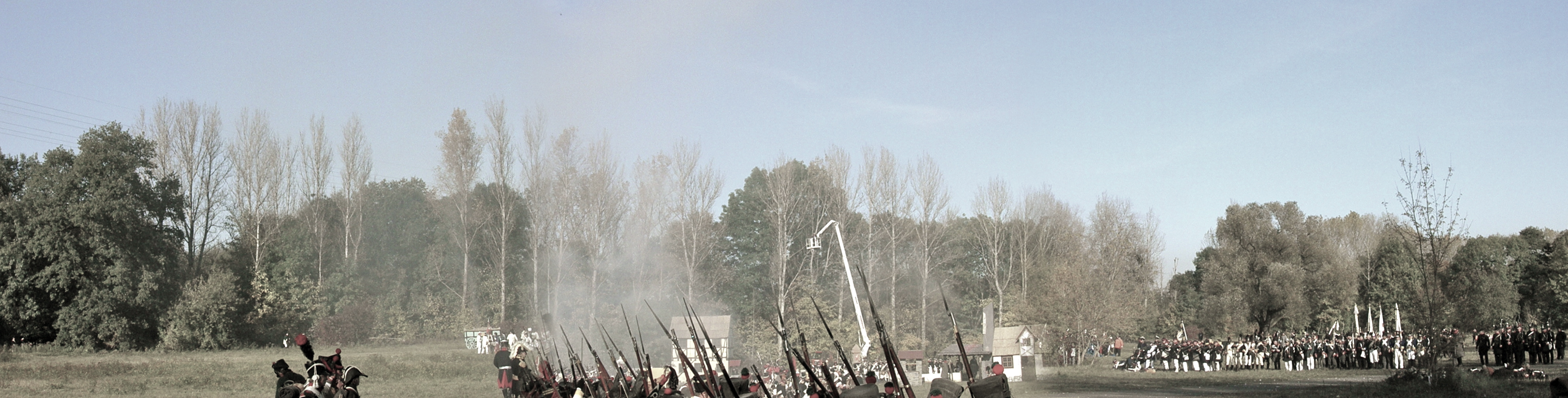
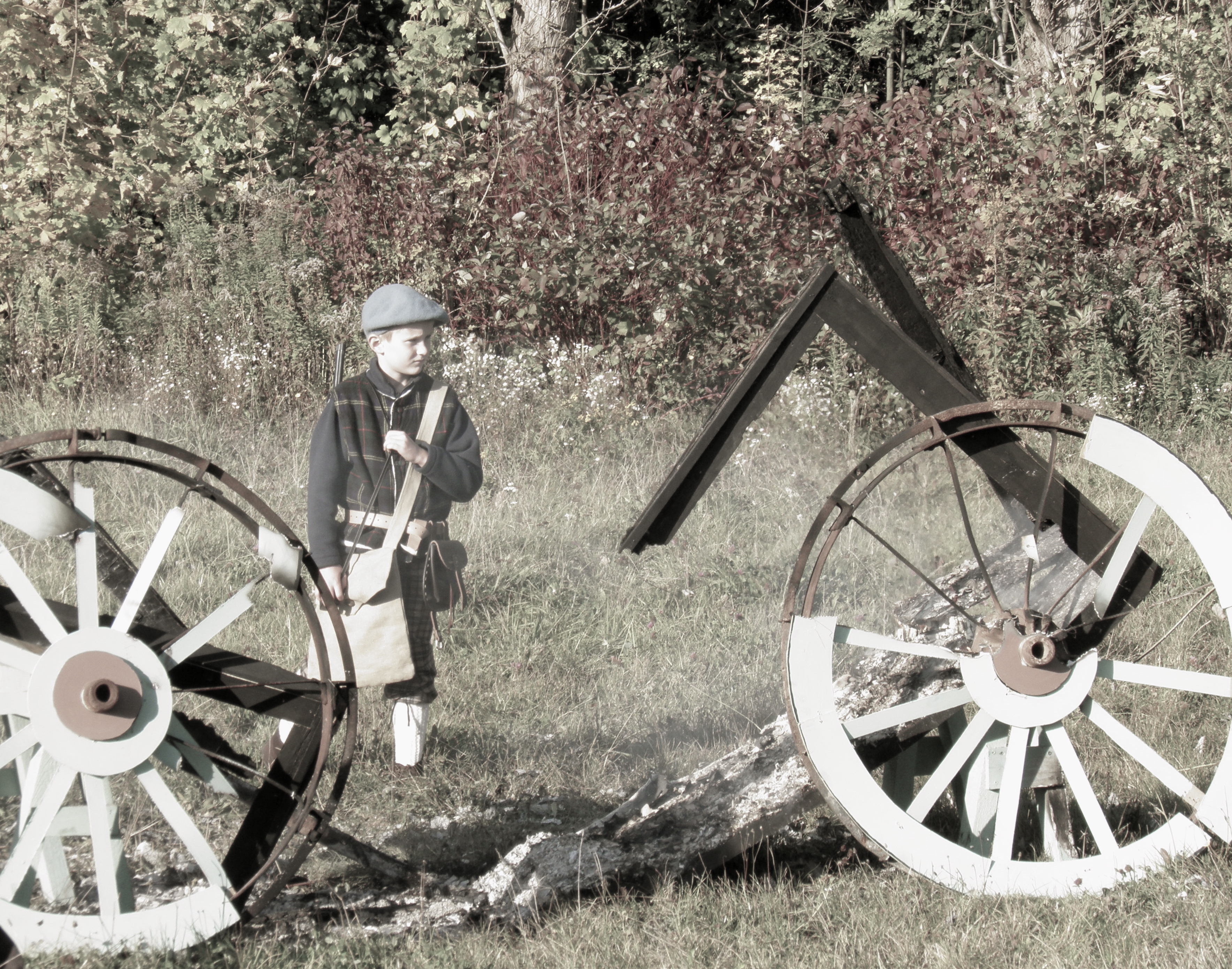
Today I had the pleasure of attending (living) the reenactment of The Battle of the Nations (also known as The Battle of Leipzig) that took place half mile south of Leipzig on 16-19 October, 1813. The battle was fought by the coalition armies of Russia, Prussia, Austria and Sweden against the French army of Napoleon. Napoleon’s army also contained Polish and Italian troops as well as Germans from the Confederation of the Rhine. The battle involved over 600,000 soldiers, making it the largest battle in Europe prior to World War I.1
This allied victory over Napoleon at Leipzig marked the first significant cooperation among European nations against a common foe. “Napoleon limped back toward Paris. Behind him he left 60,000 dead, wounded, or captured French soldiers. The Allies had lost a similar number, but they could find replacements far more quickly and easily than Napoleon. Other countries, including the Netherlands and Bavaria–which Napoleon had added to his confederation by conquest–now abandoned him and joined the Allies. On December 21, the Allies invaded France and, following their victory at Paris on March 30, 1814, forced Napoleon into exile on Elba.”2
Indeed, it was the cooperation of all the region’s powers that Leipzig led to the fall of Paris and the abdication of Napoleon. The decisiveness of this battle had a global impact that redefined the course of history.
I invite you to see all the pictures I took of this fantastic battle:
Economic Depressions: Their Cause and Cure
Need a short monograph on Austrian business cycle theory? This is the one to get.Murray Rothbard was the master of reducing complicated theories to their very essence while retaining theoretical rigor, and this essay is a case in point. It was written in 1969 and published in the form of a tiny book that achieved a huge circulation. It has not been in print since that time, but it is now back in this new release.
This time, the AmericanSensationalist Director Michael Moore was right. He explained in one sentence what thousands of men are right now protesting against in the streets and we support them. Why?
Capitalism is a social system that is based upon the foundations of individual freedom, respect for individual rights and property rights, and reason as man’s only mean to achieve their goals. However, the current economic, political and economic system in which large parts of the world are now living is not really a Capitalist economy.
The correct name for this system is “crony capitalism” and its foundations are privileges, irrational greed, expropriation, and violation of human rights (individual rights and the rights to property). It is this system that we need to fight against and fight a moral revolution against to. In the following video, you’ll hear a wonderful explanation of what that Irrational Greed is all about. The second video, is very interesting and portrays an interesting image of how TNCs (Transnational Corporations) have established Billion Worth Business all over the world without caring for what should matter most to them: Their Consumers.
I hope you enjoy them and understand that we are together in this fight,
Video: Milton Friedman On what is commonly understood as greed and on what is the result of ethical profit (via: Casey Hendrickson)
Before defining what is Capitalism I have decided to provide you with five videos that explain the philosophical foundations of Capitalism as a social system. By listening to these videos, you’ll get a wonderfully elaborated explanation of What Capitalism is and of what it consists of.
“Capitalism is the only social system based on the recognition of individual rights and, therefore, the only system that bans force from social relationships.”1
Published in 1966 this abstract from Ayn Rand‘s work on Capitalism explains in a clear and unequivocal way the true concept and definition of a system based on reason and in the recognition of the rights of free and responsible men.
Capitalism in the previous quote means a full, pure, uncontrolled, unregulated social system known as “Capitalism Laissez-faire“. It is a system that works as a set of interacting or interdependent moral, political and economical principles that are incorporated into legal systems, institutions and governments. This moral, economical and political principles are contingent to the identification that the members of the system do in order to understand the nature of man and are applied to the rational understanding of man’s psycho-epistemology (man’s mode of functioning in acquiring knowledge).
In human history there hasn’t yet existed a capitalist laissez-faire social system that fulfills the previous requirements; and only glimpses of its potentiality have been achieved through history. However, since the 15th Century “economies organizing themselves on capitalist lines have experienced greater economic dynamism: increasing productivity, increasing employment, and generating more rapid advances in economic wealth, living standards, and improved health of the population.”2 It is because of many of the principles of Capitalism Laissez-faire that Globalization and all the different forms of Capitalism have managed to benefit humanity and achieved our current conditions. Unfortunately, it has been because of the philosophical contradictions and irrational actions of man that also many adverse results have come into being from these mixed forms of capitalism and economic crisis, inequalities in the distribution of wealth and environmental degradation are still existing.
The Board of the Center for the Study of Capitalism at Wake Forest University explains what are some of these forms of Capitalism that currently exist and also explain which are some of its capitalist characteristics,
In the 21st century capitalism exists in several forms. These include 1) free market or market-led capitalism such as we are accustomed to in the U.S.; 2) corporatist or state-led capitalism where the government exerts significant guidance, leadership, and influence over the deployment of private capital (e.g. France, Japan in the 1980s); and 3) managed capitalism, in which worker groups and broad social welfare issues exert significant influence on private corporate behavior (e.g. Sweden, Germany).3 Whereas some evidence suggests that market-led capitalist economies experience greater economic dynamism and higher rates of per capita income growth than economies with other forms of capitalism,4 other evidence points to less volatility and fewer inequities in other forms of capitalism than in market-led economies.5
This blog was created to study how and when Capitalism and its philosophical principles played a role in Global History. It is my goal to demonstrate with a narration of past events how the roots of Wealth enabled for the interconnection of the World and how we could learn from the past to build more rational and objective societies.
4 R. L. Heilbroner & W. Milberg, 2006, The Making of Economic Society, Prentice-Hall: Upper Saddle River NJ; E. Phelps, 1999, “Lessons from the Corporatist Crisis in Some Asian Nations”, Journal of Policy Modeling, 21 (3), 331-339. E. Phelps, 2007, “The Economic Performance of Nations: Prosperity Depends on Dynamism, Dynamism on Institutions”, in E. Sheshinski, et al, ed., Entrepreneurship, Innovation, and the Growth Mechanism of Free Enterprise Economies, 342-356, Princeton University Press: Princeton NJ.






 Globalization & Capitalism