I just returned after spending a wonderful evening with a German Socialist Activist. It was a wonderful evening because I got to understand many of his arguments and we started discussing them openly; without never aiming at a consensus. I just got back home and saw the following video: Stephen Colbert Takes on Occupy Wall Street
Now, I just can’t stop laughing! “Ethically” Colbert is just Great!
Comedy Central’s Stephen Colbert takes on Occupy Wall Street in a hilarious yet actual segment with protest representatives of “the consensus within the press group” Justin (“a male-bodied person”) and “Ketchup” (“a female-bodied person”) in a “Co-Optportunity” with what Colbert calls a cult, oh sorry, I mean “movement”. via David Theroux | Tuesday November 1, 2011 at 11:59 PM PDT
Original Audio: On Halloween eve in 1938, the power of radio was on full display when a dramatization of the science-fiction novel “The War of the Worlds” scared the daylights out of many of CBS radio’s nighttime listeners.
Ladies and gentlemen, I have a grave announcement to make. Incredible as it may seem … those strange beings who landed in the Jersey farmlands tonight are the vanguard of an invading army from the planet Mars!
The broadcast news that Sunday night, Oct. 30, 1938, sounded real enough to the young man in Plainsboro. Up and down his block he banged on doors, shrieking: “The Martians have landed in Grovers Mill! It’s on the radio!”
Panic struck the youth choir rehearsing within the Plainsboro Presbyterian Church when they heard his message of doom. Grovers Mill was only a few miles south, and, if you believed the bulletins, the Martians with their death rays had already incinerated the place, killed thousands of humans and begun advancing north at a spectacular clip.
But Mabel “Lolly” Dey, a 16-year-old girl playing the piano, kept calm.
“I bowed my head and prayed and thought to myself, ‘If it has to be the end of the world, I couldn’t be in a better place,” Dey, now 76, recalled. “I’m in the house of the Lord.”
Like young Lolly Dey, as many as 2 million other people from coast to coast thought they were under attack from outer space.
If only they had checked carefully against their Sunday paper’s radio section.
“War of the Worlds” was a pure Halloween spoof, and the destruction of Grovers Mill was as fake as the alien beings with drooling faces and slimy tentacles. How the radio hoax got believed was largely due to the creative mischief of a single showman: Orson Welles.
At age 23, he was a bad boy of Broadway, prodigious in his drinking, eating and sleeping around. But he was also a “Boy Genius,” a director hailed for innovative stagings: “Macbeth” starring an all-black cast, “Julius Caesar” in modern dress.
His talent for radio drama was in demand, too, as the sinister voice of “The Shadow” on radio, and as the mastermind of CBS’ “Mercury Theater,” a Sunday night show featuring adaptations of classic plays and books.
Welles was fascinated with radio as a powerfully direct medium for entertainment and news. When Hitler threatened war in September 1938, Americans tuned in to hear the chilling news of English schoolchildren donning gas masks for war drills. Then the British prime minister declared he had achieved “peace in our time,” and everyone breathed easier. At least for a time.
By the fall of ’38, Mercury Theater was getting trounced in the ratings. Its competition at 8 p.m. Sunday was NBC’s ventriloquist Edgar Bergen and his smart-aleck dummy, Charlie McCarthy. Welles needed an attention-grabber. He found it in “War of the Worlds.”
“War of the Worlds” was an H.G. Wells science fiction novel written 40 years earlier about a Martian invasion of England. It was exciting stuff, but Orson Welles wanted more urgency, more immediacy. He ordered his scriptwriters to update the setting to modern-day America and present it in a novel form — as a news broadcast.
Screenplay writer Howard Koch had only a week, and a $75 paycheck, to write the scenario. For realism, he placed the cosmic battle in what he thought of as the very prosaic state of New Jersey. On a road map, he dropped a pencil to determine the precise landing site: it fell on Grovers Mill, a hamlet in West Windsor Township.
At 7:58 p.m., Oct. 30, Welles slugged down a bottle of pineapple juice, mounted a podium in the center of his New York studio, clamped on a set of headphones, and gave his announcer the signal to start the show.
Maisy Curtis was just settling into the couch of her living room in Merchantville. She had kissed her fiance goodnight about 7:45 and saw him off as he drove back to his home in Hightstown, where he taught school. Now she, her mom and two sisters tuned into the radio and stopped the dial when they heard some breezy Spanish-style dance music.
Breaking into the music, an authoritative voice announced:
Ladies and gentlemen, we interrupt our program of dance music to bring you a special bulletin … several explosions of incandescent gas, occurring in regular intervals on the planet Mars … moving towards the earth with tremendous velocity.
What did it mean? Well, here was “Professor Richard Pierson, famous Princeton astronomer,” a man with a voice very similar to Orson Welles, to explain it. Nothing to worry about, he said, since there’s no life on Mars.
But another bulletin crackled through, something about a meteorite landing with the force of an earthquake 20 miles north of Trenton. Live from the Wilmuth farm, there was reporter “Carl Phillips.”
The object doesn’t look very much like a meteor … It looks more like a huge cylinder … the metal casing is definitely extraterrestrial … Ladies and gentlemen, this is the most terrifying thing I have ever witnessed! Someone’s crawling out of the hollow top!
In her living room, Maisy Curtis’ father stirred uneasily. Someone mentioned something about Maisy’s boyfriend passing near Grovers Mill. Would this delay his trip home?
Driving with his girlfriend near Newark, a gas-station operator named Archie Burbank pulled over to listen, uncertain what it meant. And at Princeton, where there was no such person as a Prof. Pierson on the faculty, a group of geology students thought it sounded like the adventure of the lifetime — so they drove off for Grovers Mill, two miles away.
Something’s wriggling out of the shadow like a grey snake! Now it’s another one, and another. They look like tentacles to me … The eyes are black and gleam like a serpent. The mouth is V-shaped with saliva dripping from its rimless lips … There’s a jet of flame! It’s coming this way!
For an excruciating few seconds, silence. Then, another bulletin: 40 people dead! All of Mercer and Middlesex counties under martial law!
Desperate phone calls poured into Trenton police. Overwhelmed dispatchers tried to calm the men and women on the other line, telling them there was no sign of emergency. One woman in Grovers Mill was inconsolable. “You can’t imagine the horror of it!” she shrieked. “It’s hell!”
The Associated Press flashed a bulletin to all member papers: Reports of an emergency in New Jersey are false.
Ladies and gentleman, I have a grave announcement to make. The battle which took place at Grovers Mill has ended in one of the most startling defeats ever suffered by an army in modern times.
One hundred and twenty known survivors. The rest strewn over the battle area from Grovers Mill to Plainsboro crushed and trampled to death under the metal feet of the monster, or burned to death by its heat ray.
The young geology students from Princeton arrived at Grovers Mill to see dark sky, twinkling stars and dead silence — in short, no sign of cosmic warfare.
But already, a makeshift posse of farmers with squirrel guns and shotguns were forming around the mill pond off Cranbury Road. One legend has them blasting away at what they thought was a craft from Mars, only to discover in daylight they had been shooting at a water tower.
“I was crying,” recalled Maisy Curtis. “I was frantic for my fiancee and I was hearing all about these strange invaders destroying everything. My father disappeared into the bedroom and came back with some rosary beads. We just knelt and prayed.”
In her church in Plainsboro, Lolly Dey was praying too, and pondering what was causing this great catastrophe. “I had been learning in high school about Hitler and his plans to take over the world,” she said. “And it just made sense that maybe these Martians were Hitler’s allies.”
The enemy now turns east, crossing Passaic River into the Jersey marshes. … Their apparent objective is to crush resistance, paralyze communication, and disorganize human society.
Warning! Poisonous black smoke pouring in from Jersey marshes!
Gas! Radio listeners who had followed the European crisis knew what to do: filter the air with a wet fabric. All over New York, damp towels hung from tenement windows. A woman in Pittsburgh tried to swallow poison and was stopped by her husband. “I’d rather die this way!” she screamed.
Near Newark, Archie Burbank and his girlfriend ran to a man’s house, asking to be let into his cellar. “I don’t have any cellar! Get away!” he yelled back. They drove to a gas station to fill up the tank and drive off as far as they could … then realized they might want to call the Newark Evening News for information. The man at the newspaper told them it was a radio play.
Welles was still directing from his center podium, furiously cueing actors and sound effects and trying to ignore the cops banging on the studio’s front door. CBS executive Taylor Davidson demanded he break into the program to calm down all the scared listeners.
“They’re scared?” Welles shot back. “Good! They’re supposed to be scared!”
No more defenses! Our army wiped out! This is the end now.
Seeing no sign of the apocalypse outside her church window, Lolly Dey walked the six houses back home. “I told my mom about the Martians,” Dey recalled. “But by then, she had the radio on too and we figured out it was all a show.”
Orson Welles and his crew sneaked out the back of their studio to avoid the crush of reporters and lawmen who wanted a word with them. The next day, however, he put on as ingenuous a face as possible and apologized. “We are deeply shocked and deeply regretful,” he said. Hadn’t he known about the panic he was creating? “Oh, no, no, no, no.”
The notoriety of “War of the Worlds” gave the boy genius the capital he needed to make his debut movie, “Citizen Kane” — an epic that was named the greatest American film of all time last year in an American Film Institute poll. Scriptwriter Howard Koch would write “Casablanca,” the No. 2 movie on the list.
For a long time, the people of Grovers Mill grumbled about “War of the Worlds” as a mean-spirited joke. With time, however, the legend of the Martian invasion grew more remote, humorous, and worthy of commemoration. For the 50th anniversary of the infamous broadcast in 1988, West Windsor erected a bronze plaque at Van Nest Park depicting Welles, his fictional aliens and a frightened family huddled around a radio set.
The guest speaker was Koch, who was hailed not as a hoaxer but as a sci-fi pioneer. Koch, in turn, gracefully said he did the men from Mars “an injustice” by depicting them as earth-destroyers.
“I believe,” he said, “if ever living beings arrive at Grovers Mill from another planet, they will have the wisdom to come in peace and friendship.”
Before defining what is Capitalism I have decided to provide you with five videos that explain the philosophical foundations of Capitalism as a social system. By listening to these videos, you’ll get a wonderfully elaborated explanation of What Capitalism is and of what it consists of.
“Capitalism is the only social system based on the recognition of individual rights and, therefore, the only system that bans force from social relationships.”1
Published in 1966 this abstract from Ayn Rand‘s work on Capitalism explains in a clear and unequivocal way the true concept and definition of a system based on reason and in the recognition of the rights of free and responsible men.
Capitalism in the previous quote means a full, pure, uncontrolled, unregulated social system known as “Capitalism Laissez-faire“. It is a system that works as a set of interacting or interdependent moral, political and economical principles that are incorporated into legal systems, institutions and governments. This moral, economical and political principles are contingent to the identification that the members of the system do in order to understand the nature of man and are applied to the rational understanding of man’s psycho-epistemology (man’s mode of functioning in acquiring knowledge).
In human history there hasn’t yet existed a capitalist laissez-faire social system that fulfills the previous requirements; and only glimpses of its potentiality have been achieved through history. However, since the 15th Century “economies organizing themselves on capitalist lines have experienced greater economic dynamism: increasing productivity, increasing employment, and generating more rapid advances in economic wealth, living standards, and improved health of the population.”2 It is because of many of the principles of Capitalism Laissez-faire that Globalization and all the different forms of Capitalism have managed to benefit humanity and achieved our current conditions. Unfortunately, it has been because of the philosophical contradictions and irrational actions of man that also many adverse results have come into being from these mixed forms of capitalism and economic crisis, inequalities in the distribution of wealth and environmental degradation are still existing.
The Board of the Center for the Study of Capitalism at Wake Forest University explains what are some of these forms of Capitalism that currently exist and also explain which are some of its capitalist characteristics,
In the 21st century capitalism exists in several forms. These include 1) free market or market-led capitalism such as we are accustomed to in the U.S.; 2) corporatist or state-led capitalism where the government exerts significant guidance, leadership, and influence over the deployment of private capital (e.g. France, Japan in the 1980s); and 3) managed capitalism, in which worker groups and broad social welfare issues exert significant influence on private corporate behavior (e.g. Sweden, Germany).3 Whereas some evidence suggests that market-led capitalist economies experience greater economic dynamism and higher rates of per capita income growth than economies with other forms of capitalism,4 other evidence points to less volatility and fewer inequities in other forms of capitalism than in market-led economies.5
This blog was created to study how and when Capitalism and its philosophical principles played a role in Global History. It is my goal to demonstrate with a narration of past events how the roots of Wealth enabled for the interconnection of the World and how we could learn from the past to build more rational and objective societies.
4 R. L. Heilbroner & W. Milberg, 2006, The Making of Economic Society, Prentice-Hall: Upper Saddle River NJ; E. Phelps, 1999, “Lessons from the Corporatist Crisis in Some Asian Nations”, Journal of Policy Modeling, 21 (3), 331-339. E. Phelps, 2007, “The Economic Performance of Nations: Prosperity Depends on Dynamism, Dynamism on Institutions”, in E. Sheshinski, et al, ed., Entrepreneurship, Innovation, and the Growth Mechanism of Free Enterprise Economies, 342-356, Princeton University Press: Princeton NJ.
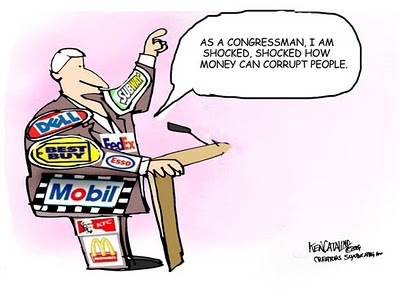
The group “The 99 percenters” (also known as the 99%) assembled in Wall Street to protest against the corporations of the United States that have benefited from the privileges granted from government through lobbying. They say to be tired of the social and economic inequality in their country. Somehow, they consider Corporations to be the one’s to blame for this inequalities.
Now, lets hold on for a second and consider what are they protesting against and who’s to blame. Then, lets try to explain what and whom should be really blamed before continuing this protests.
Social inequality: Is in fact the cultural and educational differences of those who know more than others.
Economic inequality: Is the result of those men who earn a salary that is higher than others; or of those who own a business and make more earnings than others.
Lobbying: Is the act of influencing decisions made by officials in the government in favor of some industries, unions, or groups of society.
Corporate greed: Is not to be confused with the profit that an entrepreneur earns in his ventures. Greed should better be understood as the result of living and satisfying one’s wants wants by seizing and consuming the products of the labor of others. Corporations that profit with the privileges granted by government are the only ones to be attacked and denounced; not those entrepreneurs who took risks and invest their savings.
These “99 percenters” are confused. They think that Corporations are to be blamed for the economic and financial crisis that started in 2008 in the U.S. However, it is their government and their bureaucrats that through Congress ad the FED enabled for the crisis to happen. This protests should have been taking place in front of the White House and the Senate instead of Wall Street. (Check this video of some of the protests in Wall Street agains the FED)
It is not all the rich and wealthy who benefit from government privileges. The ones who did are to be blamed. But more so, the one’s to be blamed and taken to justice are the the government officials who created the legislation that ensures that corruption and impunity continue without being punished.
As Fréderic Bastiat, the journalist and philosopher from the 19th. Century, once said:
The law has placed the collective force at the disposal of the unscrupulous who wish, without risk, to exploit the person, liberty, and property of others. It has converted plunder into a right, in order to protect plunder. And it has converted lawful defense into a crime, in order to punish lawful defense.
How has this perversion of the law been accomplished? And what have been the results?
The law has been perverted by the influence of two entirely different causes: stupid greed and false philanthropy. (…)
But, generally, the law is made by one man or one class of men. And since law cannot operate without the sanction and support of a dominating force, this force must be entrusted to those who make the laws.
This fact, combined with the fatal tendency that exists in the heart of man to satisfy his wants with the least possible effort, explains the almost universal perversion of the law. Thus it is easy to understand how law, instead of checking injustice, becomes the invincible weapon of injustice. It is easy to understand why the law is used by the legislator to destroy in varying degrees among the rest of the people, their personal independence by slavery, their liberty by oppression, and their property by plunder. This is done for the benefit of the person who makes the law, and in proportion to the power that he holds.


 Globalization & Capitalism