Paper on “Craftying analytical tools to study institutional change”

Today I did a presentation on the methodological plan for a study in the Internationalization of Leipzig’s Gallery of Contemporary Art.  I received very important critics that helped me correct the way of my research.  The critics were directed at focusing on the institutional evolution of the Gallery’s agenda (to understand what was behind of the internationalization process we had identified in our preliminary research). Indeed, crafting a study is not an easy thing and today I read that UDADISI had re-posted a great article on something related to the issue I’ll be dealing with in the next couple weeks.  So it was worth republishing. 😉 Here’s the article by Ostrom and Basurto,
These are some ideas on the evolution of institutions from the [very interesting!] paper:
What are rules:

[S]hared understandings by actors about enforced prescriptions concerning what actions (or outcomes) are required, prohibited, or permitted.

[Rules] are linguistic statements containing prescriptions similar to norms, but rules carry an additional, assigned sanction if forbidden actions are taken and observed by a monitor (Commons, 1924).

What are norms:

Norms are prescriptions about actions or outcomes that are not focused primarily on short-term material payoffs to self. A participant who holds a truth- telling norm gains an internal reward (that can be modeled as an additional value added to their utility function) for telling the truth even when material payoffs would be greater when telling a lie (Crawford and Ostrom, 2005).

Some lessons from institutional analysis:

Some of the lessons coming out of our institutional analyses in Nepal and elsewhere show that resource users who have relative autonomy to design their own rules for governing and managing common-pool resources frequently achieve better economic (as well as more equitable) outcomes than when experts do this for them.

How do rules originate on farmer irrigation systems

Farmers in old and established systems tell researchers that they do not know much about the origin of the rules they use. In Bali, for example, rules are encoded in a sacred religious system and are monitored and enforced by priests (Lansing, 1991, 2006).

What are some of the processes of rule change?

[T]he evolution of a rule system is not synonymous with progress. Certainly, evolutionary processes do not entail a priori judgments on the outcome. Evolutionary processes do involve, however, the generation of new alternatives, selection among new and old combinations of structural attributes, and retention of those combinations of attributes that are successful in a particular environment. In evolving biological systems, genotypic structures are changed through blind variation or directed variation (such as in the case of the domestication of many species of plants and animals). In evolving human-based rule systems, rule configurations within an action situation can change as a result of many self-conscious or unconscious mechanisms, including trial-and-error efforts, especially in collective-action processes. In some instances, the capacity of the biophysical resource system to buffer abuse from trial-and- error of different rule systems seems to play a necessary but not sufficient role in the emergence of successful self-governed rule systems (Basurto, 2008; Basurto and Coleman, 2010). Mechanisms for change in rule configurations can be roughly divided into relatively self-conscious and unconscious processes of change. Among examples of self-conscious processes that are frequently mentioned in the literature are those driven by imitation (Richerson and Boyd, 2005). Imitation of rules used by others can lead to rule evolution over time, especially if the farmers from multiple irrigation systems in a region regularly interact in a local market or other regular meeting place.

Imitation of entire rule systems that are thought of as ‘successful’ can also take place at the constitutional-choice level, such as the case of the adoption of the US National Parks’ law system by the Costa Rican nascent national park system. Other self- conscious processes of change in rule systems include some cases of external development interventions, such as when external aid support is conditioned to changes in local institutions based on foreign views of fairness, productivity, democracy, or development itself.

Competitive processes can also lead some users to self-consciously favor some institutional arrangements over others. Similarly, conflict over the interpretation of rules is also a process that frequently leads to self-conscious change.

Most self-conscious processes of change are based on the ability of humans to learn (Henry, 2009), such as when members of a rural fishing community organize to modify rules to control levels of exploitation based on past experiences (Basurto, 2005).

Unconscious processes of change include forgetting, like when there is a very large number of rules and no one ‘remembers’ them all without extensive research, or when laws are never practiced. The same phenomena are observed when certain taboos disappear through language loss, cognitive dissonance, technological change, or non-enforcement. These mechanisms can slowly erode rule systems, which then wither away and eventually can be replaced by new practices and norms of behavior (Kofinas, 2005).

Our dependence on language to communicate and the inherent ambiguity of language can lead to a number of unconscious processes of rule change as well. Rules are composed of mere words and, as Vincent Ostrom (1997) has frequently pointed out, words are not always understood by everyone with the same meaning (see also 2008a, 2008b). A guard may not understand the rules the same way as users. A guard, for example, may interpret rules that place heavy costs on the guard in contrast to those rules that involve low costs. Babbling equilibrium problems are widespread, even among scholars studying rules and norms systems! And, it is a key problem for the social sciences (E. Ostrom, 2005: 179).

Dopfer et al. (2004) view an economic system as a population of rules, a structure of rules, and a process of rules, where the micro domain refers to the individual carriers of rules and the systems they organize, the macro consists of the population structure of systems of meso, which is where processes of rule change take place.

It is worth restating that it would be naıve to assume that any evolutionary process always leads to better outcomes. In biological systems, competition among populations of diverse species led to the weeding out of many individuals over time who were outcompeted for mates and food in a given environment.

Friday Book Recommendation

Economic Depressions: Their Cause and Cure
Need a short monograph on Austrian business cycle theory? This is the one to get.Murray Rothbard was the master of reducing complicated theories to their very essence while retaining theoretical rigor, and this essay is a case in point. It was written in 1969 and published in the form of a tiny book that achieved a huge circulation. It has not been in print since that time, but it is now back in this new release.

What is Capitalism?

Before defining what is Capitalism I have decided to provide you with five videos that explain the philosophical foundations of Capitalism as a social system. By listening to these videos, you’ll get a wonderfully elaborated explanation of What Capitalism is and of what it consists of.

Video – What Is Capitalism (1/5)

“Capitalism is the only social system based on the recognition of individual rights and, therefore, the only system that bans force from social relationships.”1

Published in 1966 this abstract from Ayn Rand‘s work on Capitalism explains in a clear and unequivocal way the true concept and definition of a system based on reason and in the recognition of the rights of free and responsible men.

Capitalism in the previous quote means a full, pure, uncontrolled, unregulated social system known as “Capitalism Laissez-faire“. It is a system that works as a set of interacting or interdependent moral, political and economical principles that are incorporated into legal systems, institutions and governments. This moral, economical and political principles are contingent to the identification that the members of the system do in order to understand the nature of man and are applied to the rational understanding of man’s psycho-epistemology (man’s mode of functioning in acquiring knowledge).

In human history there hasn’t yet existed a capitalist laissez-faire social system that fulfills the previous requirements; and only glimpses of its potentiality have been achieved through history. However, since the 15th Century “economies organizing themselves on capitalist lines have experienced greater economic dynamism: increasing productivity, increasing employment, and generating more rapid advances in economic wealth, living standards, and improved health of the population.”2  It is because of many of the principles of Capitalism Laissez-faire that Globalization and all the different forms of Capitalism have managed to benefit humanity and achieved our current conditions. Unfortunately, it has been because of the philosophical contradictions and irrational actions of man that also many adverse results have come into being from these mixed forms of capitalism and economic crisis, inequalities in the distribution of wealth and environmental degradation are still existing.

The Board of the Center for the Study of Capitalism at Wake Forest University explains what are some of these forms of Capitalism that currently exist and also explain which are some of its capitalist characteristics,

In the 21st century capitalism exists in several forms. These include 1) free market or market-led capitalism such as we are accustomed to in the U.S.; 2) corporatist or state-led capitalism where the government exerts significant guidance, leadership, and influence over the deployment of private capital (e.g. France, Japan in the 1980s); and 3) managed capitalism, in which worker groups and broad social welfare issues exert significant influence on private corporate behavior (e.g. Sweden, Germany).3 Whereas some evidence suggests that market-led capitalist economies experience greater economic dynamism and higher rates of per capita income growth than economies with other forms of capitalism,4 other evidence points to less volatility and fewer inequities in other forms of capitalism than in market-led economies.5

This blog was created to study how and when Capitalism and its philosophical principles played a role in Global History.  It is my goal to demonstrate with a narration of past events how the roots of Wealth enabled for the interconnection of the World and how we could learn from the past to build more rational and objective societies.

Sources:

1 Rand, Ayn. Capitalism: The Unknown Ideal. Signet; Fitst Signet Printing, 1967 edition (July 15, 1986)

2 About Capitalism. BB&T Center for The Study of Capitalism. http://capitalism.wfu.edu/about/capitalism/

3 D. Coates, 2000, Models of Capitalism, Blackwell: Malden MA.

4 R. L. Heilbroner & W. Milberg, 2006, The Making of Economic Society, Prentice-Hall: Upper Saddle River NJ; E. Phelps, 1999, “Lessons from the Corporatist Crisis in Some Asian Nations”, Journal of Policy Modeling, 21 (3), 331-339. E. Phelps, 2007, “The Economic Performance of Nations: Prosperity Depends on Dynamism, Dynamism on Institutions”, in E. Sheshinski, et al, ed., Entrepreneurship, Innovation, and the Growth Mechanism of Free Enterprise Economies, 342-356, Princeton University Press: Princeton NJ.

5 M. Walker & R. Thurow, 2009, “U.S., Europe are an Oceans Apart on Human Toll of Joblessness”, Wall Street Journal, May 7, A1.

Why Globalization Matters?

“It was by making myself a Catholic that I won the war of the Vendee [the war of counter-revolution in western  France], by making myself a Muslim that I established myself in Egypt, in making myself Ultramontane [a devotee of the papacy] that I won men’s hearts in Italy. If I were to govern a Jewish people, I would re-establish Solomon’s Temple.” Napoleon Bonaparte

It is with Napoleon’s astonishing remark that I decided to give you some light of what Globalization refers to and why I choose to write about it as one of the two pillars of my research.

The term Globalization (also referred to as Globalisation) refers to what many different historians considered a process of interrelation (or unification) of the world. It was a process of cultural, political and economic relations that for the first time in history united all mankind.

It has been the aim of historians to identify When does Globalization begun and How it begun.  But also, it has been their aim to question if Globalization as a process has already concluded or if it is an ongoing process in the 21st. Century.  As well, historians are still trying to explain if Globalization should be judged (or not) as the result of only positive (good) results in regard to increasing the wealth, culture and technology of the world; while other historians argue that Globalization has also resulted in poverty, losses, conquest and cannibalization.

Globalization has been studied from different approaches in Social Sciences. Sociologists and Anthropologists have focused on the cultural effects that the transfer of technology, mass migrations, institutions and products has had in different regions of the world. Political Theorists studied how Globalization affects the institutions, norms and hierarchical authorities in specific regions and how changes in other regions may have had altered the status quo. Economists study how globalization increased the commerce and transactions between regions and territories through trade, investments, and flows of capital just to mention a few.

In this blog I’ll aim to discuss Globalization as a process and a result of the interconnectedness of human’s psycho-epistemology in specific contexts and periods of history.  My mission is to study how human behavior is not determined by nature and how human free will (action that results from rational or irrational reasonings chosen between opportunity costs) has shaped the course of history until the present.

Continue reading “Why Globalization Matters?”

Columbus Day

“Columbus was searching for hardware — precious metals, silk, and spices — the sources of wealth in his day. I was searching for software, brainpower, complex algorithms, knowledge workers, call centers, transmission protocols, breakthroughs in optical engineering — the sources of wealth in our day.”
Thomas Friedman,
The World Is Flat

Choosing the right topic to start a blog is difficult. As a previous owner and contributor of blogs (Homo Homini Lupus RIP, Libro Libertate and Capitalismo) I’ve found that my interests were always linked to one idea: Wealth.  Indeed, Wealth has played a role in every single decision I’ve made. From choosing which book to read, starting a business or planning for my career development I’ve always been interested in a difficult topic: Wealth creation.

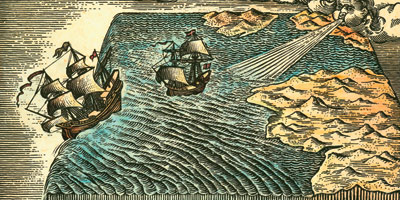
As such, I have decided to start my last blog in the celebration of Columbus Day.  A day like today on October 12th, 1492 the three ships leaded by the Italian sailor Christopher Columbus “discovered” America.  It is important to note that America was not discovered by Columbus, the Continent was already inhabited by millions of humans that had developed some of the richest and most educated civilizations on Earth.  However, the impact of his discovery amounted less than 50 years later to one of the major transfers of technology, institutions, crops, diseases and commerce than the world had ever seen.

The effects of Columbus discovery are still now evident and engineered one of the largest path-dependencies on history.  American soil (it started to be recognized as America until 15 years later) and its biological life was to transform forever.  Millions of humans were conquered and ruled by the Spanish, English, Dutch and French Crowns and millions of them died because of diseases transferred from Europe, Africa and Asia. Hundreds of different plants and animals were introduced and exported to and from the continent modifying forever the ecosystems of a large part of the planet.

Today, Columbus Day should represent for us that singular moment of globalization in which an infinite amount of transfers occurred.  These transfers reshaped the globe into a realm of interconnectedness never seen before.  Finally, in 1492 the six continents of the world were connected for the first time.  Today, we have benefited and suffered many changes that resulted from that historical moment.

It shall be the aim of this blog to study, discuss and identify those events that modified the course of history and emphasize which were those principles, decisions and achievements that enabled for more men to pursue happiness.  Lets us learn from the past!