New M.A. in History at Universidad Francisco Marroquin, Guatemala.

Envio Web Maestria Historia.jpgI am very happy to learn that Universidad Francisco Marroquín has a new MA in History (official website in Spanish).

It seems that the program will be leaded by the Sociologist Carlos Sabino and the Institute of Political Studies and International Relations – link in Spanish (from where I got my BA).  The focus of the MA is in the teaching of methodological methods to research history topics and current historiography.

Some of the courses they will offer are:

Some of its faculty are:

The MA seems to be focused on the methodological research skills in History. I am certainly not a huge fan of Methodologies in Research and would have many things to question in regard to the focus of this M.A.  Also, the Euro-centric structure of the Program is something I really do not like.

This is a great step for UFM and Guatemala.  I am certain that in the following years we’ll see a change of how the M.A. programs of Social Sciences and History will evolve from such Methodology centered and Eurocentric studies into new fields of Global History, Migration Studies, Transnational Politics, International Commerce & Globalization.

I celebrate this new M.A. program in a country that needs the knowledge of Researchers and Postgraduate students urgently.
Concorde’s last day in Global History

Video: Concorde’s last flight.

There are moments in history in which the World Order changed and historians are always trying to get them accepted and applauded by their colleagues. Those specific moments in history may be not seen immediately but until enough time has passed to understand the direct and indirect effects that shaped the course of History.

Many of these moments are the product of technological innovations that changed the way humans lived. One of them could be October 24, 2003 when three BA Concordes made the last commercial flights in history: G-BOAG flew from New York to London; G-BOAE made a return flight to Edinburgh; and G-BOAF flew around the Bay of Biscay. All three circled over London before landing within minutes of each other at Heathrow Airport.

The relevance of this event may not yet be so evident. However, we can be certain that the impact that had the catastrophe of a Concorde near Paris in July 2000 is going to determine the future of space flights. Specially after the last flight of Atlantis (the last Space Shuttle of the United States) in July 21, 2011.

The blog The Modern Historian posted a great/short overview of Concorde’s history and here is it:

During the late 1950s, aircraft manufacturers around the world started working on designs for supersonic passenger jets. The costs for such projects were so prohibitive that few of them progressed beyond the design stage. In the early 1960s, the British Aircraft Corporation, which had inherited the Type 223 supersonic transport (SST) project from the Bristol Aeroplane approached the French Sud Aviation, who were working on the Super-Caravelle SST, with an offer to co-operate on a joint project.The result of this co-operation was Concorde, which made its maiden flight in 1969. By this time, Concorde only had one compettitor, the Russian Tupolev Tu-144, but cold war tensions and the crash of a Tu-144 at the 1973 Paris Air show meant that it was Concorde that attracted orders from the major airlines. Nevertheless, the oil crisis of late 1973, environmental concerns about nervousness about sonic booms (the noise the aircraft made as it broke the sound barrier) resulted in the cancellation of all the orders except those from the national airlines of France and the United Kingdom. These orders for ten aircraft each still required substantial government subsidies to keep the project alive.In spite of these setbacks, Air Franceand British Airways (BA) started scheduled flights using Concorde in 1976. Although other airlines occasionally leased the aircraft, the high operation costs meant that supersonic travel was only feasible for the most profitible routes. Nevertheless, to continue running the services required high ticket prices, the continued government funding in the case of Air France and the sale of the British fleet of aircraft to BA at a knock-down price.All this changed following the crash of a Concorde near Paris in July 2000. The year long grounding of all the Concordes contributed to the decision taken by both airlines to withdraw the aircraft. On 27th June 2003, an Air France Concorde flew for the last time and on 24th October that same year three BA Concordes made the last commercial flights by the aircraft: G-BOAG flew from New York to London; G-BOAE made a return flight to Edinburgh; G-BOAF flew around the Bay of Biscay. All three circled over London before landing within minutes of each other at Heathrow Airport.

Reenacting The Battle of the Nations 16-19 October, 1813

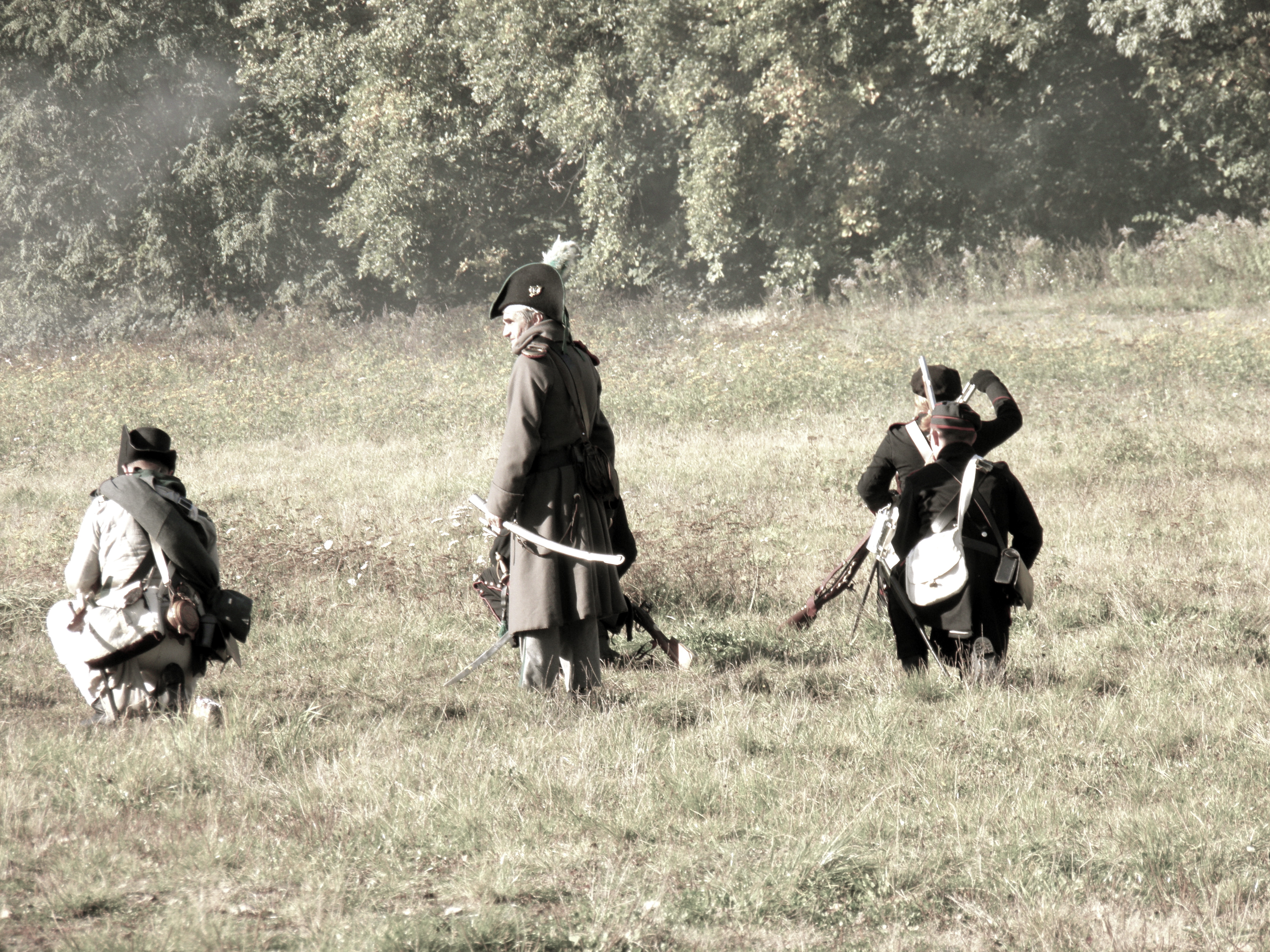
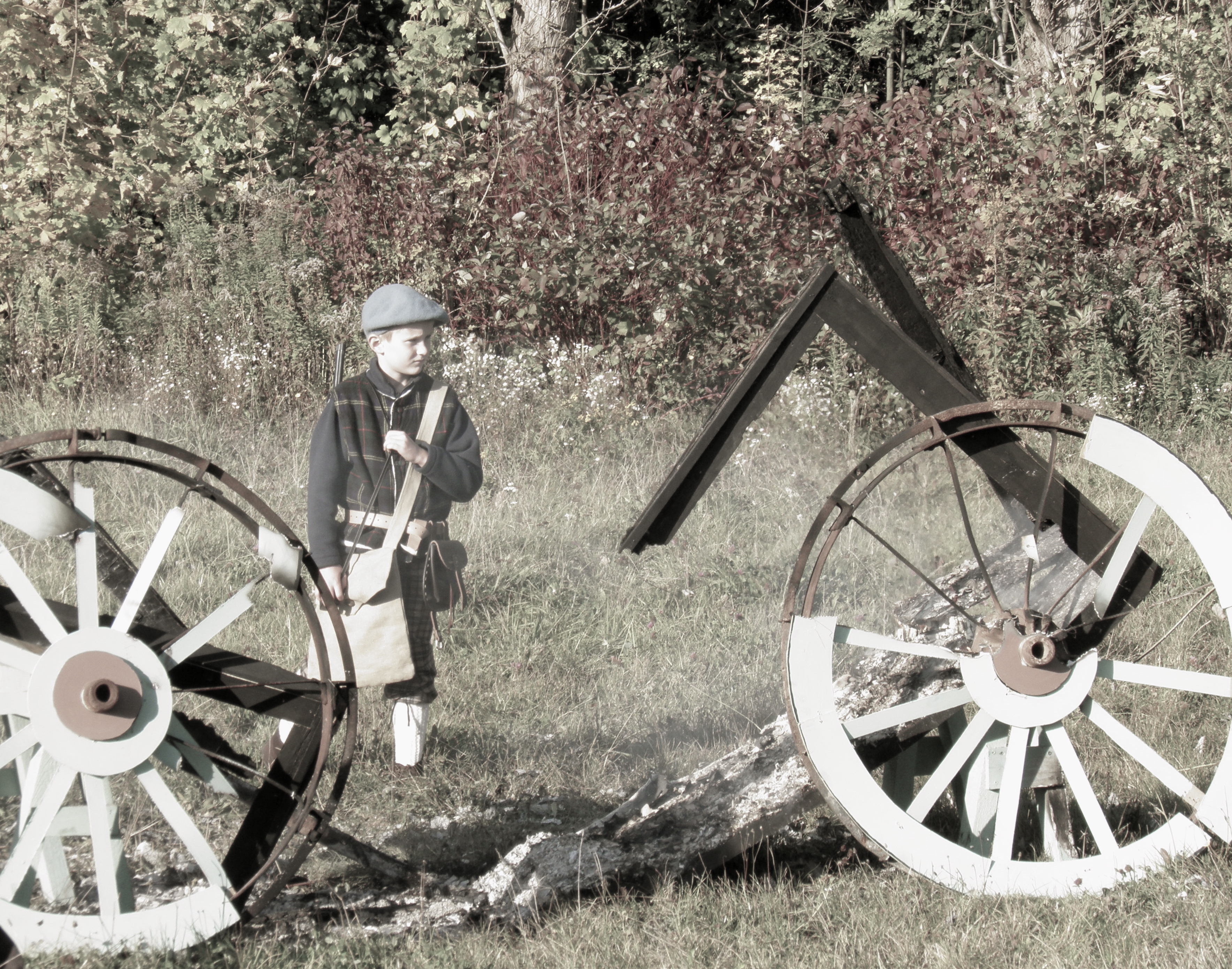
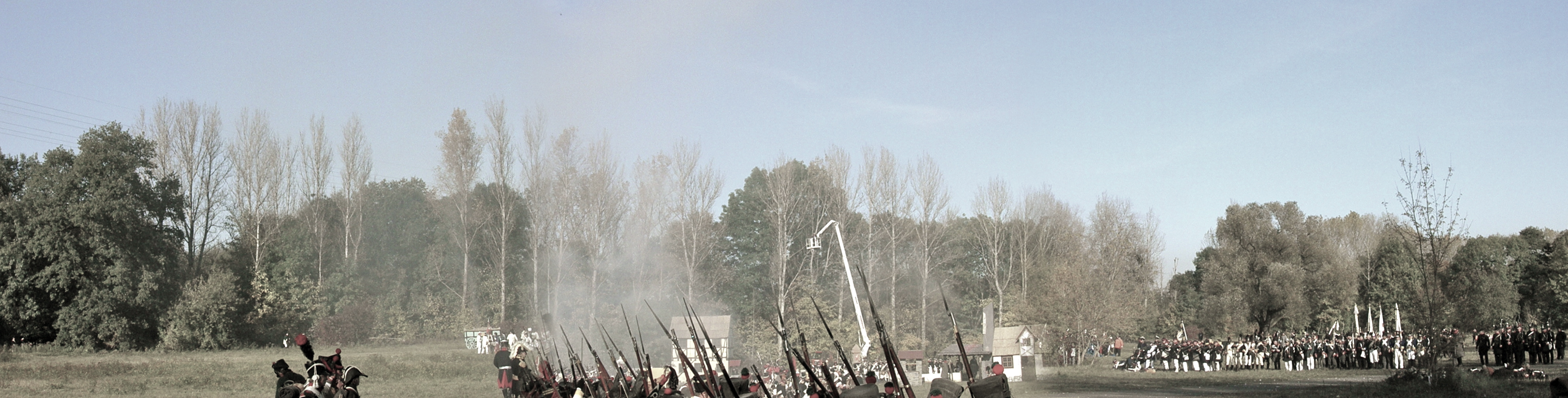
Today I had the pleasure of attending (living) the reenactment of The Battle of the Nations (also known as The Battle of Leipzig) that took place half mile south of Leipzig on 16-19 October, 1813.  The battle was fought by the coalition armies of Russia, Prussia, Austria and Sweden against the French army of Napoleon. Napoleon’s army also contained Polish and Italian troops as well as Germans from the Confederation of the Rhine. The battle involved over 600,000 soldiers, making it the largest battle in Europe prior to World War I.1

This allied victory over Napoleon at Leipzig marked the first significant cooperation among European nations against a common foe. “Napoleon limped back toward Paris. Behind him he left 60,000 dead, wounded, or captured French soldiers. The Allies had lost a similar number, but they could find replacements far more quickly and easily than Napoleon. Other countries, including the Netherlands and Bavaria–which Napoleon had added to his confederation by conquest–now abandoned him and joined the Allies. On December 21, the Allies invaded France and, following their victory at Paris on March 30, 1814, forced Napoleon into exile on Elba.”2

Indeed, it was the cooperation of all the region’s powers that Leipzig led to the fall of Paris and the abdication of Napoleon. The decisiveness of this battle had a global impact that redefined the course of history.

I invite you to see all the pictures I took of this fantastic battle:

Check dozens of more pictures in my Flickr album

1 Battle of Leipzig. Wikipedia.

2 Vía http://www.historyplace.com

Libyan Strongman Muammar Gaddafi Falls

Free Libya - Saturday Is Always A Day Of Prote...
Image by infomatique via Flickr

Dictatorship nations are outlaws. Any free nation had the right to invade Nazi Germany and, today, has the right to invade Soviet Russia, Cuba or any other slave pen. Whether a free nation chooses to do so or not is a matter of its own self-interest, not of respect for the non-existent “rights” of gang rulers. It is not a free nation’s duty to liberate other nations at the price of self-sacrifice, but a free nation has the right to do it, when and if it so chooses.

This right, however, is conditional. Just as the suppression of crimes does not give a policeman the right to engage in criminal activities, so the invasion and destruction of a dictratorship does not give the invader the right to establish another variant of a slave society in the conquered country.” Ayn RandThe Virtue of Selfishness, 104

Gaddafi came into power as an assassin and terrorist. He started out murdering, continued murdering and had been going out murdering until today.  His death is no panacea but it is surely a victory for the Libyan people and their 2011 Revolution.

Starting in February 15th, 2011 a series of peaceful protests asked for change in the country and they were met with military force by the Gaddafi regime.  Thousands were hurt and killed. Gaddafi proclaimed his despotic discourse that same night and said that the only way he was going to leave Libya was going to be in a cuffing.  Indeed, that’s how he will leave the history of the country.

The fight for Libyans has not finished; loyalists around the Algerian and Nigerian borders are still present and the opposition continues.

I celebrate the capture of this dictator and our attention needs to be focused now in the continues shipping of supplies of medicine, fuel and food were for Libya’s urban centres.  As the philosopher Ayn Rand mentioned in the quote with which I begun this post; it is necessary as well, that we keep a close attention to the outcome of this Libyan revolution in order to avoid that another variant of a slave society in the conquered country with national or international control.

Againts Greed and Crony Capitalism

Morality
Image by tdietmut via Flickr

“This economic system that they call Capitalism has no moral or ethical core to it.” Michael Moore

This time, the American Sensationalist Director Michael Moore was right. He explained in one sentence what thousands of men are right now protesting against in the streets and we support them. Why?

Capitalism is a social system that is based upon the foundations of individual freedom, respect for individual rights and property rights, and reason as man’s only mean to achieve their goals.  However, the current economic, political and economic system in which large parts of the world are now living is not really a Capitalist economy.

The correct name for this system is “crony capitalism” and its foundations are privileges, irrational greed, expropriation, and violation of human rights (individual rights and the rights to property). It is this system that we need to fight against and fight a moral revolution against to.  In the following video, you’ll hear a wonderful explanation of what that Irrational Greed is all about. The second video, is very interesting and portrays an interesting image of how TNCs (Transnational Corporations) have established Billion Worth Business all over the world without caring for what should matter most to them: Their Consumers.

I hope you enjoy them and understand that we are together in this fight,

Video: Milton Friedman On what is commonly understood as greed and on what is the result of ethical profit (via: Casey Hendrickson)

Stossel On Crony Capitalism Part 1/6