Concorde’s last day in Global History

Video: Concorde’s last flight.

There are moments in history in which the World Order changed and historians are always trying to get them accepted and applauded by their colleagues. Those specific moments in history may be not seen immediately but until enough time has passed to understand the direct and indirect effects that shaped the course of History.

Many of these moments are the product of technological innovations that changed the way humans lived. One of them could be October 24, 2003 when three BA Concordes made the last commercial flights in history: G-BOAG flew from New York to London; G-BOAE made a return flight to Edinburgh; and G-BOAF flew around the Bay of Biscay. All three circled over London before landing within minutes of each other at Heathrow Airport.

The relevance of this event may not yet be so evident. However, we can be certain that the impact that had the catastrophe of a Concorde near Paris in July 2000 is going to determine the future of space flights. Specially after the last flight of Atlantis (the last Space Shuttle of the United States) in July 21, 2011.

The blog The Modern Historian posted a great/short overview of Concorde’s history and here is it:

During the late 1950s, aircraft manufacturers around the world started working on designs for supersonic passenger jets. The costs for such projects were so prohibitive that few of them progressed beyond the design stage. In the early 1960s, the British Aircraft Corporation, which had inherited the Type 223 supersonic transport (SST) project from the Bristol Aeroplane approached the French Sud Aviation, who were working on the Super-Caravelle SST, with an offer to co-operate on a joint project.The result of this co-operation was Concorde, which made its maiden flight in 1969. By this time, Concorde only had one compettitor, the Russian Tupolev Tu-144, but cold war tensions and the crash of a Tu-144 at the 1973 Paris Air show meant that it was Concorde that attracted orders from the major airlines. Nevertheless, the oil crisis of late 1973, environmental concerns about nervousness about sonic booms (the noise the aircraft made as it broke the sound barrier) resulted in the cancellation of all the orders except those from the national airlines of France and the United Kingdom. These orders for ten aircraft each still required substantial government subsidies to keep the project alive.In spite of these setbacks, Air Franceand British Airways (BA) started scheduled flights using Concorde in 1976. Although other airlines occasionally leased the aircraft, the high operation costs meant that supersonic travel was only feasible for the most profitible routes. Nevertheless, to continue running the services required high ticket prices, the continued government funding in the case of Air France and the sale of the British fleet of aircraft to BA at a knock-down price.All this changed following the crash of a Concorde near Paris in July 2000. The year long grounding of all the Concordes contributed to the decision taken by both airlines to withdraw the aircraft. On 27th June 2003, an Air France Concorde flew for the last time and on 24th October that same year three BA Concordes made the last commercial flights by the aircraft: G-BOAG flew from New York to London; G-BOAE made a return flight to Edinburgh; G-BOAF flew around the Bay of Biscay. All three circled over London before landing within minutes of each other at Heathrow Airport.

Paper on “Craftying analytical tools to study institutional change”

Today I did a presentation on the methodological plan for a study in the Internationalization of Leipzig’s Gallery of Contemporary Art.  I received very important critics that helped me correct the way of my research.  The critics were directed at focusing on the institutional evolution of the Gallery’s agenda (to understand what was behind of the internationalization process we had identified in our preliminary research). Indeed, crafting a study is not an easy thing and today I read that UDADISI had re-posted a great article on something related to the issue I’ll be dealing with in the next couple weeks.  So it was worth republishing. 😉 Here’s the article by Ostrom and Basurto,
These are some ideas on the evolution of institutions from the [very interesting!] paper:
What are rules:

[S]hared understandings by actors about enforced prescriptions concerning what actions (or outcomes) are required, prohibited, or permitted.

[Rules] are linguistic statements containing prescriptions similar to norms, but rules carry an additional, assigned sanction if forbidden actions are taken and observed by a monitor (Commons, 1924).

What are norms:

Norms are prescriptions about actions or outcomes that are not focused primarily on short-term material payoffs to self. A participant who holds a truth- telling norm gains an internal reward (that can be modeled as an additional value added to their utility function) for telling the truth even when material payoffs would be greater when telling a lie (Crawford and Ostrom, 2005).

Some lessons from institutional analysis:

Some of the lessons coming out of our institutional analyses in Nepal and elsewhere show that resource users who have relative autonomy to design their own rules for governing and managing common-pool resources frequently achieve better economic (as well as more equitable) outcomes than when experts do this for them.

How do rules originate on farmer irrigation systems

Farmers in old and established systems tell researchers that they do not know much about the origin of the rules they use. In Bali, for example, rules are encoded in a sacred religious system and are monitored and enforced by priests (Lansing, 1991, 2006).

What are some of the processes of rule change?

[T]he evolution of a rule system is not synonymous with progress. Certainly, evolutionary processes do not entail a priori judgments on the outcome. Evolutionary processes do involve, however, the generation of new alternatives, selection among new and old combinations of structural attributes, and retention of those combinations of attributes that are successful in a particular environment. In evolving biological systems, genotypic structures are changed through blind variation or directed variation (such as in the case of the domestication of many species of plants and animals). In evolving human-based rule systems, rule configurations within an action situation can change as a result of many self-conscious or unconscious mechanisms, including trial-and-error efforts, especially in collective-action processes. In some instances, the capacity of the biophysical resource system to buffer abuse from trial-and- error of different rule systems seems to play a necessary but not sufficient role in the emergence of successful self-governed rule systems (Basurto, 2008; Basurto and Coleman, 2010). Mechanisms for change in rule configurations can be roughly divided into relatively self-conscious and unconscious processes of change. Among examples of self-conscious processes that are frequently mentioned in the literature are those driven by imitation (Richerson and Boyd, 2005). Imitation of rules used by others can lead to rule evolution over time, especially if the farmers from multiple irrigation systems in a region regularly interact in a local market or other regular meeting place.

Imitation of entire rule systems that are thought of as ‘successful’ can also take place at the constitutional-choice level, such as the case of the adoption of the US National Parks’ law system by the Costa Rican nascent national park system. Other self- conscious processes of change in rule systems include some cases of external development interventions, such as when external aid support is conditioned to changes in local institutions based on foreign views of fairness, productivity, democracy, or development itself.

Competitive processes can also lead some users to self-consciously favor some institutional arrangements over others. Similarly, conflict over the interpretation of rules is also a process that frequently leads to self-conscious change.

Most self-conscious processes of change are based on the ability of humans to learn (Henry, 2009), such as when members of a rural fishing community organize to modify rules to control levels of exploitation based on past experiences (Basurto, 2005).

Unconscious processes of change include forgetting, like when there is a very large number of rules and no one ‘remembers’ them all without extensive research, or when laws are never practiced. The same phenomena are observed when certain taboos disappear through language loss, cognitive dissonance, technological change, or non-enforcement. These mechanisms can slowly erode rule systems, which then wither away and eventually can be replaced by new practices and norms of behavior (Kofinas, 2005).

Our dependence on language to communicate and the inherent ambiguity of language can lead to a number of unconscious processes of rule change as well. Rules are composed of mere words and, as Vincent Ostrom (1997) has frequently pointed out, words are not always understood by everyone with the same meaning (see also 2008a, 2008b). A guard may not understand the rules the same way as users. A guard, for example, may interpret rules that place heavy costs on the guard in contrast to those rules that involve low costs. Babbling equilibrium problems are widespread, even among scholars studying rules and norms systems! And, it is a key problem for the social sciences (E. Ostrom, 2005: 179).

Dopfer et al. (2004) view an economic system as a population of rules, a structure of rules, and a process of rules, where the micro domain refers to the individual carriers of rules and the systems they organize, the macro consists of the population structure of systems of meso, which is where processes of rule change take place.

It is worth restating that it would be naıve to assume that any evolutionary process always leads to better outcomes. In biological systems, competition among populations of diverse species led to the weeding out of many individuals over time who were outcompeted for mates and food in a given environment.

At the Monument to the Battle of the Nations

Location Leipzig, Saxony, Germany. Designer Bruno Schmitz Material Granite-faced concrete. Length 80 metres (260 ft) Width 70 metres (230 ft) Height 91 metres (299 ft). Beginning date 1898-10-18. Opening date 1913-10-18. Dedicated to Battle of Leipzig. Coordinates 51°18′44″N 12°24′47″E

The Battle of the Nations was fought during 16-19 October, 1813  and the commemoration of such an important battle in Leipzig kept me busy during this weekend.  Yesterday, the Reenactment of the Battle was fantastic and today I went to the GIGANTIC monument that celebrates the victory of the allied nations against Napoleon.

What is the importance of this building?

  • Architecturally; the structure is amazing.  It is 91 meters tall and its base is 124 metres (407 ft) large and 124 metres (407 ft) wide.
  • Aesthetically; the sculptures of the four legendary historic qualities ascribed to the German people: bravery, faith, sacrifice and fertility are simply exquisite if understood in the context in which they were made.1 It was bravery for defending what is yours; faith (courage) to fight against the vicissitudes; sacrifice (fighting until the last moment in order to protect Life); and fertility (to overcome the mass murder caused by this war). IThe statues of the monument were sculpted by Christian Behrens and his apprentice Franz Metzner with a fantastic technique.
  • Historically; it commemorates the establishment of a German community that united different nations into a common goal.1

For further images; I invite you to check this Flickr album with the snapshots I took.

1Koshar, Rudy. (2000) From monuments to traces: artifacts of German memory, 1870-1990. University of California Press. p.44

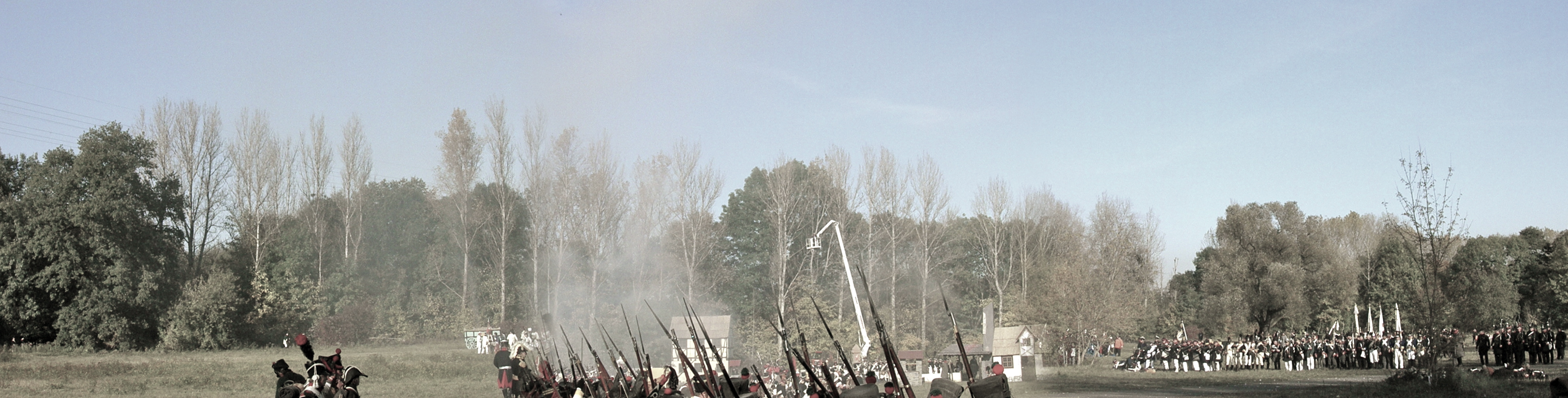
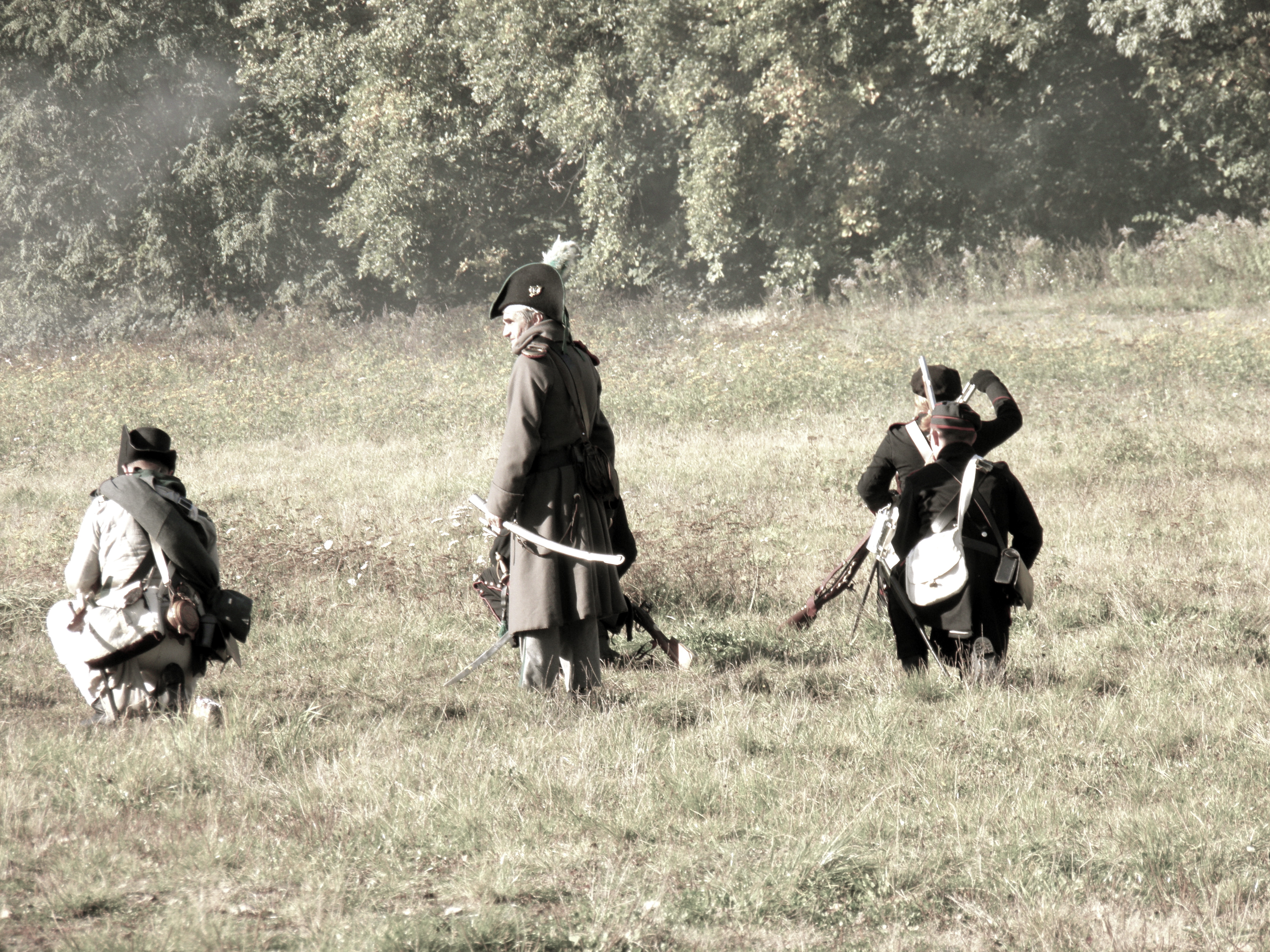
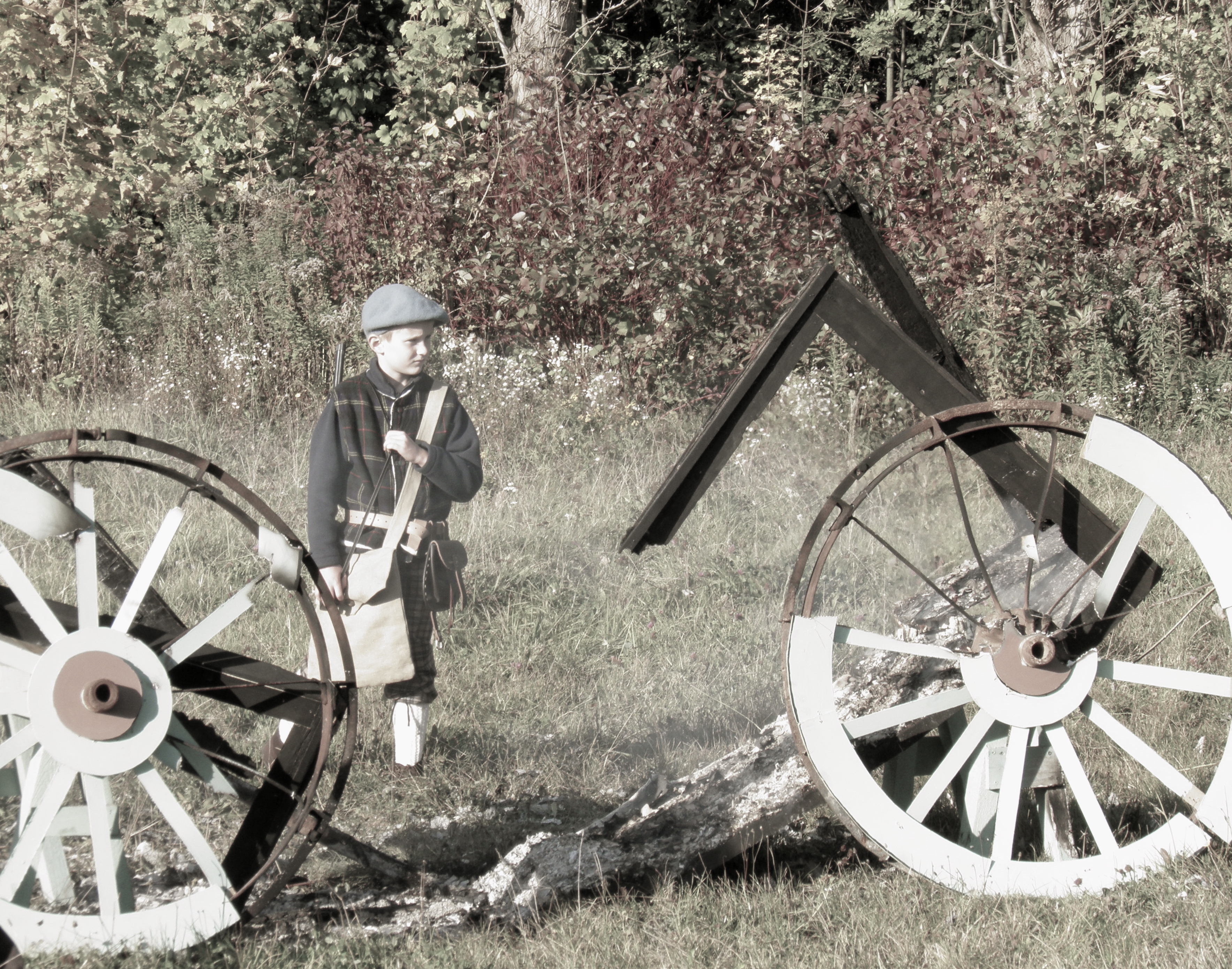
Reenacting The Battle of the Nations 16-19 October, 1813

Today I had the pleasure of attending (living) the reenactment of The Battle of the Nations (also known as The Battle of Leipzig) that took place half mile south of Leipzig on 16-19 October, 1813.  The battle was fought by the coalition armies of Russia, Prussia, Austria and Sweden against the French army of Napoleon. Napoleon’s army also contained Polish and Italian troops as well as Germans from the Confederation of the Rhine. The battle involved over 600,000 soldiers, making it the largest battle in Europe prior to World War I.1

This allied victory over Napoleon at Leipzig marked the first significant cooperation among European nations against a common foe. “Napoleon limped back toward Paris. Behind him he left 60,000 dead, wounded, or captured French soldiers. The Allies had lost a similar number, but they could find replacements far more quickly and easily than Napoleon. Other countries, including the Netherlands and Bavaria–which Napoleon had added to his confederation by conquest–now abandoned him and joined the Allies. On December 21, the Allies invaded France and, following their victory at Paris on March 30, 1814, forced Napoleon into exile on Elba.”2

Indeed, it was the cooperation of all the region’s powers that Leipzig led to the fall of Paris and the abdication of Napoleon. The decisiveness of this battle had a global impact that redefined the course of history.

I invite you to see all the pictures I took of this fantastic battle:

Check dozens of more pictures in my Flickr album

1 Battle of Leipzig. Wikipedia.

2 Vía http://www.historyplace.com

Friday Book Recommendation

Economic Depressions: Their Cause and Cure
Need a short monograph on Austrian business cycle theory? This is the one to get.Murray Rothbard was the master of reducing complicated theories to their very essence while retaining theoretical rigor, and this essay is a case in point. It was written in 1969 and published in the form of a tiny book that achieved a huge circulation. It has not been in print since that time, but it is now back in this new release.