The group “The 99 percenters” (also known as the 99%) assembled in Wall Street to protest against the corporations of the United States that have benefited from the privileges granted from government through lobbying. They say to be tired of the social and economic inequality in their country. Somehow, they consider Corporations to be the one’s to blame for this inequalities.
Now, lets hold on for a second and consider what are they protesting against and who’s to blame. Then, lets try to explain what and whom should be really blamed before continuing this protests.
What they say to be protesting against:
- Social Inequality
- Economic Inequality
- Lobbying
- Corporate greet
What are the really protesting against:
- Social inequality: Is in fact the cultural and educational differences of those who know more than others.
- Economic inequality: Is the result of those men who earn a salary that is higher than others; or of those who own a business and make more earnings than others.
- Lobbying: Is the act of influencing decisions made by officials in the government in favor of some industries, unions, or groups of society.
- Corporate greed: Is not to be confused with the profit that an entrepreneur earns in his ventures. Greed should better be understood as the result of living and satisfying one’s wants wants by seizing and consuming the products of the labor of others. Corporations that profit with the privileges granted by government are the only ones to be attacked and denounced; not those entrepreneurs who took risks and invest their savings.
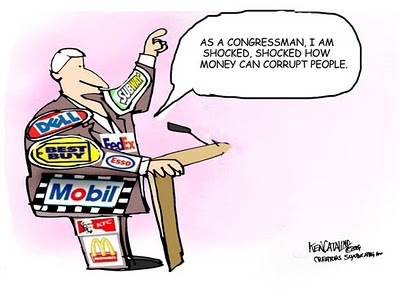
These “99 percenters” are confused. They think that Corporations are to be blamed for the economic and financial crisis that started in 2008 in the U.S. However, it is their government and their bureaucrats that through Congress ad the FED enabled for the crisis to happen. This protests should have been taking place in front of the White House and the Senate instead of Wall Street. (Check this video of some of the protests in Wall Street agains the FED)
It is not all the rich and wealthy who benefit from government privileges. The ones who did are to be blamed. But more so, the one’s to be blamed and taken to justice are the the government officials who created the legislation that ensures that corruption and impunity continue without being punished.
 As Fréderic Bastiat, the journalist and philosopher from the 19th. Century, once said:
The law has placed the collective force at the disposal of the unscrupulous who wish, without risk, to exploit the person, liberty, and property of others. It has converted plunder into a right, in order to protect plunder. And it has converted lawful defense into a crime, in order to punish lawful defense.
How has this perversion of the law been accomplished? And what have been the results?
The law has been perverted by the influence of two entirely different causes: stupid greed and false philanthropy. (…)
But, generally, the law is made by one man or one class of men. And since law cannot operate without the sanction and support of a dominating force, this force must be entrusted to those who make the laws.
This fact, combined with the fatal tendency that exists in the heart of man to satisfy his wants with the least possible effort, explains the almost universal perversion of the law. Thus it is easy to understand how law, instead of checking injustice, becomes the invincible weapon of injustice. It is easy to understand why the law is used by the legislator to destroy in varying degrees among the rest of the people, their personal independence by slavery, their liberty by oppression, and their property by plunder. This is done for the benefit of the person who makes the law, and in proportion to the power that he holds.
I invite you to continue reading Bastiat’s wonderful book “The Law” online. I am myself, have read it for dozens of times and consider it one of the most enlightening works ever written. Spanish versión: La ley por Frédéric Bastiat [PDF¨]

 Last night I attended a lecture titled “