Finally, we are 7 Billion

Video: 7 Billion,National Geographic Magazine

The human population on planet Earth has reached for the first time in history 7 billion  as reported by the United Nations[1]. As of today, October 28, 2011 at  16:44 (GMT+1) it was estimated to be 6.92 billion by the United States Census Bureau[2] and you can check their World Population Clock.  and 7 billion by .  But also, we can also acknowledge that this is also the first time in human history in which most humans have access to medical services, potable water, electricity.

As Susa Lewis from Nova acknowledges, “For most of human existence our ancestors led precarious lives as scavengers, hunters, and gatherers, and there were fewer than 10 million human beings on Earth at any one time. Today, many cities have more than 10 million inhabitants each, and populations continue to skyrocket.”

Largest Urban Agglomerations, 1975, 2000, 2025

Source: United Nations, World Urbanization Prospects: The 2007 Revision.

Also, the UN World Urbanizaiton Prospects reviewed that “Through most of history, the human population has lived a rural lifestyle, dependent on agriculture and hunting for survival. In 1800, only 3 percent of the world’s population lived in urban areas. By 1900, almost 14 percent were urbanites, although only 12 cities had 1 million or more inhabitants. In 1950, 30 percent of the world’s population resided in urban centers. In 2008, for the first time, the world’s population was evenly split between urban and rural areas. There were more than 400 cities over 1 million and 19 over 10 million. More developed nations were about 74 percent urban, while 44 percent of residents of less developed countries lived in urban areas.”

World Population Cartogram

Nova has the following interactive map in which you can trace the dramatic growth of human populations over recent centuries, and see where on Earth as many as three billion more people may live by 2050.

Launch Interactive – Printable Map Version

New challenges for humans will continue appearing with so many of us living here.  However, it is not the number what really matters but how we are all going to live here.  Currently, Thomas Malthus famous argument from 1798 in which he said “that population growth was a critical problem, reasoning that because human population grows exponentially while our food supplies grow linearly, that our growth would lead to massive problems” has already been proven wrong.

But what has still not being solved is the current philosophical crisis in which we live.  For a great part of human history, the world has been ruled by a collectivist philosophy of life that in the words of Ayn Rand “promoted the subjugation of the individual to a group (kings, oligarchs, nobility, religions, patrimonialists, corporations, parties, communities)—whether to a race, class or state does not matter. Collectivism holds that man must be chained to collective action and collective thought for the sake of what is called “the common good.” The previous sentences are very important and cannot be passed without understanding its historical results.  You can further explore them in the work of Leonard Peikoff titled “The Ominous Parallels“.

For more information regarding human population check the following links:

The Great Narrative and the School of Salamanca

The Great Narrative in regard to 16th Century Spain is focused on the expansion of Spanish Mercantilism in America and in how the Ottomans were defeated at the naval Battle of Lepanto bringing their dominance of the Mediterranean to a close.

Sadly (to a great extent), this Euro-centric perspective started to change and more emphasis was given to the production of knowledge in the Peninsula via the appropriation of the culture and scientific knowledge brought to Europe by the al-Andalus Muslims. The Great Narrative and its “Western exceptionalism” discourse won the battle again and it focused on how “Europe” or the “West” acquired this knowledge and created a “Renaissance of Knowledge” while forgetting the source of it.

This Western Renaissance is today widely know and studied as the School of Salamanca.  A School that Western historians like to remember as the product in 100% of Catholic Religion, Spanish rationalist theological work, Western humanism and by the Protestant Reformation that was consolidated in Salamanca with the writings of the Scholastics Francisco de Vitoria, Domingo de Soto, Martín de Azpilcueta (or Azpilicueta), Tomás de Mercado, and Francisco Suárez.

The “non-western” roots of this Renaissance in the Spanish Peninsula are still not well discussed nor researched.  There’s still the need for further study the inherited knowledge from the al-Andalus Muslims (who were later known as Mudéjars) and to establish a direct link of many of the roots of “Europe’s Renaissance” in places as far as the Tigris and Eufrates.

Today, my book recommendation will be a great work that exemplifies how this Great Narrative idealized the School of Salamanca as the product of 100% “Western values”.  It is worth reading and studying carefully in order to not commit the same mistakes.

School of SalamancaThe School of Salamanca

Marjorie Grice-Hutchinson’s remarkable classic, The School of Salamanca, posed an extraordinary challenge when it first appeared in 1952. The book is not only a pioneering presentation of this lost school of monetary theory—fantastic thinkers of Old Spain that were more advanced than the English classicals centuries later–it is also beautifully written.

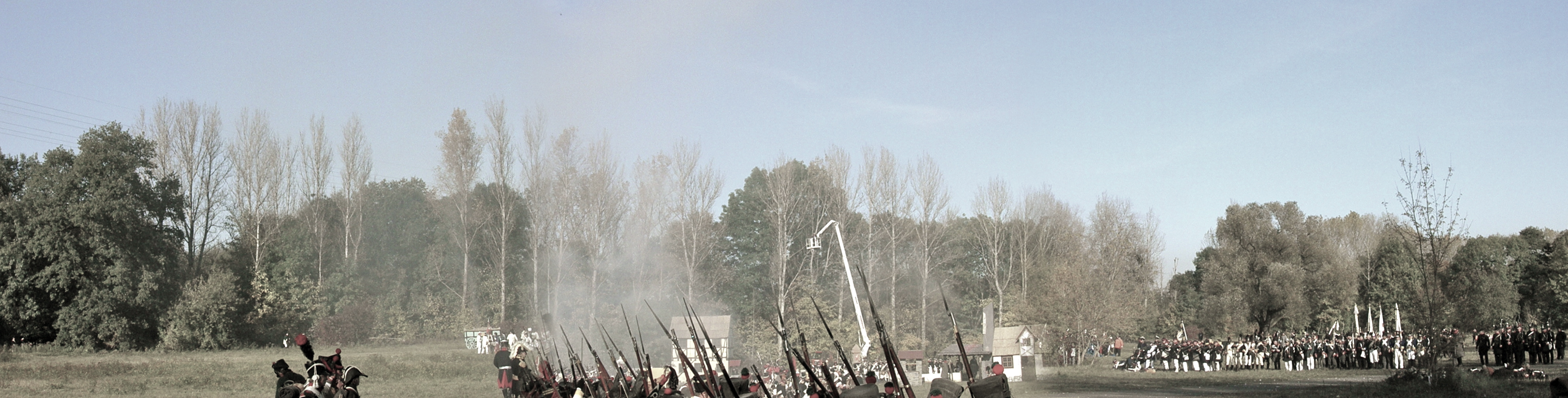
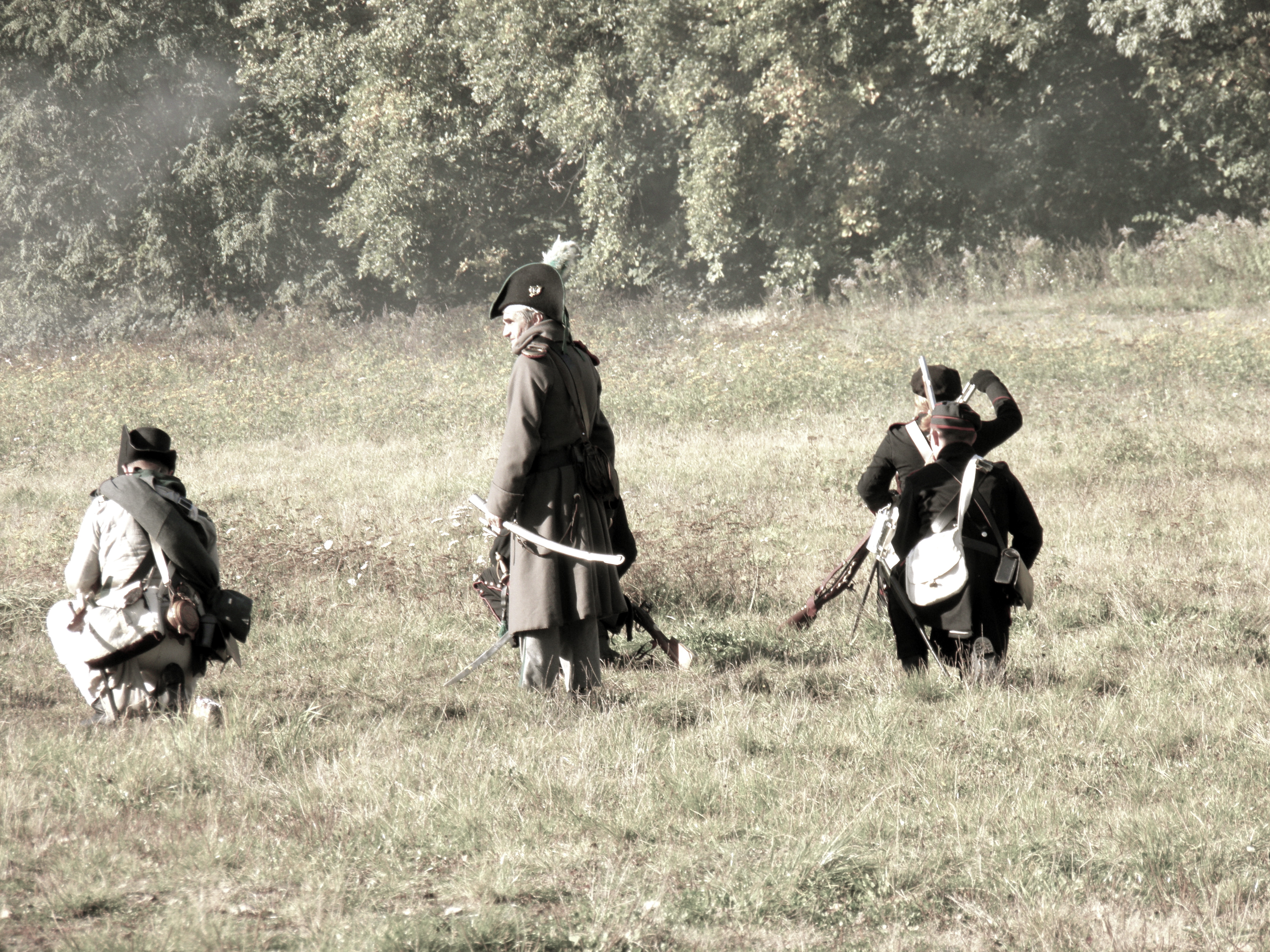
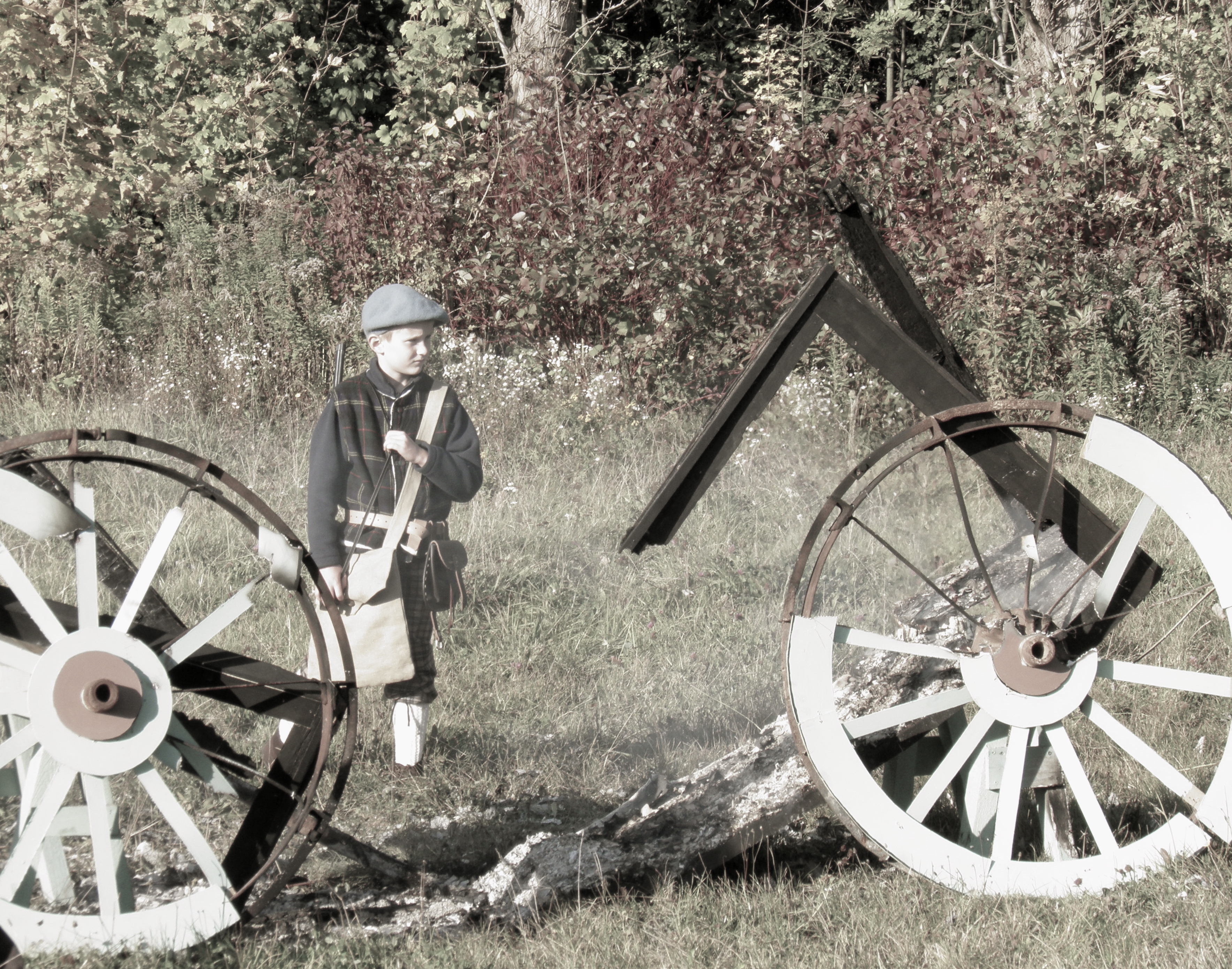
Reenacting The Battle of the Nations 16-19 October, 1813

Today I had the pleasure of attending (living) the reenactment of The Battle of the Nations (also known as The Battle of Leipzig) that took place half mile south of Leipzig on 16-19 October, 1813.  The battle was fought by the coalition armies of Russia, Prussia, Austria and Sweden against the French army of Napoleon. Napoleon’s army also contained Polish and Italian troops as well as Germans from the Confederation of the Rhine. The battle involved over 600,000 soldiers, making it the largest battle in Europe prior to World War I.1

This allied victory over Napoleon at Leipzig marked the first significant cooperation among European nations against a common foe. “Napoleon limped back toward Paris. Behind him he left 60,000 dead, wounded, or captured French soldiers. The Allies had lost a similar number, but they could find replacements far more quickly and easily than Napoleon. Other countries, including the Netherlands and Bavaria–which Napoleon had added to his confederation by conquest–now abandoned him and joined the Allies. On December 21, the Allies invaded France and, following their victory at Paris on March 30, 1814, forced Napoleon into exile on Elba.”2

Indeed, it was the cooperation of all the region’s powers that Leipzig led to the fall of Paris and the abdication of Napoleon. The decisiveness of this battle had a global impact that redefined the course of history.

I invite you to see all the pictures I took of this fantastic battle:

Check dozens of more pictures in my Flickr album

1 Battle of Leipzig. Wikipedia.

2 Vía http://www.historyplace.com

Friday Book Review: “1493” by Charles C. Mann

Reviewed by Marek Kohn, Financial Times

“In hindsight, 1492 might have been a good point at which to reset the calendar. Traditionally, the year in which Columbus discovered America is seen as the moment Europe began to shape a New World. Today it looks more like the start of a process that has stitched the drifting continents back together: 1492 was the Year Zero of globalisation, and 1493 was Year One.”

Read More: “1493” – book review at FT.com

Columbus Day

“Columbus was searching for hardware — precious metals, silk, and spices — the sources of wealth in his day. I was searching for software, brainpower, complex algorithms, knowledge workers, call centers, transmission protocols, breakthroughs in optical engineering — the sources of wealth in our day.”
–Thomas Friedman,
The World Is Flat

Choosing the right topic to start a blog is difficult. As a previous owner and contributor of blogs (Homo Homini Lupus RIP, Libro Libertate and Capitalismo) I’ve found that my interests were always linked to one idea: Wealth.  Indeed, Wealth has played a role in every single decision I’ve made. From choosing which book to read, starting a business or planning for my career development I’ve always been interested in a difficult topic: Wealth creation.

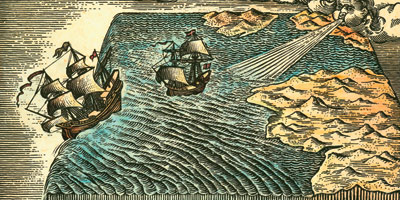
As such, I have decided to start my last blog in the celebration of Columbus Day.  A day like today on October 12th, 1492 the three ships leaded by the Italian sailor Christopher Columbus “discovered” America.  It is important to note that America was not discovered by Columbus, the Continent was already inhabited by millions of humans that had developed some of the richest and most educated civilizations on Earth.  However, the impact of his discovery amounted less than 50 years later to one of the major transfers of technology, institutions, crops, diseases and commerce than the world had ever seen.

The effects of Columbus discovery are still now evident and engineered one of the largest path-dependencies on history.  American soil (it started to be recognized as America until 15 years later) and its biological life was to transform forever.  Millions of humans were conquered and ruled by the Spanish, English, Dutch and French Crowns and millions of them died because of diseases transferred from Europe, Africa and Asia. Hundreds of different plants and animals were introduced and exported to and from the continent modifying forever the ecosystems of a large part of the planet.

Today, Columbus Day should represent for us that singular moment of globalization in which an infinite amount of transfers occurred.  These transfers reshaped the globe into a realm of interconnectedness never seen before.  Finally, in 1492 the six continents of the world were connected for the first time.  Today, we have benefited and suffered many changes that resulted from that historical moment.

It shall be the aim of this blog to study, discuss and identify those events that modified the course of history and emphasize which were those principles, decisions and achievements that enabled for more men to pursue happiness.  Lets us learn from the past!