We are constantly bombarded with media reports on globalization in terms of its increasing process and potential effects on our lives. What is meant by this concept and why should we be concerned with its impact? The developing countries of sub-Saharan Africa, Latin America and Asia should be interested in it because of the opportunities and threats offered by globalization (also known as globalisation).
The mother of this globalization is Science and the activator is her daughter Technology (both affectionately called science and technology). The most visible manifestations of “globalization” are in the economic and communications spheres. And one of the fathers of Science is our friend Copernicus.
In two sentences his contribution to Science and Globalization is:
Copernicus broke open the medieval idea of an enclosed, Earth-centered universe.
He set the stage for all of modern astronomy.
And why does this matter?
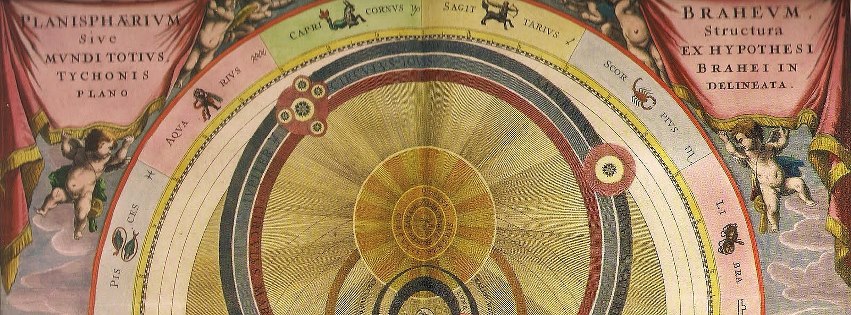
He lived at a time when people believed Earth lay enclosed within crystal spheres at the center of the universe. Can you picture the leap of imagination required for him to conceive of a sun-centered universe? The publication of Copernicus’ book – De revolutionibus orbium coelestium (On the Revolutions of the Celestial Spheres) – just before his death in 1543, set the stage for all of modern astronomy. Today, people speak of his work as the Copernican Revolution.
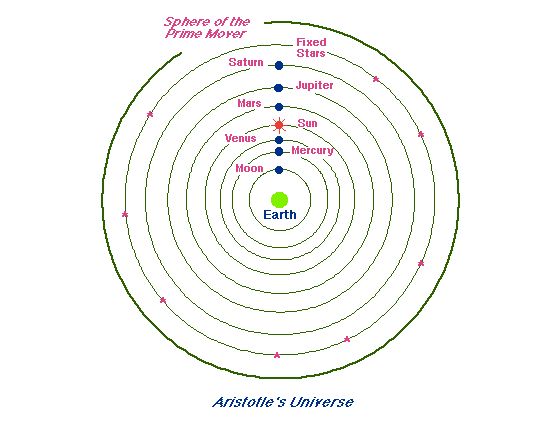
Post-data: Copernicus wasn’t the first to conceive of a sun-centered universe. Early Greek philosophers also spoke of it. It was the Greek philosopher Aristotle, however, who proposed that the heavens were literally composed of 55 concentric, crystalline spheres to which the celestial objects were attached. In Aristole’s model, Earth lay at the center of these spheres. Thus Earth lay – fixed and enclosed – until Copernicus published his version of a heliocentric universe.
Political Cartoon of Napoleon I and Talleyrand Napoleon I, originally Napolean Bonaparte, was the emperor of France. He seized power in 1799 in a coup d’etat, crowned himself emperor in 1804, and attempted to conquer Europe. He abdicated in 1815 after several military defeats.
Je connais quelqu’un qui a plus d’esprit que Napoléon, que Voltaire, que tous les ministres présents et futurs: c’est l’opinion.
I know where there is more wisdom than is found in Napoleon, Voltaire, or all the ministers present and to come — in public opinion.
Charles Maurice de Talleyrandwas born a day like today on February 13, 1754. He is one of the smartest and more prolific politicians and diplomats of modern times (and one of my favourites). Born and well educated in the arts, letters and ideas into an aristocratic family in Paris he quickly became a wise men by a young age. He worked, survived and taught successfully for and against the regimes of Louis XVI, participated actively through the French Revolution and then under Napoleon I, Louis XVIII, Charles X, and Louis-Philippe.
The Dutch historian, Pieter Geyl, said once that, “in the purely political arena” the only figure to have held on to his rank in history during the Napoleonic era, apart from Napoleon himself of course, was Charles-Maurice de Talleyrand-Périgord and he intended to include a chapter on the prince in his famous work Napoleon For and Against (Harmondsworth, 1949).(1)
Talleyrand was, without a doubt, one of the most remarkable figures in the history of the late eighteenth and early nineteenth century, and certainly one of the most controversial. He was one of a rare breed capable of occupying a wide range of positions in politics and society, both in his public and private life. To a certain extent, he was representative of his era, whether taking on the mantel of the Ancien Régime, as an aristocrat working for the Revolution, or as lord of the Château de Valençay during the Restoration. However, it is the most important of these roles, Minister of Foreign Affairs during the Directoire, the Consulate, the Empire and the Restoration, for which he is of course remembered.
To learn more about his life, works and ideas I invite you to read the following biography (one of my favourite books too) which I am sure you will all enjoy: Talleyrand by Duff Cooper
Tattoo inspired from Darwin’s notebook around July 1837 that showed his first sketch of an evolutionary tree.
Today people around the world celebrates the 204 Anniversary of Charles Darwin birth. To me this day is special and I celebrate the life and work of this great man by sharing with you the WHY he is history’s most important thinker.
Throughout his life, Darwin’s work resulted in the most enormous benefits that scientific knowledge, acquired through human curiosity and ingenuity, ever contributed to the advancement of humanity. Darwin gave us the research and opened the doors for human inquiry by founding the unifying theory of Biology: Evolution. He was the first to present convincing evidence of it and its major driving force – natural selection.
The general idea of evolution preceded Darwin, and he shied away from making the explicit and incendiary claim that even humans were evolved from other creatures. But his explanation of natural selection as a mechanism that made evolution plausibly able to explain the origin of species without reference to a creator up-ended the contemporary orthodoxy. It set a new course that no subsequent scientific work could ignore. And according to the eminent late evolutionary biologistErnst Mayr, “Eliminating God from science made room for strictly scientific explanations of all natural phenomena; it gave rise to positivism; it produced a powerful intellectual and spiritual revolution, the effects of which have lasted to this day.”
Eugene Byrne and Simon Gurr wanted to celebrate Darwin’s lifelong spirit of curiosity and bring the message to kids with their new graphic novel.
After only seven years as Head of the Catholic Church, the resignation of Pope Benedict XVI is an astonishing news. This may be a message on how Globalization affects such global organization. The election of Pope Benedict XVI followed all the rules of the Church but did not listen to the “new” rules imposed by globalization: which include good advertisement, global awareness, and above all intercultural appealing to standards of ‘universal friendliness and empathy’, among others. I wrote an article titled “Parishes Fail to Market Catholicism to Hispanics (pdf available here)” (National Catholic Reporter, Vol. 43, No. 12 2007) discussing how the Catholic Church has failed to Market Catholicism among Hispanics.
Benedict XVI was elected on 19 April 2005 in a papal conclave, celebrated his Papal InaugurationMass on 24 April 2005, and took possession of his cathedral, the Archbasilica of St. John Lateran, on 7 May 2005. Today, February 11, 2013, Benedict announced that he would resign the papacy, effective February 28, due to age and ill health.
His health may be have been an issue. However, it seems to me that the real problem started when the Papal conclave of 2005 elected him above the other contestants for the Pope position without taking notice of all the changes that institution has gone through centuries.
Currently, Catholics are 17.77% of the total population in Africa, 63.10% in the Americas, 3.05% in Asia, 39.97% in Europe, 26.21% in Oceania and 17.09% of the world population. (Further information: Catholicism by country)
Distribution of Catholics by World Region, 2004, 2025, and 2050 Note: Percentages may not add to 100% due to rounding. Source: Author’s calculations based on data from PRB’s World Population Data Sheet 2004 and accessed at http://www.catholic-hierarchy.org.
Globalization is slowly forcing them to adapt to this new demographics and the election of a Latin American (a Mediterranean look would suffice) or African Pope could bring some new Fresh air to this archaic institution. The Latin America region already represents 42 percent of the world’s 1.2 billion-strong Catholic population, the largest single block in the Church, compared to 25 percent in its European heartland.
In 2005 among the “popeable” (one who might become pope) where also the cardinals Carlo Maria Martini, who died last year and obtained 40 votes in the first ballot versus the popular Italian cardinal Camillo Ruini who also was a contestant for the position in that initial ballot. Cardinal Ruini has been very active in the mass media and was one of the cardinals who most often appeared on Italian television, newspapers and magazines. I would suppose that his election as a new Pope in the Conclave of cardinals that will choose the next pope in mid-March is very high. Camilo Ruini is very popular among the “Reformer” side of the Catholic Church as the news inform (he is also more photogenic and could appeal to the Hispanic followers easily).
Lets see what happens in March, 2013 with the new Papal Conclave. Meanwhile, I share with you a documentary on the new face of this Eurocentric organization that is finally (slowly) changing its own look!
The geographical hotspots of the world are all related to economic trade and global exchange of political interests. Places such as the Panama and Suez Canals have always been in the Western media. However, from an economic and strategic perspective, the Strait of Malacca is one of the most important shipping lanes in the world in the 21st Century. The history of this Strait’s geopolitical relevance goes as back as 400 years of history.
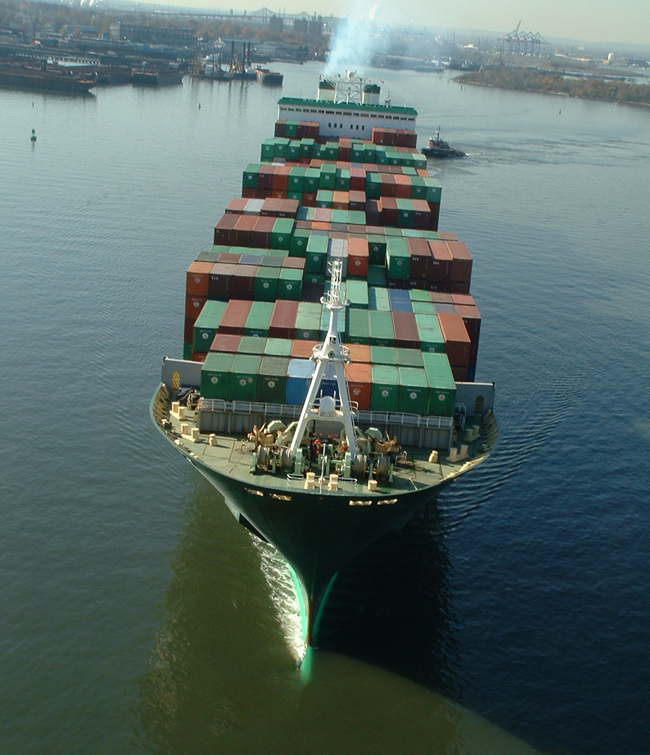
For centuries the strait has been the main shipping channel between the Indian Ocean and the Pacific Ocean. It has been controlled by the major regional powers and also by the mayor global power during different historical periods. In 2011 hundreds of thousands of containers in more than 60,000 vessels crossed its waters carrying about one-quarter of the world’s traded goods including oil, Chinese manufactures, and Indonesian coffee.
In order to understand which is the geopolitical importance of the Strait of Malacca for the Chinese government we need to overview the current geopolitical dynamics and economic investments in the region.
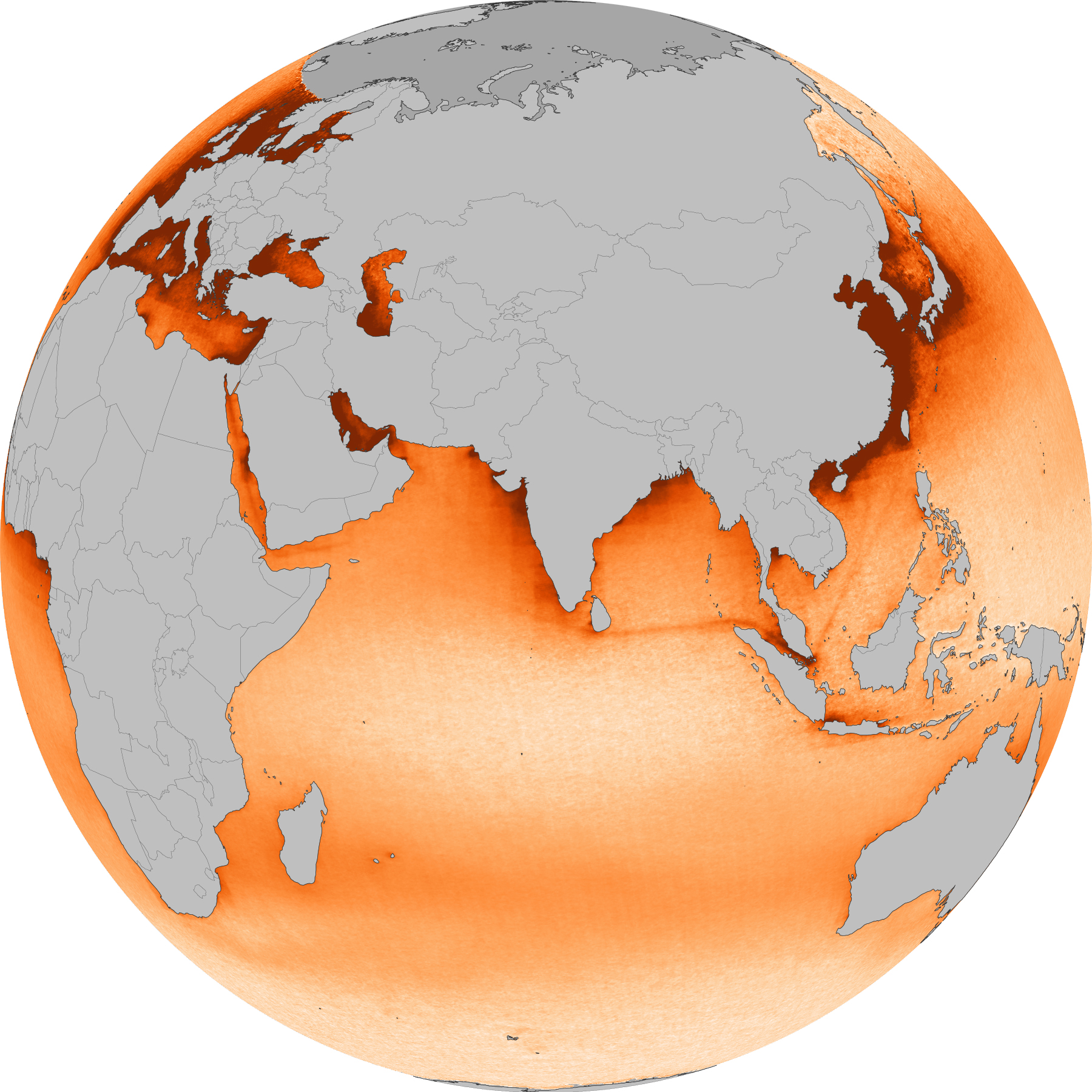
The following image from NASA clearly depicts what are some of the IMPRESSIVE negative externalities caused by the transport of global goods in the region and opens the door for discussing
Elevated levels of nitrogen dioxide pop out over certain shipping lanes in observations made by the Aura satellite between 2005-2012. The signal was the strongest over the northeastern Indian Ocean.
Data from the Dutch and Finnish-built Ozone Monitoring Instrument (OMI) on NASA’s Aura satellite show long tracks of elevated nitrogen dioxide (NO2) levels along certain shipping routes. NO2, is among a group of highly-reactive oxides of nitrogen, known as NOx, that can lead to the production of fine particles and ozone that damage the human cardiovascular and respiratory systems. Combustion engines, such as those that propel ships and motor vehicles, are a major source of NO2 pollution.



 After only seven years as Head of the
  ” (
” (

 Download (.pdf)
