Hagamos una Revolución Gloriosa en Guatemala

tecun-uman

En los últimos días, semanas y meses he visto a muchos amigos y conocidos que inspirados por el conservadurismo burkeano se han opuesto a los cambios que algunos hemos exigido.  Ellos parecen creer y confiar en la experiencia de pasado y en la superveniencia de las tradiciones. Ha sido así que, entendieron como amenazas al status quo la solicitud de antejuicio contra Morales, las críticas que hicimos contra los diputados y ministros aliados con la impunidad y se opusieron a la solicitud de detener el gobierno actual y pedir la renuncia de Jimmy Morales, Jafeth Cabrera y la cancelación de su partido.  Otros de ellos se han opuesto a estos cambios no por conservadores, sino por traidores y por proteger sus privilegios heredados o recientemente adquiridos.

Edmund Burke fue una de las mentes más ilustres del siglo dieciocho y su oposición a la Revolución Francesa es elocuente y comprendo los motivos por los cuales se opuso a la misma. No los apoyo y tampoco los justifico, pero comprendo su visión conservadora y aprendo de ella pues su visión explica que esa Revolución y drásticos cambios surgieron del resentimiento de una clase más pobre que desgarró el tejido social, substituyendo así la sabia gestión del progreso natural por una dictadura de los principios abstractos, segados de todo lo concreto histórico.

Las próximas semanas podrían ser el momento de nacimiento de una revolución guatemalteca y es necesario que estudiemos los efectos de la revolución francesa y cómo se equivocaron al hacer tabula rasa en vez de reconstruir la sociedad en un proceso mesurado y de cambios que sí podría gestarse desde una CICIG fortalecida y sólida.  De Burke recordemos que enfatizó que la revolución puede ser necesaria, pero “solo para mantener y poner al día la tradición, cuyo orden ha sido probado por su resistencia en el tiempo.”  Esto quiere decir que, cambiar el gobierno guatemalteco y pedir la renuncia de los congresistas que firmaron el Pacto de Impunidad podría ser viable, es necesario y requerirá de una consolidación democrática a través de una asamblea constituyente y de que se convoque a nuevas elecciones.

El Estado de Guatemala ha sido el fruto de una larga acumulación de experiencias y de reglas probadas por la experiencia histórica.  Sabemos ya cuáles de estos sistemas de gobierno no funcionan. Pero requerimos construir un gobierno que combata las causas de esos sistemas de gobierno fallidos.  Los problemas de Guatemala se encuentran en la falta de acceso a la alimentación, salud y educación digna para el 60% de la población que vive actualmente en la pobreza. Somos una pequeña clase de gobernantes quienes estamos destruyendo este país. Está en nosotros cambiar las reglas del juego y aprender de las experiencias pasadas para construir un nuevo gobierno.

La crisis política del Ejecutivo corrupto, un poder Legislativo que protega la impunidad y el subdesarrollo económico y social de Guatemala se deben a la existencia de una Constitución que no vela por el respeto de los derechos individuales.

Necesitamos una REFORMA CONSTITUCIONAL donde prevalezca el Derecho, se combata la corrupción con el apoyo de la CICIG y se fomente la economía de libre mercado.

Regresemos a discutir la creación de un sistema bicameral, la caducidad de la legislación, la reducción del número de diputados y la disminución en la discrecionalidad de los funcionarios.

Aspiremos todos a ser hombres y mujeres de Estado. Porque lo que nos distingue a nosotros de los políticos es que NO perdemos NUNCA de vista los principios y la ética. Al contrario, nos caracterizamos por SIEMPRE aplicar los principios a la política, atendiendo a las circunstancias, pero sin eludir la responsabilidad de actuar y cambiar, pues, de no hacerlo, sabemos que contribuiríamos a la irreparable ruina de nuestra querida Guatemala. Seamos nosotros actores del cambio y tengamos una Revolución Gloriosa.

Scholarships for a PhD in History

I’d love to apply for this! If only I could! Perhaps, in my next life.

FYI, historians! Apply to this amazing PhD in one of Europe’s best program!

sriaamhe's avatar

Scholarships for a PhD in History at the International Max Planck Research School for Moral Economies of Modern Societies (IMPRS Moral Economies), Berlin.

http://www.royalhistoricalsociety.org/Call%20for%20Application%202014%20IMPRS%20Moral%20Economies.pdf


View original post

Israel-Palestine: Is a reasonable debate possible?

Barry Stocker's avatarNotes On Liberty

The question in the title is to be taken very seriously and not just as a prelude to a comforting ‘of course there is’ answer and a few helpful hints to how to engage in respectful debate. This is a debate which stretches at the  limits of debate, at all attempts at civility and respect for other points of view in debate. I am trying to find a way to discuss the issues in a way that is equally considerate of the rights and interests of all parties to the debate, while also finding that debates about Arab Palestinian and Jewish Israeli positions may at some point just not be open to rational debate, and can only be settled by pragmatic compromise at best, and violent imposition  in the less happy scenarios.

This started with a social media post on my part condemning George Galloway, a very left socialist British…

View original post 3,415 more words

The gated community motto: Come and live in a lie while ignoring life!

The papers, books and studies related to the urban development of gated communities in the Global South have provided lots of information by problematizing the history and politics behind the imaginary of these projects. Urban developers all over Latin America, Africa and Asia are building hundreds of communities and apartment buildings that imitate European and Western Styles of construction, lifestyle, norms and regulations. This morning I got my hands in one more of these advertisements for a housing project located in a recently developed dormitory city near Guatemala City, Guatemala.

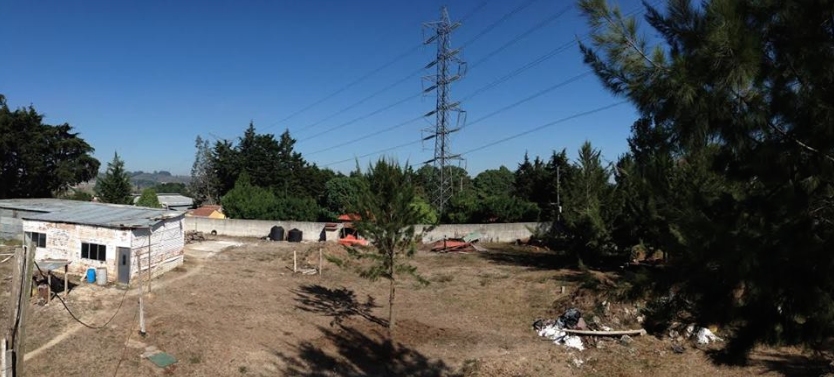
The community is called “Residenciales Pasaje Español” and the development aims at replicating the lifestyle of a Spaniard ideal of a community  (while, of course, ignoring reality about Spain’s complexities).  The advertisements are all directed at the appeals of the growing middle-class market in Guatemala which is backed by a search for: affordable housing, accesible parks, gated walls around the housing project, 24/7 private police service, white houses that offer access to parking spaces for family-sized cars.  All of this providing a “theme-park” feeling that enables you to transport yourself from the violent and insecure life outside of the gates.

plano del proyecto

Guatemala City and the dormitory cities around it are inhabited by aprox. 3.5 million people with more than 1 million cars and the figures are quickly rising. Many of the gated communities are 1 or 1.5 hours away from most of the office and industrial areas and traffic jam is a constant worry for this people. Alienated from crime and lack of rule of law, these gated-communities offer an escape from public worries to taxpayers and an excuse to ignore the country’s multiple problems.

torres de luz

But as any other theme-park there are many flaws and dangers in the aim to replicate the “ideal society”.  The complex is located straight next to a line of huge power towers that represent a health menace to the people that will live in the houses. Also, the gated-community is surrounded by hundreds of new houses and dozens of new gated-communities that once completed and sold will represent an increase in the traffic jam outside of the “housing dream”.

Perhaps it is still time to Rethink the future of our cities. We still have time to further problematize our development model and think about the contradictions behind these city-building dystopias. And bring to light more information regarding how these gated-communities further weaken collaboration, cooperation and citizenship in our societies…

Piketty’s “Capital,” and the Rest of the World

Video: Thomas Piketty Discusses, “Capital In The 21st Century” with Ryan Grim and Alexis Goldstein

The book by the French economist Thomas Piketty’s Capital in the Twenty-First Century has already become part of everyday discussions and is being referenced among academics. The research by Piketty has come in the perfect time and there are plenty of reasons why. Piketty’s book discussion brings some light to the study of income quintiles and deciles into a new debate of the “the skyrocketing incomes of the 1% — and the mind-boggling gains of the 0.1% and 0.01%  — by gathering and publishing income tax data that nobody had bothered with before. Piketty was behind similar projects in France, Britain, Japan, and other countries.” (via Justin Fox at the Harvard Business Review)

I finished reading the book this weekend and it was eye-opening. The book presents great challenges to the study of capital and inequalities in the developed economies as well as in the rest of the world. The book also opens the doors for a wider discussion on the effects European Capital has had in the global economy. Further, the book invites globalists to challenge our understanding of European-centric terms that over longer periods of time become, perhaps, insufficient to comprehend global economic processes over the passing of centuries and how these processes have changed and transformed themselves by a complex evolution and redefinition.

It can’t be denied that capital during all of the 19th Century and in the beginning of the 20th Century was centered in the main European metropolises and extracted most of the goods from the periphery. Few Capital remained in colonies and protectorates. Wealth belonged to the Empires and Poverty remained in colonial territories. Even the poorest of the European was considered Rich by comparison to the inhabitants of Colonies.

Today, European Empires are gone for a while, U.S. Capital increased and gained from the fall of the European Empires and new economies started developing in former Colonies. Giant Economies like China and Russia woke up after decades of isolation from global trade and today reconfigured our understanding of Capital. Piketty’s book somehow fails to explore this Global political changes and its economic effects.

Piketty’s central argument has a gigantic weakness since it is tied to nation-states and cannot be compared or understood in reference to Global Capital flows in today’s multinational economy. Very few references are made to the role played by Multinational Companies and foreign national investments and savings by State Companies in the world.  And less is mentioned of global inequalities and the North-South divide that has been increased by the investments done by Developed and Developing Economies in the rest of the world.  Piketty argues that Capital has tended over time to grow faster than the overall economy (he focuses on European and US economies); and that income from capital is invariably much less evenly distributed than labor income (again he focuses on European and US economies). Thus failing to acknowledge how Labor income stopped been localized during the 20th Century and it involved multiple polities far away from the metropolis.  Piketty argues that together (Capital growth and its uneven distribution) amount to a powerful force for increasing inequality.

Piketty doesn’t take things as far as Marx and this is a pitty. Marx’s methodology involved the State but it also referenced to its effects both and from the peripheries through the pass of longer periods of time. This is one of the most important contributions of Marx: his global understand of the economy.

Piketty shows how over the two-plus centuries for which good records exist, the only major decline in capital’s economic share and in economic inequality was the result of World Wars I and II, which destroyed lots of capital and brought much higher taxes in the U.S. and Europe. However, he again fails to acknowledge how Capital grew in the Global South after these wars as a result of increased inequalities in the Colonies and Agriculture-centered States in South America and Asia. During the wars Capital destruction was followed by a spectacular run of economic growth that involved the entire globe and not only Europe and the U.S.  The Cold War is a good reference for finding how Capital flows went from Europe to Asia, America and Africa.  As well, the run of economic growth started involving non-State actors in which Capital continue increasing at a higher and faster rate than the one he references and studies. Failing to study this shows in Piketty’s book that after decades of peace, slowing growth, and declining tax rates, capital and inequality are on the rise all over the developed world only, and it’s not clear what if anything will alter that trajectory in the decades to come.  However, the declining tax rates, capital and inequality are on the rise at a faster pace in the developing economies and in the “puppet states” (Nigeria, Chile, the Middle East countries) which have emerged around them as sources of petrol, minerals and rare earths.

Piketty’s main worry as points out Justin Fox is that “growing wealth in Europe will bring a return to 19th century circumstances in which most affluent people get that way through inheritance.” Plus, “U.S. median income will continue lossing ground relative to other nations in the following years”. But this are not the only worries that we should identify.  The BRICS countries are probably a good source of comparison to see how the growing wealth of the 20th Century remains on the hands of the few rich and is currently been passed through inheritance. Further, developing economies in South America and Africa are an extreme case of the last.

Piketty’s solution to Europe’s and U.S. problems is that a progressive global wealth tax be established. But this tax will fail to be the best response to the current dynamics of inequality if Capital continues flowing outside of Europe into multinational capital investments overseas and into State companies overseas. 

I enjoyed this political economy analysis and will continue learning a lot from it. Piketty’s solution is a challenge for the study of global political economy and the reconfiguration of the global economy in the 21st Century. Perhaps if a new book is published studying the shareholders who own the most stock in almost every Fortune 500 company and the Capital of any major global company instead of only the economies of France, Germany or the United States more accurate insights will be found.