El rol de un empresario/a estratégico en la conmemoración del Día de la Tierra

Celebrar el Día de la Tierra en las economías del Sur Global es sumamente importante para los empresarios y emprendedores que buscan construir negocios con el potencial de crecimiento exponencial. Para conseguir esa riqueza sostenible con la que todos los empresarios soñamos, implementar y fortalecer las prácticas de economía circular es imprescindible en un mundo con recursos limitados y con presiones energéticas y vitales cada vez más agudas. Temas ambientales como el cambio climático, la eficiencia energética, la contaminación derivada de las prácticas empresariales y la pérdida de biodiversidad tienen un impacto global que trasciende las fronteras económicas y que debe ser el eje central de la visión estratégica de todos los proyectos empresariales. Ante este contexto y a pesar de su situación económica, las economías del sur global son los territorios en los que una visión empresarial estratégica contribuirá significativamente a superar estos desafíos debido a la rápida industrialización, las nuevas prácticas de explotación de recursos y la apertura a nuevas oportunidades de negocio cada vez más circulares y energéticamente innovadores.

Como consecuencia de este impacto climático global, el rol central de los empresarios con visión estratégica es uno de los principales vehículos por el cuál muchas economías en el sur global serán capaces de rescatar a las comunidades más vulnerables ante la degradación ambiental actual. Estas comunidades vulnerables, dependen en gran medida de los recursos naturales para su sustento y está en las innovaciones empresariales la inmensa oportunidad de cambir el ritmo de Producción-Consumo-Desecho de la economía lineal hacia sistemas productivos de economía circular como el de la siguiente gráfica,

Además, las economías del sur global a menudo cuentan con una rica biodiversidad y recursos naturales con un inmenso potencial de investigación científica y nuevas formas de producción que permitirán desarrollar soluciones económicas para continuar protegiendo los recursos de este planeta. Conmemorar el Día de la Tierra cada 22 de abril sirve para crear conciencia sobre la necesidad de conservar estos recursos para las generaciones futuras y de apoyar al sector empresarial que innove en proyectos sostenibles y circulares. Adoptar estas prácticas sostenibles de la economía circular como parte de la Planeación Estrategia, Misión y Visión de las empresas no sólo garantiza el desarrollo económico a largo plazo, fomenta la paz y la convivencia y, como consecuencia, protege el medio ambiente de todos los humanos.

Dado que la degradación ambiental plantea graves amenazas a la salud pública, especialmente en regiones con acceso limitado a la atención sanitaria y al saneamiento es importante recordar el importantísimo rol social que los empresarios tienen en sus áreas locales de trabajo, producción y comercialización. A través de la conmemoración del Día de la Tierra, los empresarios y emprendedores sostenibles tienen una oportunidad de oro para identificar iniciativas destinadas a abordar la contaminación y promover el aire limpio, el agua potable y el saneamiento de las comunidades que les rodean. La participación activa en las actividades del Día de la Tierra demuestra un compromiso con los acuerdos ambientales internacionales y las soluciones colaborativas para los desafíos globales apremiantes.

Celebrar el Día de la Tierra en las economías del sur global es una oportunidad para subrayar la interconexión de las cuestiones ambientales, sociales y política con el importante rol que la actividad económica tiene para liderar la innovación sostenible en la meta común por alcanzar los 17 ODS. La investigación en productos que utilicen energías renovables y que innoven en el diseño de los productos para eliminar por completo los desechos es también un gran aporte que los empresarios exitosos continúan desarrollando e innovando.

Un empresario visionario tiene en estas celebraciones la oportundiad de reforzar la importancia de la acción colectiva de sus clientes para generar cambios en el consumo y para construir mecanismo de colaboración económicamente sostenibles que nos permitan proteger nuestro planeta para las generaciones actuales y futuras.

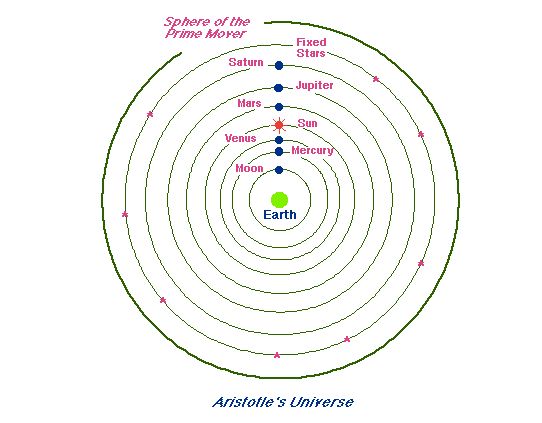
Why is Copernicus relevant to our understanding of Globalization?

192207_337884092969813_1647955587_o

We are constantly bombarded with media reports on globalization in terms of its increasing process and potential effects on our lives. What is meant by this concept and why should we be concerned with its impact? The developing countries of sub-Saharan Africa, Latin America and Asia should be interested in it because of the opportunities and threats offered by globalization (also known as globalisation).

The mother of this globalization is Science and the activator is her daughter Technology (both affectionately called science and technology). The most visible manifestations of “globalization” are in the economic and communications spheres. And one of the fathers of Science is our friend Copernicus.

In two sentences his contribution to Science and Globalization is:

  • Copernicus broke open the medieval idea of an enclosed, Earth-centered universe.
  • He set the stage for all of modern astronomy.

And why does this matter?

He lived at a time when people believed Earth lay enclosed within crystal spheres at the center of the universe. Can you picture the leap of imagination required for him to conceive of a sun-centered universe? The publication of Copernicus’ book – De revolutionibus orbium coelestium (On the Revolutions of the Celestial Spheres) – just before his death in 1543, set the stage for all of modern astronomy. Today, people speak of his work as the Copernican Revolution.

Post-data: Copernicus wasn’t the first to conceive of a sun-centered universe. Early Greek philosophers also spoke of it. It was the Greek philosopher Aristotle, however, who proposed that the heavens were literally composed of 55 concentric, crystalline spheres to which the celestial objects were attached. In Aristole’s model, Earth lay at the center of these spheres. Thus Earth lay – fixed and enclosed – until Copernicus published his version of a heliocentric universe.

A Satellite’s View of Ship Pollution and globalization

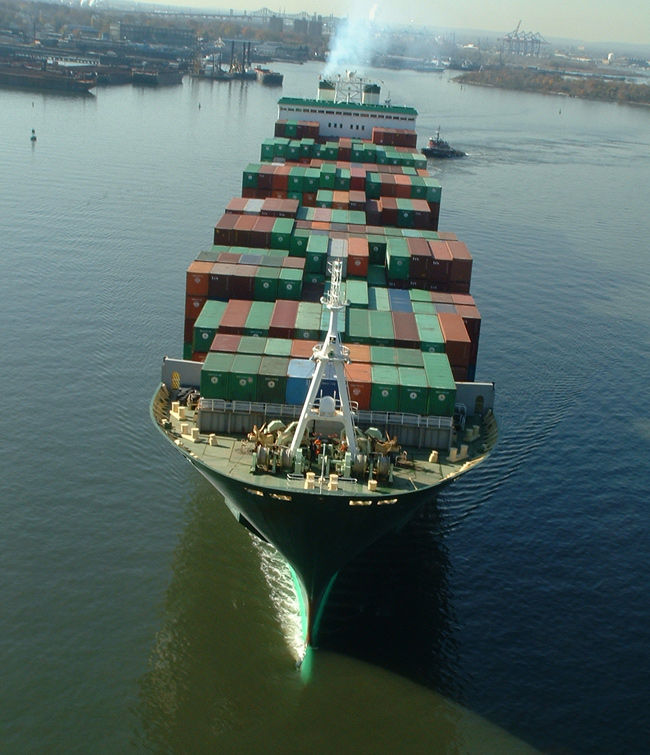
Cargo-Ship650The geographical hotspots of the world are all related to economic trade and global exchange of political interests. Places such as the Panama and Suez Canals have always been in the Western media. However, from an economic and strategic perspective, the Strait of Malacca is one of the most important shipping lanes in the world in the 21st Century. The history of this Strait’s geopolitical relevance goes as back as 400 years of history.

For centuries the strait has been the main shipping channel between the Indian Ocean and the Pacific Ocean. It has been controlled by the major regional powers and also by the mayor global power during different historical periods. In 2011 hundreds of thousands of containers in more than 60,000 vessels crossed its waters carrying about one-quarter of the world’s traded goods including oil, Chinese manufactures, and Indonesian coffee.

In order to understand which is the geopolitical importance of the Strait of Malacca for the Chinese government we need to overview the current geopolitical dynamics and economic investments in the region.

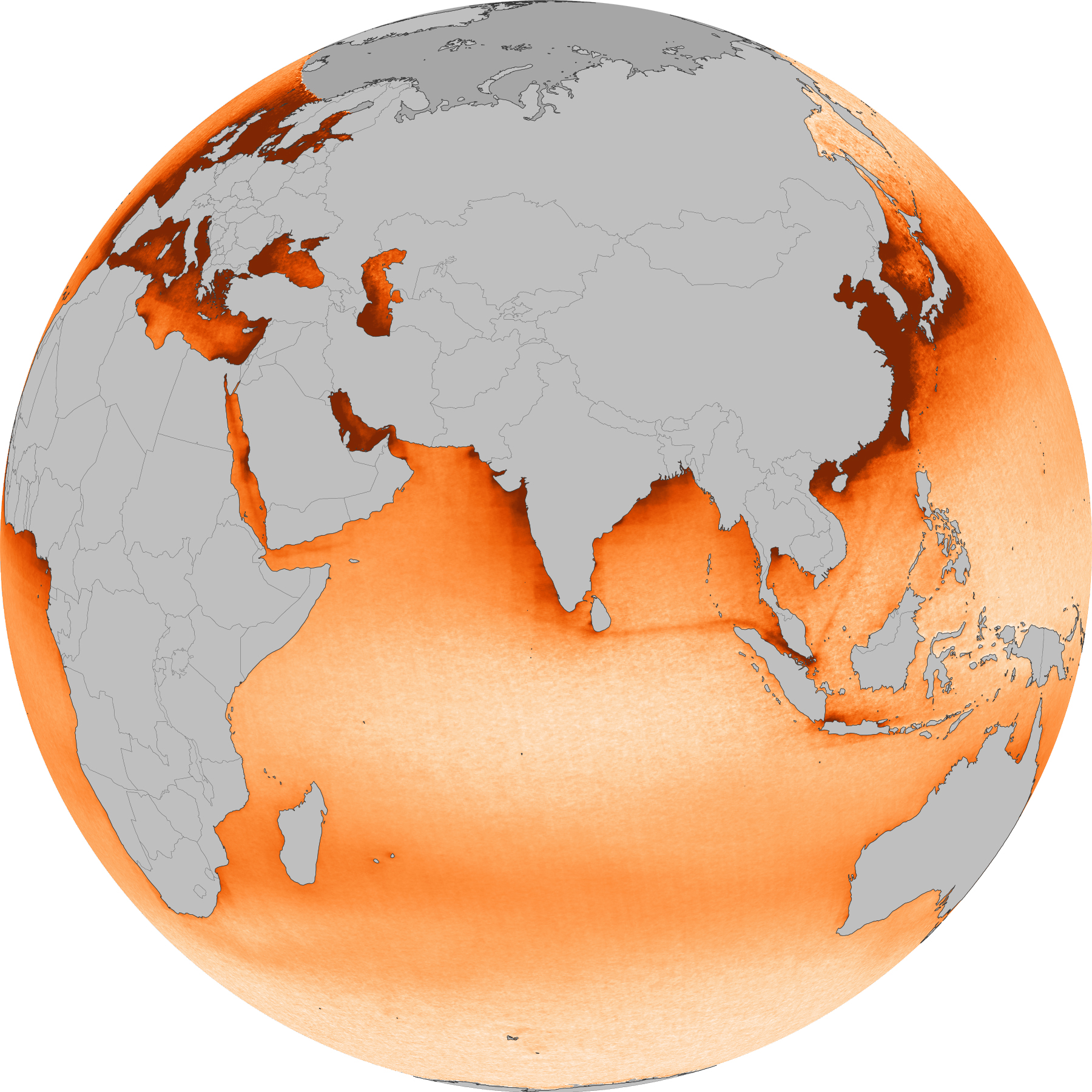
The following image from NASA clearly depicts what are some of the IMPRESSIVE negative externalities caused by the transport of global goods in the region and opens the door for discussing

  • How can we fix this?
  • Who should fix it?
  • Can it be fixed?
  • Can we reduce the future impacts in the area?
  • What solutions are available?
A Satellite’s View of Ship Pollution

Color bar for A Satellite’s View of Ship Pollution
acquired 2005 – 2012 download large image (2 MB, JPEG, 1800×1800)

Elevated levels of nitrogen dioxide pop out over certain shipping lanes in observations made by the Aura satellite between 2005-2012. The signal was the strongest over the northeastern Indian Ocean.

Data from the Dutch and Finnish-built Ozone Monitoring Instrument (OMI) on NASA’s Aura satellite show long tracks of elevated nitrogen dioxide (NO2) levels along certain shipping routes. NO2, is among a group of highly-reactive oxides of nitrogen, known as NOx, that can lead to the production of fine particles and ozone that damage the human cardiovascular and respiratory systems. Combustion engines, such as those that propel ships and motor vehicles, are a major source of NO2 pollution.

To learn some more on the importance of the Strait of Malacca and the value of this shipping lane you can read the essay I wrote titled “The Strait of Malacca as one of the most important geopolitical regions for the People’s Republic of China. Download (.pdf)

Satellite images of negative externalities caused by Globalization

I always keep track of the images from space taken by NASA.  They usually have impressive “natural hazards” photographed with the highest technology available.  However, sometimes the natural hazards to humanity are not caused by the natural cycles of Earth.  In those cases, it is humans who have created hazards for themselves and people die.  Now, why would we create things that harm us so much? Why would we support and contribute to such terrible things?  A good explanation is the one given by economists with the complex and difficult term negative externalities.

A negative externality is a spillover of an economic transaction that negatively impacts a party that is not directly involved in the transaction. The first party bears no costs for their impact on society while the second party receives no benefits from being impacted. This occurs when marginal social cost is greater than marginal private cost (MSC > MPC).

The case of pollution in China elucidates very well how the market-driven approach to correcting externalities by “internalizing” third party costs and benefits fails to work in a globalized economy.  For example, by requiring a polluter to repair any damage caused. But, in many cases internalizing costs or benefits is not feasible, especially if the true monetary values cannot be determined.  In fact, our technological gadgets and thousands of products imported from China are the cause of the hazardous health conditions in that country.  We as consumers are part of this chain by buying the products. How can we do something?

I would suggest that the best way to participate in a positive way is to continue creating awareness of the failure of the government of China to protect the lives of the Chinese people.  It is at the end of the day the responsibility of that government to protect the life and property of its citizens, not ours.  We as consumers can only morally sanction them and stop consuming their products whenever possible.

This is a good (and very unfortunate) example of how globalization without an objective code of values becomes a zero sum game.  I share with you the information regarding how dangerous has become the air in the surroundings of Beijing and Tianjin,

—-

Air Quality Suffering in China

acquired January 14, 2013download large image (7 MB, JPEG, 5000×6400)
acquired January 14, 2013download GeoTIFF file (47 MB, TIFF)
Air Quality Suffering in China

acquired January 3, 2013download large image (8 MB, JPEG, 5000×6400)
acquired January 3, 2013download GeoTIFF file (51 MB, TIFF)
acquired January 3 – 14, 2013download Google Earth file (KMZ)

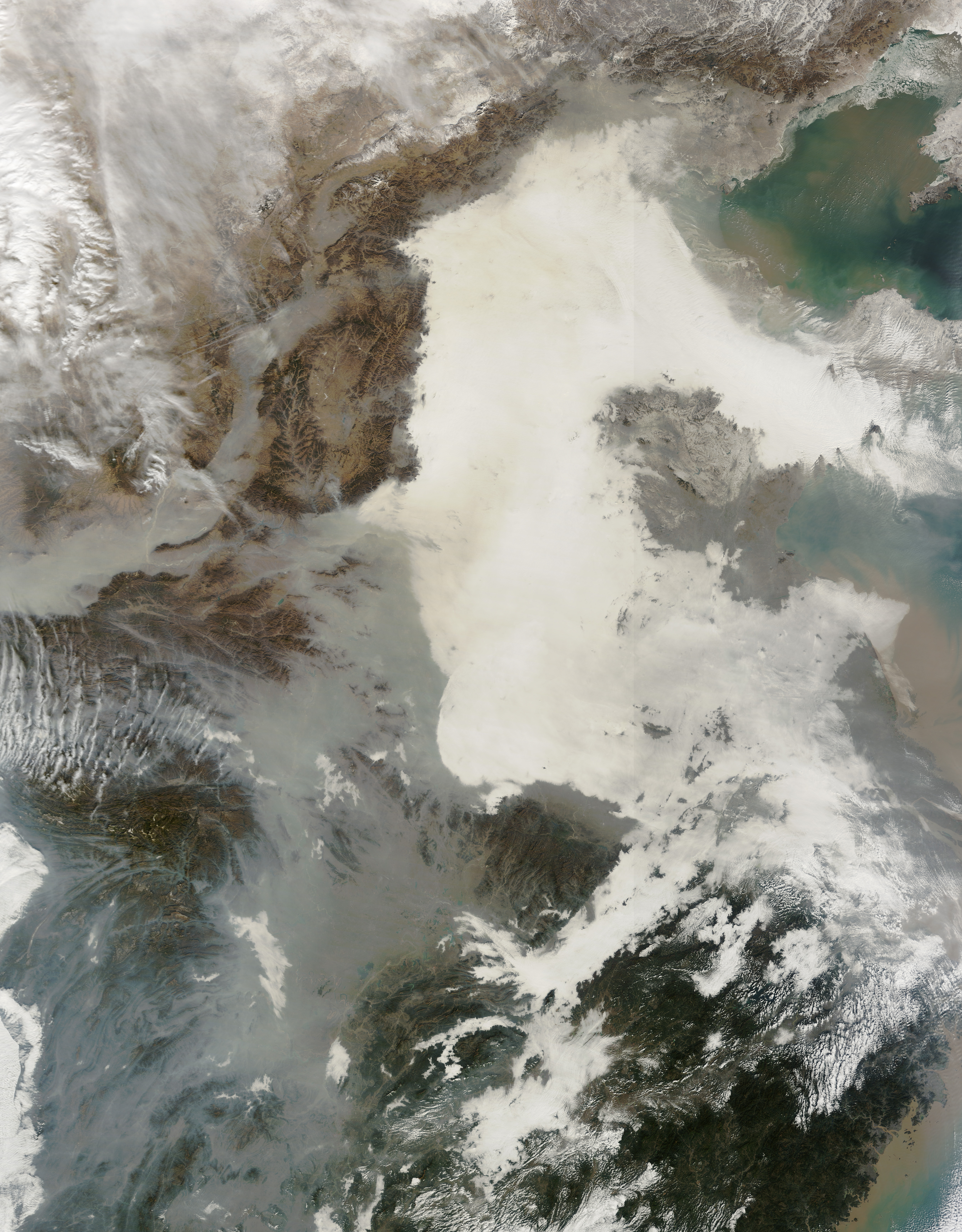
Residents of Beijing and many other cities in China were warned to stay inside in mid-January 2013 as the nation faced one of the worst periods of air quality in recent history. The Chinese government ordered factories to scale back emissions, while hospitals saw spikes of more than 20 to 30 percent in patients complaining of respiratory issues, according to news reports.

The Moderate Resolution Imaging Spectroradiometer (MODIS) on NASA’s Terra satellite acquired these natural-color images of northeastern China on January 14 (top) and January 3, 2013. The top image shows extensive haze, low clouds, and fog over the region. The brightest areas tend to be clouds or fog, which have a tinge of gray or yellow from the air pollution. Other cloud-free areas have a pall of gray and brown smog that mostly blots out the cities below. In areas where the ground is visible, some of the landscape is covered with lingering snow from storms in recent weeks. (Snow is more prominent in the January 3 image.)

At the time that the January 14 image was taken by satellite, ground-based sensors at the U.S. Embassy in Beijingreported PM2.5 measurements of 291 micrograms per cubic meter of air. Fine, airborne particulate matter (PM) that is smaller than 2.5 microns (about one thirtieth the width of a human hair) is considered dangerous because it is small enough to enter the passages of the human lungs. Most PM2.5 aerosol particles come from the burning of fossil fuels and biomass (wood fires and agricultural burning). The World Health Organization considers PM2.5to be safe when it is below 25.

Also at the time of the image, the air quality index (AQI) in Beijing was 341. An AQI above 300 is considered hazardous to all humans, not just those with heart or lung ailments. AQI below 50 is considered good. On January 12, the peak of the current air crisis, AQI was 775 the U.S Embassy Beijing Air Quality Monitor—off the U.S. Environmental Protection Agency scale—and PM2.5 was 886 micrograms per cubic meter.

  1. Resources

  2. Air Pollution in China: Real-time Air Quality Index Visual Map. Accessed January 14, 2013.
  3. China Air Daily. Accessed January 14, 2013.
  4. U.S Embassy Beijing Air Quality Monitor. Accessed January 14, 2013.
  1. References

  2. Associated Press, via Yahoo News (2013, January 14) Beijing warns residents after off-the-charts smog . Accessed January 14, 2013.
  3. NASA (2010, September 22) New Map Offers a Global View of Health-Sapping Air Pollution.Accessed January 14, 2013.
  4. NASA Earth Observatory (2012, March 23) Satellites Map Fine Aerosol Pollution Over China.
  5. The New York Times (2013, January 14) China allows media to report alarming air pollution crisis. Accessed January 14, 2013.
  6. Yahoo News (2013, January 14) China’s air pollution problem slideshow. Accessed January 14, 2013.

NASA image courtesy Jeff Schmaltz, LANCE MODIS Rapid Response. Caption by Mike Carlowicz.

Two historical references for a discussion on the right to keep and bear arms

Battle  of Courcelette
Battle of Courcelette
Like the observer in the tree in the right foreground, painter Louis Weirter witnessed this Somme battle as a soldier. His painting depicts the chaos and complexity of fighting on the Western Front, and the use of combined arms tactics. The capture of the ruined town of Courcelette, France on 15 September 1916 was a significant Canadian victory. It was also the first time tanks (left foreground) were used in battle.
Painted by Louis Alexander Weirter
Beaverbrook Collection of War Art

One of the most controversial discussions in the last few weeks has been the one around guns, its regulation and controls, its production, on the rights to use guns, on private gun ownership and the arguments of those in favor/against the Right to keep and bear arms in the United States of America.  The right to keep and bear arms in that country has a historical significance rooted in a long standing common law, prior even to the existence of their Constitution.  In England, a similar legal wording can be found in the Bill of Rights 1689 which states “Subjects which are Protestants may have Arms for their Defense”.

The historical significance of this argument is long standing and varies from country to country (specially those with a common law system).  The principle behind this topic is the relation of the private ownership (historically contextualized of course) of the “means of force” versus the monopoly of the use of force by government.  Today I have two recommendations on this topic for those of you looking for essays and books to read:

tilly-diagram

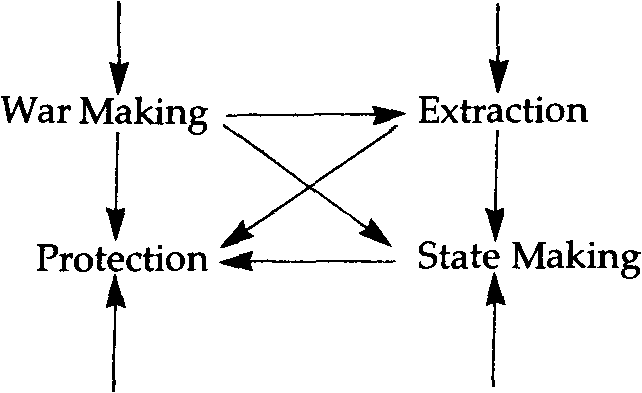
The monopoly of the use of force is claimed to be the reason behind why some kings in Europe succeed in wining wars and enriching their countries; and also the reason why others were subjugated and conquered (see the work of War Making and State Making as Organized Crime by Charles Tilly for a complete picture on this topic (online pdf) a Chapter from Bringing the State Back In (1985), edited by Peter Evans, Dietrich Rueschemeyer, and Theda Skocpol).  But also, in a longer historical perspective it has been the monopoly of the use of force by specific authorities which for other authors built/destroyed entire civilizations (see the work of The Shield of Achilles: War, Peace and the Course of History (2002) by Philip Bobbitt).

Have a happy reading!