Occupy the Mind with Economics

Video: Occupy Wall Street & Capitalism: A Professor’s Response

Karl Marx was an intellectual radical.  What that means is that he sought to get at the root cause of social ills with his analysis.  Despite my extreme disagreement with Marx on his diagnosis, I have always been attracted to intellectual radicalism.  Not the fashionable radical chic of rock stars, etc., but the nerdy radicalism of scholars and public intellectuals.  Not a radicalism evident where the cool-kids party while skipping school, but a radicalism born in the library and in reading dusty old books and studying long and hard to try and figure things out.  Think hard, read widely, think even harder, then attempt to write clearly — that is the intellectual radicalism that I find exciting.”

Continue reading via: Occupy the Mind with Economics

Journal Reco: Globalization and Global History in Toynbee

ArnoldToynbee1961
Image by cesarharada.com via Flickr

Abstract

This article traces the intellectual history of Arnold J. Toynbee. It centers on early twentieth-century British social thought and its synthesis of idealism and evolution. Toynbee used this framework to interpret imperial and international affairs, and, like his mentors, he focused especially on the unprecedented, progressive possibilities of global integration. With the failure of the Paris Peace Conference, however, Toynbee began to regard globalization as a contradiction between social unity and spiritual disjuncture. A Study of History, his endeavor to bring historical writing into its global present, followed from this opposition, which he sought to explain and hoped to resolve. By the mid 1930s, world events finally overwhelmed Toynbee’s commitment to the old conceptual synthesis. He returned to such thinking after World War II, but his brief declaration of methodological limitations illuminated for historical study the antinomy of the global scale.

Universal history must be construed and denied.

To many world historians today, Arnold J. Toynbee is regarded like an embarrassing uncle at a house party. He gets a requisite introduction by virtue of his place on the family tree, but he is quickly passed over for other friends and relatives. For much of the twentieth century though, Toynbee was perhaps the world’s most read, translated, and discussed living scholar. His output was enormous, hundreds of books, pamphlets, and articles. Of these, scores were translated into thirty different languages. In 1947, Time magazine considered his historical significance to be on par with Marx.2 Among intellectuals, response to his work was de rigueur. Indeed, the critical reaction to Toynbee constitutes a veritable intellectual history of the midcentury: we find, for example, Aron, Frye, Huxley, Kennan, Kracauer, Kroeber, Morgenthau, Mumford, Niebuhr, Ortega y Gasset, Popper, Ricouer, [End Page 747] and Sweezy, as well as a long list of the period’s most important historians, Beard, Braudel, Collingwood, and so on.

A survey of these responses consistently reveals odd contradictions between positions. In recent historical work, for example, Reba Soffer aligns 1930s-era Toynbee with Britain’s “radical right,” while Christopher Brewin describes his politics of the same period as “progressive liberal.”3 In Toynbee’s own time, two of the most sustained attacks came from E. H. Carr and Pieter Geyl, each in a certain way the inverse of the other. Carr translated the Marxist critique of bourgeois moralism into his study of international relations; he assailed Toynbee’s “utopian prescriptions” as so many alibis for British national interest. And as in Marxism, spotlight on the furtive particular in turn revealed a sturdier universal, in this case, what Carr called “the nature of politics.” Geyl, on the other hand, read Toynbee’s “impossibly universalist system” not as façade for a specific concern, but as its disintegration; he deemed Toynbee’s world history as an attempt to “escape” the uniqueness of the West. Toynbee’s “passion for unity,” Geyl wrote, was “fundamentally antagonistic to history, the guardian of the particular.”4 So which was it: the camouflage of self-interest or an ecumenical hallucination? And which was the corrective to Toynbee’s grand failure? Naturalism or historicism? Siegfried Kracauer shook his head: “There is something schizophrenic about Toynbee.”5

One approach toward understanding this contradiction can be found in Karl Löwith‘s brief comments on Toynbee in Meaning in History. All modern temporality, according to Löwith, was an “inconsistent compound” of ancient Greek cyclicality and a Christian theology of history. In addition, the latter’s eschatology endowed the historical process with “universality,” evoking above every smaller narrative the single, imagined identity of “mankind.” With this broad phrasing, Löwith fittingly characterized the two-sidedness of Toynbee’s thinking,[End Page 748] but he left unattended Toynbee’s struggle against a categorical universalism.6 Löwith’s high degree of abstraction offers little to the historiographer assessing world history and the varied circumstances that have contributed to its diverse formulations. My own reading stays considerably closer to the text. For in understanding Toynbee, philosophical generalization, like a quick dismissal, misses the struggles and contradictions in his attempt at world history. These break points help elucidate the history of the field, as well as the history of global thought and twentieth-century intellectual currents more generally. Perhaps too, they present to contemporary world-historical thinking an insight of value, even as Toynbee’s system has long stood in ruins.

The basis for Toynbee’s historical logic, and the source of its core difficulty, derived from a set of ideas which are best described as “evolutionary idealism.” One of the dominant trends in early twentieth-century British social thought, evolutionary idealism sought to combine Darwinian naturalism and teleological purpose, two positions hitherto locked in debate. Writers applied this synthesis to questions of imperial affairs, and it underscored much of the era’s thinking on the globe and its history. From this conceptual framework, Toynbee reckoned that the single most significant feature of his age was world integration, a “unification [that] . . . has caught in its meshes the whole living generation of mankind and all the habitable lands and navigable seas on the face of the Planet.”7 Indeed, Toynbee’s entire career as historian and political analyst can be read as a massive reflection on what came to be called globalization. His earliest such writings fully mirrored the evolutionary idealism of his educators. Yet this outlook faced a serious challenge in the immediate aftermath of World War I. The strains of colonial violence and worldwide turmoil fragmented teleology into a multiplicity of beliefs and interests. Toynbee persistently and loudly emphasized this problem of difference. At the same time, and throughout the interwar years, he remained committed to evolutionary idealism and strained to refashion it for the new, polycentric world. Both his rationale and his method for a history of the globe followed from that effort. The contradictions, however, could not be contained, and by the late 1930s, internal adjustments appeared inadequate. With the Italian invasion of Ethiopia and the attendant fiasco at the League of [End Page 749] Nations, Toynbee renounced his previous position. For a brief but significant moment, he neither synthesized nor hybridized the unity of the globe and its diversity of ideals. World integration rendered the universal and the particular into categories at once interdependent and irreconcilable, at once complementary and contradictory. After World War II he returned to the principle of synthesis with ever new and ever unsatisfactory attempts at reconciliation. Across Toynbee’s reception then, as in Carr and Geyl, his key concepts hopelessly chased each other in circles. Yet this indetermination anticipated in a uniquely interrelated way some of the major philosophical and historiographical currents of later years, expressing the irresolvability of postmodernism, the renewed interest in religion, and world history itself.

Read more: Michael Lang. “Globalization and Global History in Toynbee.” Journal of World History 22.4 (2011): 747-783. Project MUSE. Web. 25 Nov. 2011. <http://muse.jhu.edu/journals/journal_of_world_history/v022/22.4.lang.html&gt;.

Journal Reco. “Sino-Pacifica”: Conceptualizing Greater Southeast Asia as a Sub-Arena of World History

Map of Southeast Asia
Image via Wikipedia

I just got my hands in a great article on Southeast Asia issues.  Here’s the abstract for the article (via Project MUSE) and I hope you’ll get to enjoy it too,

Conventional geography’s boundary line between a “Southeast Asia” and an “East Asia,” following a “civilizational” divide between a “Confucian” sphere and a “Viet­nam aside, everything but Confucian” zone, obscures the essential unity of the two regions. This article argues the coherence of a macroregion “Sino-Pacifica” encom­passing both and explores this new framework’s implications: the Yangzi River basin, rather than the Yellow River basin, pioneered the developments that led to the rise of Chinese civilization, and the eventual prominence of the Yellow River basin came not from centrality but rather from its liminality—its position as the contact zone between Inner Eurasia and Southeast Asia.

In a sense . . . the frontier of Southeast Asia has retreated slowly from the line of the Yangzi (in what is now central China) to the Mekong delta (in what is now southern Vietnam).

—Charles Holcombe, The Genesis of East Asia

[T]he Vietnamese-Lao wars of the seventeenth century were resolved wisely when the Le rulers in Vietnam and the Lao monarch agreed that every inhabitant in the upper Mekong valley who lived in a house built on stilts owed allegiance to Laos, while those whose homes had earth floors owed allegiance to Vietnam.

—The Emergence of Modern Southeast Asia: A New History [End Page 659]

The question of boundaries is the first to be encountered; from it all others flow.

Fernand Braudel, The Mediterranean World in the Age of Philip II

In conventional geography, the largest division of the human community is the continental or subcontinental scale “world region.” World regions are the most useful as concepts when their boundaries can be seen as enduring, immobile, and, above all, easy to map. Yet, in the first quotation above, we see a border between two world regions, Southeast and East Asia, that rolls southward thousands of miles over thousands of years. In the second quotation, we see a border between two kingdoms within the same world region, Southeast Asia, that cannot be traced as a simple line on the ground, being created by the contrasting cultural preferences of inextricably mixed populations. The moving boundary and the undrawable boundary are actually the same, the frontiers between Sinified Vietnam and its un-Sinified neighbors.

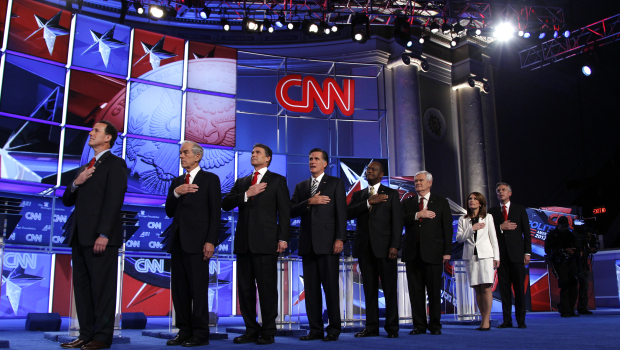
Republican Debate Highlights on Foreign Policy and National Security

Its been long since the last time I heard a candidate from the GOP really defending the values of fiscal conservatism, respect for individual freedom and a non-interventionist foreign policy for the US in a debate. I have heard it in some Democrat candidates from past debates but never in a Republican debate.  Luckily, I was happy to hear Ron Paul doing so and getting my support and applauses.

Last night, November 23th 2011, CNN, the American Enterprise Institute and the Heritage Foundation sponsored a debate on foreign policy. I leave you now with an interesting summary and some notes done by CBS of the most relevant candidates:

  • WINNERS:

Ron Paul

This was the Texas lawmaker’s strongest debate, getting lots of airtime and challenging many of his rivals about U.S. foreign policy. His views are not in the mainstream of Republican orthodoxy, but he is consistent in his beliefs and not afraid to tell voters what he really thinks. His fundraising numbers could go up in the short-term, based on his debate performance Tuesday night, even if long-term it may be hard for him to broaden his support.

Newt Gingrich

Success begets success. Newt has done well in past debates and it has helped him in the polls. With his polling success, moderators gave him more airtime, which allowed the one-time afterthought and current front-runner to show off his debating skills. He took a risk by going against conservative Republican orthodoxy on immigration, and that could backfire, but overall Gingrich showed that he has been thinking about these issues for decades. And since it was a debate focused on foreign policy, no one asked him about his relationship with mortgage giant Freddie Mac and the $1.6 million he earned, which also helped the former House speaker.

Jon Huntsman

As the former ambassador to both China and Singapore, Tuesday’s national security debate was Jon Huntsman’s moment to shine. And for the most part, he succeeded: Huntsman, who touted throughout the debate his experience living abroad, presented clear policy positions on Pakistan and Afghanistan – at one point getting into a heated debate with Mitt Romney over the Afghan troop drawdown ¬- and even managed to bring the conversation back around to the American economy. Perhaps for the first time in the campaign, the former Utah governor was able to set himself apart from the rest of the GOP crowd.

Michele Bachmann

Despite having largely been written off as a major player in the race for the Republican presidential nomination, Rep. Michele Bachmann delivered a strong performance in Tuesday’s debate, demonstrating her confidence discussing policy issues, and taking her competitors to task when they faltered. In a heated exchange with Rick Perry over providing aid to Pakistan, the Minnesota lawmaker blasted the Texas governor for what she described as his “highly naïve” take on the issue; later, she sparred with Newt Gingrich for his stance on immigration. Whether or not Bachmann’s performance was strong enough to get her back in the game remains to be seen – but she certainly earned more screen time than in recent debates.

Mitt Romney

Romney had one of his worst performances of the 11 debates so far, but he still managed to do fairly well. Romney is a front-runner for a reason: he has been running for president for five years and that practice has paid off for the former Massachusetts governor. Romney skillfully turned questions about foreign policy into answers about domestic issues where he was able to contrast his own positions with those of President Obama, cementing the idea that this race is going to come down to Romney and one other candidate.

Rick Santorum

Rick Santorum is still widely considered a long-shot candidate, but he earned his fair share of airtime in Tuesday’s debate. And while the former Pennsylvania senator may not have said much to change how America feels about him – he endorsed racial profiling Muslims and mistakenly referred to Africa as a country – he made his best effort to make his way back onto the public’s radar.

  • LOSERS

Herman Cain

Herman Cain did not have the standout moment he needed to prove to voters he has a command of foreign policy. After surging in the polls, Cain’s campaign has lost momentum in recent days, most notably after stumbling over a question regarding Libya. The only memorable moment from Cain in this debate came when he flubbed debate moderator Wolf Blitzer’s name, calling the CNN anchor “Blitz.”

Rick Perry

The Texas governor took some bold positions during this debate, but his policy stances were vigorously challenged by his colleagues. Perry almost seemed to immediately backtrack on the tough stance he took against foreign aid to Pakistan after Michele Bachmann called his position “naive.” Perry was also on the defense when other candidates — Mitt Romney, Herman Cain and Ron Paul — said they disagreed with Perry’s assertion that the U.S. should consider a no-fly zone over Syria.

Thanksgiving Greatest Quotes

Thanksgiving is a typically American holiday. In spite of its religious form (giving thanks to God for a good harvest), its essential, secular meaning is a celebration of successful production. It is a producers’ holiday. The lavish meal is a symbol of the fact that abundant consumption is the result and reward of production. Abundance is (or was and ought to be) America’s pride—just as it is the pride of American parents that their children need never know starvation. Ayn Rand

Thanksgiving is the perfect time to recognize what we are truly grateful for, to appreciate and celebrate the fruits of our labor: our wealth, health, relationships and material things–all the values we most selfishly cherish. Debi Ghate