The Great Narrative in regard to 16th Century Spain is focused on the expansion of Spanish Mercantilism in America and in how the Ottomans were defeated at the naval Battle of Lepanto bringing their dominance of the Mediterranean to a close.
Sadly (to a great extent), this Euro-centric perspective started to change and more emphasis was given to the production of knowledge in the Peninsula via the appropriation of the culture and scientific knowledge brought to Europe by the al-Andalus Muslims. The Great Narrative and its “Western exceptionalism” discourse won the battle again and it focused on how “Europe” or the “West” acquired this knowledge and created a “Renaissance of Knowledge” while forgetting the source of it.
The “non-western” roots of this Renaissance in the Spanish Peninsula are still not well discussed nor researched. There’s still the need for further study the inherited knowledge from the al-Andalus Muslims (who were later known as Mudéjars) and to establish a direct link of many of the roots of “Europe’s Renaissance” in places as far as the Tigris and Eufrates.
Today, my book recommendation will be a great work that exemplifies how this Great Narrative idealized the School of Salamanca as the product of 100% “Western values”. It is worth reading and studying carefully in order to not commit the same mistakes.
Marjorie Grice-Hutchinson’s remarkable classic, The School of Salamanca, posed an extraordinary challenge when it first appeared in 1952. The book is not only a pioneering presentation of this lost school of monetary theory—fantastic thinkers of Old Spain that were more advanced than the English classicals centuries later–it is also beautifully written.
“Dictatorship nations are outlaws. Any free nation had the right to invade Nazi Germany and, today, has the right to invade Soviet Russia, Cuba or any other slave pen. Whether a free nation chooses to do so or not is a matter of its own self-interest, not of respect for the non-existent “rights” of gang rulers. It is not a free nation’s duty to liberate other nations at the price of self-sacrifice, but a free nation has the right to do it, when and if it so chooses.
This right, however, is conditional. Just as the suppression of crimes does not give a policeman the right to engage in criminal activities, so the invasion and destruction of a dictratorship does not give the invader the right to establish another variant of a slave society in the conquered country.” Ayn Rand. The Virtue of Selfishness, 104
Gaddafi came into power as an assassin and terrorist. He started out murdering, continued murdering and had been going out murdering until today. His death is no panacea but it is surely a victory for the Libyan people and their 2011 Revolution.
Starting in February 15th, 2011 a series of peaceful protests asked for change in the country and they were met with military force by the Gaddafi regime. Thousands were hurt and killed. Gaddafi proclaimed his despotic discourse that same night and said that the only way he was going to leave Libya was going to be in a cuffing. Indeed, that’s how he will leave the history of the country.
The fight for Libyans has not finished; loyalists around the Algerian and Nigerian borders are still present and the opposition continues.
I celebrate the capture of this dictator and our attention needs to be focused now in the continues shipping of supplies of medicine, fuel and food were for Libya’s urban centres. As the philosopher Ayn Rand mentioned in the quote with which I begun this post; it is necessary as well, that we keep a close attention to the outcome of this Libyan revolution in order to avoid that another variant of a slave society in the conquered country with national or international control.
Before defining what is Capitalism I have decided to provide you with five videos that explain the philosophical foundations of Capitalism as a social system. By listening to these videos, you’ll get a wonderfully elaborated explanation of What Capitalism is and of what it consists of.
“Capitalism is the only social system based on the recognition of individual rights and, therefore, the only system that bans force from social relationships.”1
Published in 1966 this abstract from Ayn Rand‘s work on Capitalism explains in a clear and unequivocal way the true concept and definition of a system based on reason and in the recognition of the rights of free and responsible men.
Capitalism in the previous quote means a full, pure, uncontrolled, unregulated social system known as “Capitalism Laissez-faire“. It is a system that works as a set of interacting or interdependent moral, political and economical principles that are incorporated into legal systems, institutions and governments. This moral, economical and political principles are contingent to the identification that the members of the system do in order to understand the nature of man and are applied to the rational understanding of man’s psycho-epistemology (man’s mode of functioning in acquiring knowledge).
In human history there hasn’t yet existed a capitalist laissez-faire social system that fulfills the previous requirements; and only glimpses of its potentiality have been achieved through history. However, since the 15th Century “economies organizing themselves on capitalist lines have experienced greater economic dynamism: increasing productivity, increasing employment, and generating more rapid advances in economic wealth, living standards, and improved health of the population.”2 It is because of many of the principles of Capitalism Laissez-faire that Globalization and all the different forms of Capitalism have managed to benefit humanity and achieved our current conditions. Unfortunately, it has been because of the philosophical contradictions and irrational actions of man that also many adverse results have come into being from these mixed forms of capitalism and economic crisis, inequalities in the distribution of wealth and environmental degradation are still existing.
The Board of the Center for the Study of Capitalism at Wake Forest University explains what are some of these forms of Capitalism that currently exist and also explain which are some of its capitalist characteristics,
In the 21st century capitalism exists in several forms. These include 1) free market or market-led capitalism such as we are accustomed to in the U.S.; 2) corporatist or state-led capitalism where the government exerts significant guidance, leadership, and influence over the deployment of private capital (e.g. France, Japan in the 1980s); and 3) managed capitalism, in which worker groups and broad social welfare issues exert significant influence on private corporate behavior (e.g. Sweden, Germany).3 Whereas some evidence suggests that market-led capitalist economies experience greater economic dynamism and higher rates of per capita income growth than economies with other forms of capitalism,4 other evidence points to less volatility and fewer inequities in other forms of capitalism than in market-led economies.5
This blog was created to study how and when Capitalism and its philosophical principles played a role in Global History. It is my goal to demonstrate with a narration of past events how the roots of Wealth enabled for the interconnection of the World and how we could learn from the past to build more rational and objective societies.
4 R. L. Heilbroner & W. Milberg, 2006, The Making of Economic Society, Prentice-Hall: Upper Saddle River NJ; E. Phelps, 1999, “Lessons from the Corporatist Crisis in Some Asian Nations”, Journal of Policy Modeling, 21 (3), 331-339. E. Phelps, 2007, “The Economic Performance of Nations: Prosperity Depends on Dynamism, Dynamism on Institutions”, in E. Sheshinski, et al, ed., Entrepreneurship, Innovation, and the Growth Mechanism of Free Enterprise Economies, 342-356, Princeton University Press: Princeton NJ.
“It was by making myself a Catholic that I won the war of the Vendee [the war of counter-revolution in western France], by making myself a Muslim that I established myself in Egypt, in making myself Ultramontane [a devotee of the papacy] that I won men’s hearts in Italy. If I were to govern a Jewish people, I would re-establish Solomon’s Temple.” Napoleon Bonaparte
It is with Napoleon’s astonishing remark that I decided to give you some light of what Globalization refers to and why I choose to write about it as one of the two pillars of my research.
The term Globalization (also referred to as Globalisation) refers to what many different historians considered a process of interrelation (or unification) of the world. It was a process of cultural, political and economic relations that for the first time in history united all mankind.
It has been the aim of historians to identify When does Globalization begun and How it begun. But also, it has been their aim to question if Globalization as a process has already concluded or if it is an ongoing process in the 21st. Century. As well, historians are still trying to explain if Globalization should be judged (or not) as the result of only positive (good) results in regard to increasing the wealth, culture and technology of the world; while other historians argue that Globalization has also resulted in poverty, losses, conquest and cannibalization.
Globalization has been studied from different approaches in Social Sciences. Sociologists and Anthropologists have focused on the cultural effects that the transfer of technology, mass migrations, institutions and products has had in different regions of the world. Political Theorists studied how Globalization affects the institutions, norms and hierarchical authorities in specific regions and how changes in other regions may have had altered the status quo. Economists study how globalization increased the commerce and transactions between regions and territories through trade, investments, and flows of capital just to mention a few.
In this blog I’ll aim to discuss Globalization as a process and a result of the interconnectedness of human’s psycho-epistemology in specific contexts and periods of history. My mission is to study how human behavior is not determined by nature and how human free will (action that results from rational or irrational reasonings chosen between opportunity costs) has shaped the course of history until the present.


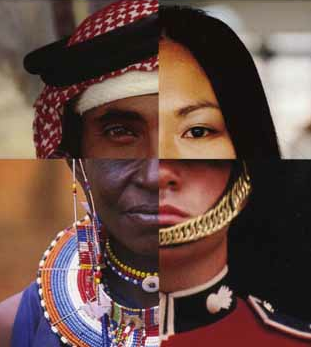

 Globalization & Capitalism