Since then, the alcohol industry (widely hated and considered evil before 1933) started developing into one of the most successful industries of the modern world. The access to competition ignited an immense diversification of marketing, production and commercialization strategies that improved the quality, safety, additives and capabilities of the previous distilled liquors.
By 2010 The world’s five biggest alcohol companies by market cap had their hubs in Beligum Anheuser-Busch Inbev (BUD), Brazil (Companhia de Bebidas das Américas (AMBEV) (ABV); United Kingdom (Diageo plc (DEO), The Netherlands (Heineken (HINKY.PK) and France (Pernod-Ricard (PDRDF.PK). And the industry gives provides with jobs to millions of workers around the globe.
Today, in 2011 we face a different but at the same time similar Prohibition of a product. I refer to the research, production, industrialization and commercialization of controlled drugs (marihuana, cocaine, etc.) that has been condemned by world government with the same irrational argument once used with alcohol.
Because of this Prohibition on Drugs; the world is facing a Trillionaire war leaded by the United States politicians who profit from it. More so, millions of jobs are lost every day and in the countries in which it is produced and stored before reaching the final markets the chaos reigns (for just one story of how this chaos come into being check: The Drug War in Guatemala: A Conversation with Giancarlo Ibarguen).
Let us learn from history and save our children and future generations from committing the same mistakes.
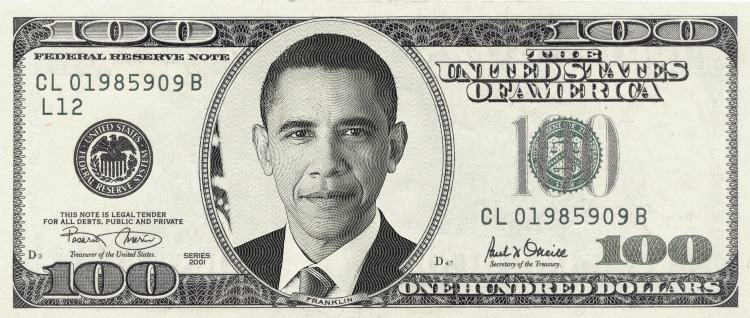
Today I was impressed to watch Obama’s Weekly Address of December 03, 2011 in which he literally called for Americans to unite against the Republicans. He said that Republicans were not only opposing the American Jobs Act but that they were actually opposing to the reduction of taxes for middle class families by about $1,000.00. He was giving the speech of “we’ve got to cut taxes” and more so, that he had established a supposed computerized calculator to tell Americans how much money they were going to lose from their pockets if they don’t Stop Republicans. Here is the video,
Now, President Obama was lying once again and the reason lies behind the fact that he is calling for $1.5 trillion in new tax revenue. As professor Lew Rockwell from the Ludwig von Mises Institute noted, the proposed cuts are not real cuts, but cuts in the rate of increase, says Rockwell. He pointed out that the tax hikes are aimed at young entrepreneurs and business people starting out, as the oligarchs don’t like new people moving up in society.
“Taxes are wealth destruction. So anybody that proposes more taxes seeks to make us poorer as a group. However, the elites will make a lot more money out of this.”
More so, Rockwell believes that Obama, funded by the biggest banks, wants to help the ruling class and stick it to the productive class. He argues that the elite bankers, military industrial complex, and big pharma are getting far too rich and must be cut back. Rockwell predicts global inflation will result from the current depression.
Watch Rockwell’s complete explanation in this video,
The foreign policy of the richest countries has always depended in controlling the world’s monetary systems. As a continuation of the postcolonial systems, they continue holding the power to grant credits to poorer countries, to rescue their economies in periods of crisis and in pushing for an increase in world “reserves” and international “liquidity.” The end result of this policies resulted in creating world inflation and enriching those central banks that controlled the dice of this international game (just as it had been done in the previous colonial period).
Colonialism may seem to many an ‘old history’ that was overcome with the modernization of the world and the decolonization processes after World War II. Nonetheless, in the following postcolonial period many already institutionalized strategies continued working and are still present today. The IMF, for example, was one of the institutions born as a result of the decolonization process. Its results (far distant from their founding vision) were to keep the postcolonial countries in monetary and economic dependency.
For long the world’s centralized banking and monetary authorities, headed primarily by the International Monetary Fund, collaborated to initiate a period of surveillance, aid, and guarantees for the world’s financial markets as Philipp Bagus and David Howden explained in the post “The IMF and Moral Hazard“. However, the long-term results of theses policies fostered the dependency of postcolonial economies and, as such, empowered the populist leaderships in the former colonies that pursued expansive social programs that couldn’t be supported without their foreign aid and long-term indebtment.
Video: The Plan To Collapse Iran’s Central Bank
Today, I saw a video titled “The Plan To Collapse Iran’s Central Bank” in which analysts in the U.S.A. are evaluating the possibilities of collapsing Iran’s economy and disenabling them to continue researching their nuclear programs. Strategies as these may seem as “bogus” to many; however, the long history of international monetary intervention of the economies in postcolonial countries is long and influential (see: Pastor, Manuel (1989). Latin America, the Debt Crisis, and the International Monetary Fund. Latin American Perspectives). The results of any of these strategies always end up creating inflation and as Henry Hazlitt mentioned in his essay “End the IMF” in the year 1963 the only solution for and end to inflation (an as such for peace and economic recovery) is to eliminate the IMF and the interventionist international monetary system that has proved, in practice, a gigantic machine for world inflation.
Video: Occupy Wall Street & Capitalism: A Professor’s Response
“Karl Marx was an intellectual radical. What that means is that he sought to get at the root cause of social ills with his analysis. Despite my extreme disagreement with Marx on his diagnosis, I have always been attracted to intellectual radicalism. Not the fashionable radical chic of rock stars, etc., but the nerdy radicalism of scholars and public intellectuals. Not a radicalism evident where the cool-kids party while skipping school, but a radicalism born in the library and in reading dusty old books and studying long and hard to try and figure things out. Think hard, read widely, think even harder, then attempt to write clearly — that is the intellectual radicalism that I find exciting.”
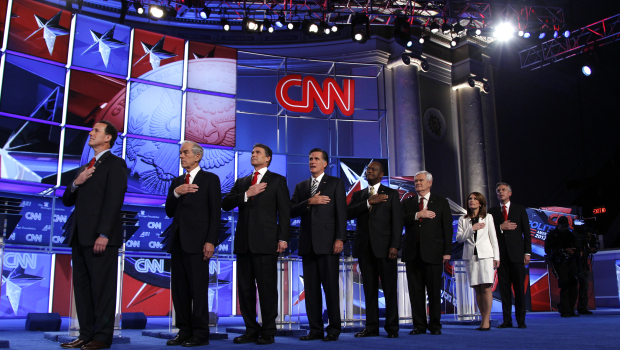
Its been long since the last time I heard a candidate from the GOP really defending the values of fiscal conservatism, respect for individual freedom and a non-interventionist foreign policy for the US in a debate. I have heard it in some Democrat candidates from past debates but never in a Republican debate. Luckily, I was happy to hear Ron Paul doing so and getting my support and applauses.
Last night, November 23th 2011, CNN, the American Enterprise Institute and the Heritage Foundation sponsored a debate on foreign policy. I leave you now with an interesting summary and some notes done by CBS of the most relevant candidates:
This was the Texas lawmaker’s strongest debate, getting lots of airtime and challenging many of his rivals about U.S. foreign policy. His views are not in the mainstream of Republican orthodoxy, but he is consistent in his beliefs and not afraid to tell voters what he really thinks. His fundraising numbers could go up in the short-term, based on his debate performance Tuesday night, even if long-term it may be hard for him to broaden his support.
Success begets success. Newt has done well in past debates and it has helped him in the polls. With his polling success, moderators gave him more airtime, which allowed the one-time afterthought and current front-runner to show off his debating skills. He took a risk by going against conservative Republican orthodoxy on immigration, and that could backfire, but overall Gingrich showed that he has been thinking about these issues for decades. And since it was a debate focused on foreign policy, no one asked him about his relationship with mortgage giant Freddie Mac and the $1.6 million he earned, which also helped the former House speaker.
Jon Huntsman
As the former ambassador to both China and Singapore, Tuesday’s national security debate was Jon Huntsman’s moment to shine. And for the most part, he succeeded: Huntsman, who touted throughout the debate his experience living abroad, presented clear policy positions on Pakistan and Afghanistan – at one point getting into a heated debate with Mitt Romney over the Afghan troop drawdown ¬- and even managed to bring the conversation back around to the American economy. Perhaps for the first time in the campaign, the former Utah governor was able to set himself apart from the rest of the GOP crowd.
Despite having largely been written off as a major player in the race for the Republican presidential nomination, Rep. Michele Bachmann delivered a strong performance in Tuesday’s debate, demonstrating her confidence discussing policy issues, and taking her competitors to task when they faltered. In a heated exchange with Rick Perry over providing aid to Pakistan, the Minnesota lawmaker blasted the Texas governor for what she described as his “highly naïve” take on the issue; later, she sparred with Newt Gingrich for his stance on immigration. Whether or not Bachmann’s performance was strong enough to get her back in the game remains to be seen – but she certainly earned more screen time than in recent debates.
Mitt Romney
Romney had one of his worst performances of the 11 debates so far, but he still managed to do fairly well. Romney is a front-runner for a reason: he has been running for president for five years and that practice has paid off for the former Massachusetts governor. Romney skillfully turned questions about foreign policy into answers about domestic issues where he was able to contrast his own positions with those of President Obama, cementing the idea that this race is going to come down to Romney and one other candidate.
Rick Santorum
Rick Santorum is still widely considered a long-shot candidate, but he earned his fair share of airtime in Tuesday’s debate. And while the former Pennsylvania senator may not have said much to change how America feels about him – he endorsed racial profiling Muslims and mistakenly referred to Africa as a country – he made his best effort to make his way back onto the public’s radar.
Herman Cain did not have the standout moment he needed to prove to voters he has a command of foreign policy. After surging in the polls, Cain’s campaign has lost momentum in recent days, most notably after stumbling over a question regarding Libya. The only memorable moment from Cain in this debate came when he flubbed debate moderator Wolf Blitzer’s name, calling the CNN anchor “Blitz.”
Rick Perry
The Texas governor took some bold positions during this debate, but his policy stances were vigorously challenged by his colleagues. Perry almost seemed to immediately backtrack on the tough stance he took against foreign aid to Pakistan after Michele Bachmann called his position “naive.” Perry was also on the defense when other candidates — Mitt Romney, Herman Cain and Ron Paul — said they disagreed with Perry’s assertion that the U.S. should consider a no-fly zone over Syria.



 Globalization & Capitalism