El TLC con Europa, la inversión segura

“Institutions are the rules of the game in a society… The major role of institutions in a society is to reduce uncertainty by establishing a stable (but not necessarily efficient) structure to human interaction.” Douglass C. North

Ya casi se cumple el año de la guerra arancelaria que arrancó el 02 de abril de 2025. Y desde entonces, sí algo sabemos los que trabajamos en el comercio exterior, es que la rentabilidad rara vez se pierde por “falta de calidad”. La mayoría de las veces se pierde por incertidumbre y otro tanto por la crisis climática. Desde hace un año, un arancel que sube de un día a otro, un cargo extra “temporal” que cambia los costos ya pactados o una regla que obliga a renegociar precios cuando el contenedor ya va en ruta pueden ser la diferencia entre dormir tranquilos o no.

En ese contexto crítico en que vivimos, los exportadores centroamericanos tienen una gran oportunidad en el tratado de libre comercio, oficialmente conocido como Acuerdo de Asociación entre Centroamérica y la Unión Europea (AdA CA-UE). El “AdA”, como coloquialmente conocemos, es una herramienta que ayuda como un ancla a las exportaciones de la región. Este acuerdo, en vigencia desde 2013 ofrece una total estabilidad arancelaria y una desgravación bajo reglas claras y certeras. Además, el acuerdo cuenta con pilares vigentes de Cooperación y Política que contribuyen a resolver problemas por potenciales barreras no arancelarias.

Mientras en otros mercados clave de Centroamérica hay alta volatilidad. Acuerdos como el AdA ofrecen ese respiro para proteger las inversiones de los exportadores que diversifican sus exportaciones. La más reciente publicación de la Casa Blanca, el 20 de febrero de 2026, imponiendo un recargo temporal de importación bajo la Sección 122 de la Trade Act de 1974,entará en vigor el día de mañana 24 de febrero de 2026. Esta decisión tendrá covbertura sobre todas las importaciones al establecer un 10% arancelario por encima de los aranceles existentes (con algunas excepciones aún pendientes de ser resueltas).

El AdA reduce sorpresas y mejora márgenes

Ante mercados inestables, la estabilidad no solo reduce sorpresas comerciales, sino que incrementa los márgenes, promueve contratos más largos y asegura más oportunidades de inversión en valor agregado.

El AdA está diseñado para reducir aranceles y mejorar eficiencia aduanera, pero su beneficio más subestimado es la previsibilidad con reglas claras, cronogramas de desgravación y de revisiones y procedimientos que no cambian por impulso político. En términos arancelarios, la UE resume así el efecto del acuerdo:

  • La UE acordó eliminar aranceles para 73% de sus líneas agrícolas, equivalentes a ~64% de importaciones agrícolas desde Centroamérica.
  • Entre los bienes que pueden entrar libres de derechos se mencionan café, camarones, aceite de palma, piñas y melones.
  • Productos sensibles como azúcar y ron pueden entrar en la UE dentro de contingentes libres de derechos.

En otras palabras: si Guatemala exporta agroindustria (y especialmente agroindustria con diferenciación), el acuerdo crea un terreno muy sólido y estable para crecer y hacer contratos de largo plazo.
Cuando el arancel se vuelve una variable política, los aranceles salen aún más caros

La diferencia entre un marco estable y uno volátil se ve en las potenciales exportaciones que una empresa genera todos los días con potenciales clientes. Por ejemplo, tomemos estas variables:

  • Cotizaste a 90 días.
  • Cerraste precio con el comprador.
  • Programaste producción y empaque.
  • Reservaste flete e invertiste en tener el producto listo para exportar.

Sin embargo, de forma repentida aparece un recargo general (temporal o “de emergencia”) que subirá el costo de entrada tal y como ocurrirá a partir de este mes de febrero, 2026. En la práctica, la implementación de la Sección 122 afectará al exportador con:

  • erosionar márgenes del importador que
  • provocarán pedidos más pequeños o intermitentes en el futuro y que quizás,
  • obligarán al importador a renegociar precios para ser cauteloso y/o
  • empujar al importador a “cubrirse” con proveedores alternativos intl. o locales.

Mientras tanto, el exportador Centroamericano se encontrará atado de manos para tomar decisiones planificadas. Mientras tanto, el AdA que ofrece un sistema arancelario preferencial predecible dará la certeza necesaria para distribuir el riesgo y cumplir con los altos estándares de calidad que la región exige (geolocalización de parcelas, reglas de etiquetado, diseño circular, trazabilidad y diligencia debida, entre otros) convirtiéndose en diferenciadores competitivos.
La ventaja competitiva de 2026 se llama previsibilidad

En un entorno donde el arancel puede convertirse en una “decisión política” de un día para otro, la pregunta estratégica para el exportador centroamericano ya no es únicamente a qué mercado vender, sino bajo qué reglas vale la pena invertir. Porque invertir en valor agregado —marca, empaque, certificaciones, trazabilidad, innovación de producto— requiere una visión de largo plazo y estrategia visionaria. Y ese horizonte estrátegico se construye con instituciones que reduzcan incertidumbre, como advertía Douglass North.

El Acuerdo de Asociación CA-UE debe utilizarse como algo más que un tratado comercial. Debemos utilizarlo como una herramienta empresarial que construya estabilidad comercial. Su valor no está solo en la desgravación arancelaria, sino en la capacidad de permitirte planificar, fijar precios con mayor seguridad, negociar contratos de largo plazo y sostener relaciones comerciales sin el sobresalto permanente de recargos “temporales”. Exportar a Europa es para Centroamérica una apuesta mucho más certera.

Por supuesto, exportar a la UE trae también sus propias exigencias y quienes las aprenden a implementar, las convierten rápidamente en grandes ventajas. El exportador centroamericano que cumple origen y reglas y que también tiene un producto con valor agregado que cumple estándares, tiene a su total acceso un mercado que premia con contratos de largo plazo, reputación y mejores oportunidades para posicionarse en nichos de mayor valor.

En 2026, competir no es solo producir bien, sin aprender a vender bien bajo reglas estables y diversificar las exportaciones. Si tu empresa quiere crecer sin apostar su rentabilidad a la volatilidad, vale la pena explorar el AdA a profundidad: identificar tu código arancelario, revisar reglas de origen, mapear requisitos y convertir la previsibilidad en estrategia. El acuerdo AdA está ahí y la oportunidad es usarlo con mucha visión y estrategia.

The Economic Impact of a War Between Japan & China

64b720d3-a89d-42e7-ba78-69c5c1bec68d.img

“The United States believes that the establishment of diplomatic relations with the People’s Republic will contribute to the welfare of the American people, to the stability of Asia where the United States has major security and economic interest, and to the peace of the entire world.”

President Jimmy Carter
The American Presidency Project. December 15, 1978


Unfortunately, this is not a conspiracy theory.  2013 is a decisive year to deter the escalation of a war between Japan & the People’s Republic of China.  Who can stop it? According to this impressive video, the United States of America has a decisive role to play in this global arena.

A major conflict between the region’s two largest economies would not only impose a harsh dilemma on U.S. diplomats, but also have a significant impact on the entire global economy. It is in every nation’s best interest that the Chinese and Japanese settle their territorial dispute peacefully.

The team at One Minute MBA explains that

“The conflict between China and Japan has put the United States in a precarious position: if a full-scale war were to erupt, the U.S. would be forced to choose between a long-time ally (Japan) and its largest economic lender (China). Last year, China’s holdings in U.S. securities reached $1.73 trillion and goods exported from the U.S. to China exceeded $100 billion. The two countries also share strong economic ties due to the large number of American companies that outsource jobs to China.

However, the U.S. government may be legally obligated to defend Japan. In November, the U.S. Senate added an amendment to the National Defense Authorization Act that officially recognizes Japan’s claims to the disputed islands; the U.S. and Japan are also committed to a mutual defense treaty that requires either country to step in and defend the other when international disputes occur. Not honoring this treaty could very easily tarnish America’s diplomatic image.

The countries of the Asia-Pacific region are collectively responsible for 55 percent of the global GDP and 44 percent of the world’s trade. A major conflict between the region’s two largest economies would not only impose a harsh dilemma on U.S. diplomats, but also have a significant impact on the entire global economy. It is in every nation’s best interest that the Chinese and Japanese settle their territorial dispute peacefully.”

To read the entire video transcript please visit this link.

For All the Tea in China

22 February, 1784: The first American trade ship to China weighs anchor in New York City. The history of trade between China and the West is fraught with conflict and cultural complications, as demonstrated by the audacious 19th-century attempt by the British to steal China’s tea crop and transplant it to its own plantations in India. The caper is recounted in Sarah Rose‘s FOR ALL THE TEA IN CHINA.

In the dramatic story of one of the greatest acts of corporate espionage ever committed, Sarah Rose recounts the fascinating, unlikely circumstances surrounding a turning point in economic history. By the middle of the nineteenth century, the British East India Company faced the loss of its monopoly on the fantastically lucrative tea trade with China, forcing it to make the drastic decision of sending Scottish botanist Robert Fortune to steal the crop from deep within China and bring it back to British plantations in India. Fortune’s danger-filled odyssey, magnificently recounted here, reads like adventure fiction, revealing a long-forgotten chapter of the past and the wondrous origins of a seemingly ordinary beverage.

22 February, 1784: The first American trade ship to China weighs anchor in New York City. The history of trade between China and the West is fraught with conflict and cultural complications, as demonstrated by the audacious 19th-century attempt by the British to steal China's tea crop and transplant it to its own plantations in India. The caper is recounted in Sarah Rose's FOR ALL THE TEA IN CHINA: http://bit.ly/Zn5SltIn the dramatic story of one of the greatest acts of corporate espionage ever committed, Sarah Rose recounts the fascinating, unlikely circumstances surrounding a turning point in economic history. By the middle of the nineteenth century, the British East India Company faced the loss of its monopoly on the fantastically lucrative tea trade with China, forcing it to make the drastic decision of sending Scottish botanist Robert Fortune to steal the crop from deep within China and bring it back to British plantations in India. Fortune's danger-filled odyssey, magnificently recounted here, reads like adventure fiction, revealing a long-forgotten chapter of the past and the wondrous origins of a seemingly ordinary beverage.

February 20 1524. The Commemoration of the death and defeat of a Mayan Prince in a Critical Juncture of Globalization

Title: The Clash.<br /><br />By: Alfredo Gálvez Suárez.<br /><br />A depiction of the battle of 1524 in which the Spanish conquistadores defeated the Army leaded by Tecum Umam.
Title: The Clash.
By: Alfredo Gálvez Suárez.
A depiction of the battle of 1524 in which the Spanish conquistadores defeated the Army leaded by Tecum Umam.

The term Globalization refers to what many different historians considered a process of interrelation (or unification) of the world. It was a process of cultural, political and economic relations that for the first time in history united all mankind.  One of these critical events of unification and clash of cultural and political relations took place in  February 20 1524.  This day is commemorated by Guatemalans to remember the leaders and events of the “The battle of Llanos del Pinal  ((The Society of Geography and History of Guatemala documented that this battle actually took place on February 12 1524) which took place in the vicinity of the K’iche’ Mayan city of  Xelajú (located in today’s mountainous area of Guatemala in Central America).

tecun-uman

In this battle, the K’iche’ Rajpop Achij Tecum Umam (Guatemala’s National Hero and K’iche’ Mayan Captain of the army) commanded an army of 72,000 warriors (as narrated by the Chronicler Francisco de Fuentes y Guzmán) that fought against the invading hordes of the conquistador Pedro de Alvarado and his indigenous allies from the territories that are today the South of Mexico. While the invaders defeated the K’iche’ army, the chroniclers of this battle remembered Tecum Umam as the glorious warrior and miraculous hero that started to be referred in the narrations with epic roles and anthropomorphic abilities.

After this battle that “tainted all the neighbouring rivers red of blood” the Spanish conquistadores continued their invasion in the following month of the city of Q’umarkaj (also known as Utatlán). This secured for them the hegemony over the other less powerful cities of IximcheMixco Viejo, and Zaculeu that were located in the Southernmost part of the Sierra Madre mountain range.

The aftermath of this battle concluded six years later with the Quauhquechollan alliance of the conquistador Jorge de Alvarado (brother of Pedro de Alvarado) and their Nahuatl allies from the city of Quauhquechollan that gave the Spanish and absolute control of large part of Mesoamerica.

By the beginning of the Spanish conquest the territory of Mesoamerica the Mayan Civilisation was already extinguished and dozens of different indigenous tribes leaded by  caciques, warriors and priests controlled weaker and less advanced forced-labor societies.  This enabled the conquest of the territories to be fast and easy.

Just a decade later, by the 1540s, the new elite that ruled this forced-labor societies had already established itself with a mixed Spanish-Indigenous head in control and started the process of acculturation, integration, evangelisation, assimilation and reeducation of a society that went from a tribalist type of life into a mercantilist economy ruled from a metropolitan and global Empire with its head 5,400 miles away in the city of Madrid.

Since 1524, Mesoamerica joined the global community of trade, commerce, acculturation and universalisation of traditions and costumes.  This is an important junction that should be remembered by all of us.

A Satellite’s View of Ship Pollution and globalization

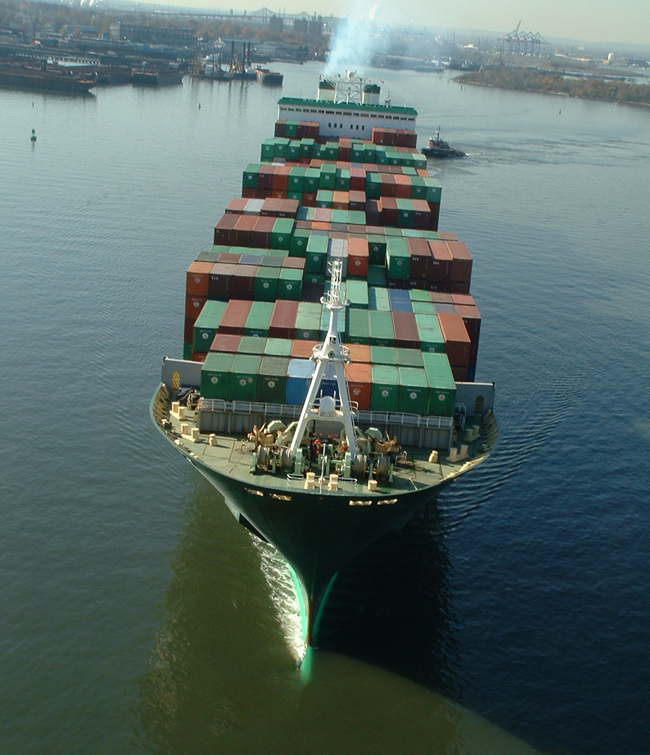
Cargo-Ship650The geographical hotspots of the world are all related to economic trade and global exchange of political interests. Places such as the Panama and Suez Canals have always been in the Western media. However, from an economic and strategic perspective, the Strait of Malacca is one of the most important shipping lanes in the world in the 21st Century. The history of this Strait’s geopolitical relevance goes as back as 400 years of history.

For centuries the strait has been the main shipping channel between the Indian Ocean and the Pacific Ocean. It has been controlled by the major regional powers and also by the mayor global power during different historical periods. In 2011 hundreds of thousands of containers in more than 60,000 vessels crossed its waters carrying about one-quarter of the world’s traded goods including oil, Chinese manufactures, and Indonesian coffee.

In order to understand which is the geopolitical importance of the Strait of Malacca for the Chinese government we need to overview the current geopolitical dynamics and economic investments in the region.

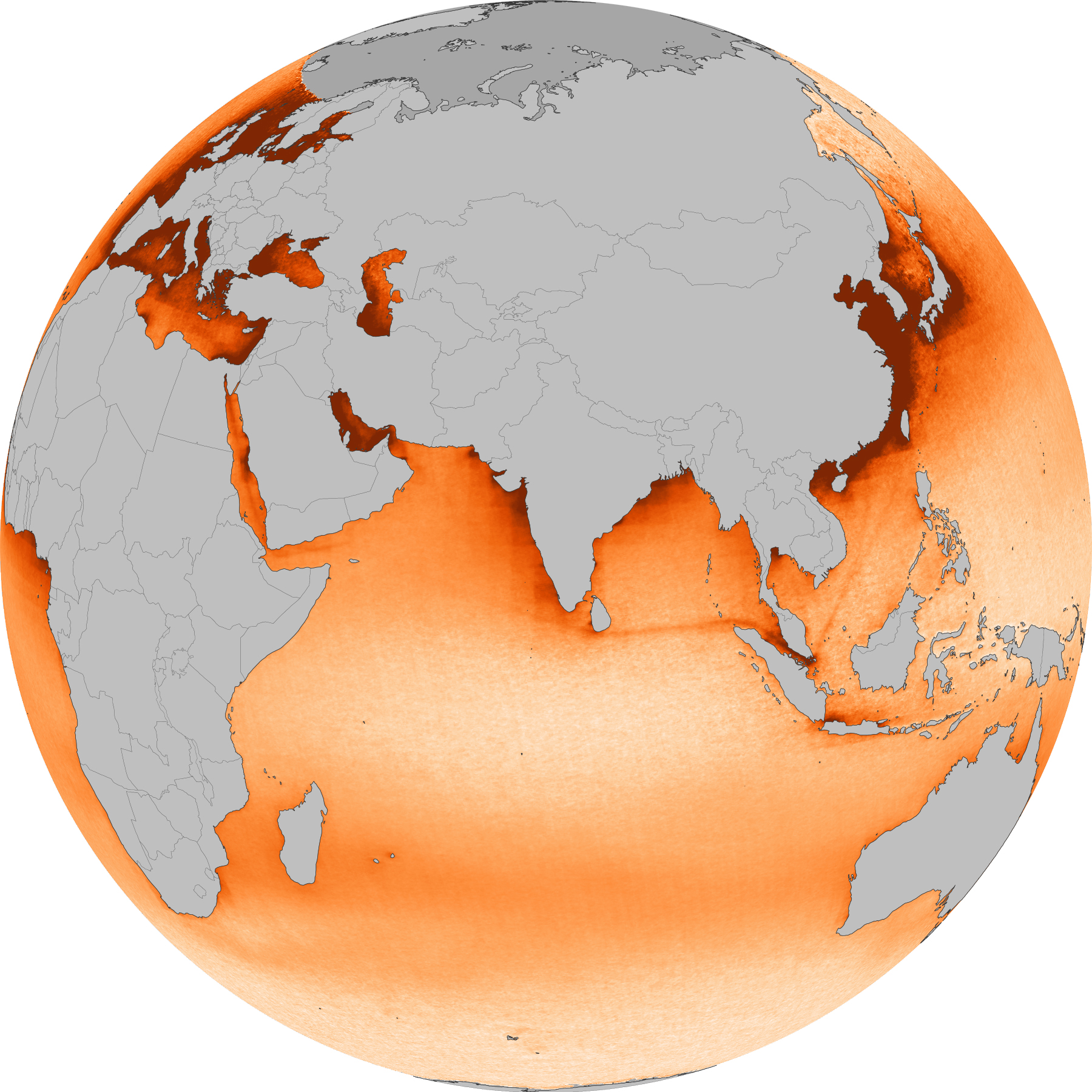
The following image from NASA clearly depicts what are some of the IMPRESSIVE negative externalities caused by the transport of global goods in the region and opens the door for discussing

  • How can we fix this?
  • Who should fix it?
  • Can it be fixed?
  • Can we reduce the future impacts in the area?
  • What solutions are available?
A Satellite’s View of Ship Pollution

Color bar for A Satellite’s View of Ship Pollution
acquired 2005 – 2012 download large image (2 MB, JPEG, 1800×1800)

Elevated levels of nitrogen dioxide pop out over certain shipping lanes in observations made by the Aura satellite between 2005-2012. The signal was the strongest over the northeastern Indian Ocean.

Data from the Dutch and Finnish-built Ozone Monitoring Instrument (OMI) on NASA’s Aura satellite show long tracks of elevated nitrogen dioxide (NO2) levels along certain shipping routes. NO2, is among a group of highly-reactive oxides of nitrogen, known as NOx, that can lead to the production of fine particles and ozone that damage the human cardiovascular and respiratory systems. Combustion engines, such as those that propel ships and motor vehicles, are a major source of NO2 pollution.

To learn some more on the importance of the Strait of Malacca and the value of this shipping lane you can read the essay I wrote titled “The Strait of Malacca as one of the most important geopolitical regions for the People’s Republic of China. Download (.pdf)